Wireless TV Audio Platforms Challenge Traditional Home Theatre Setups
 April Ossington
10 Aug 2026
April Ossington
10 Aug 2026
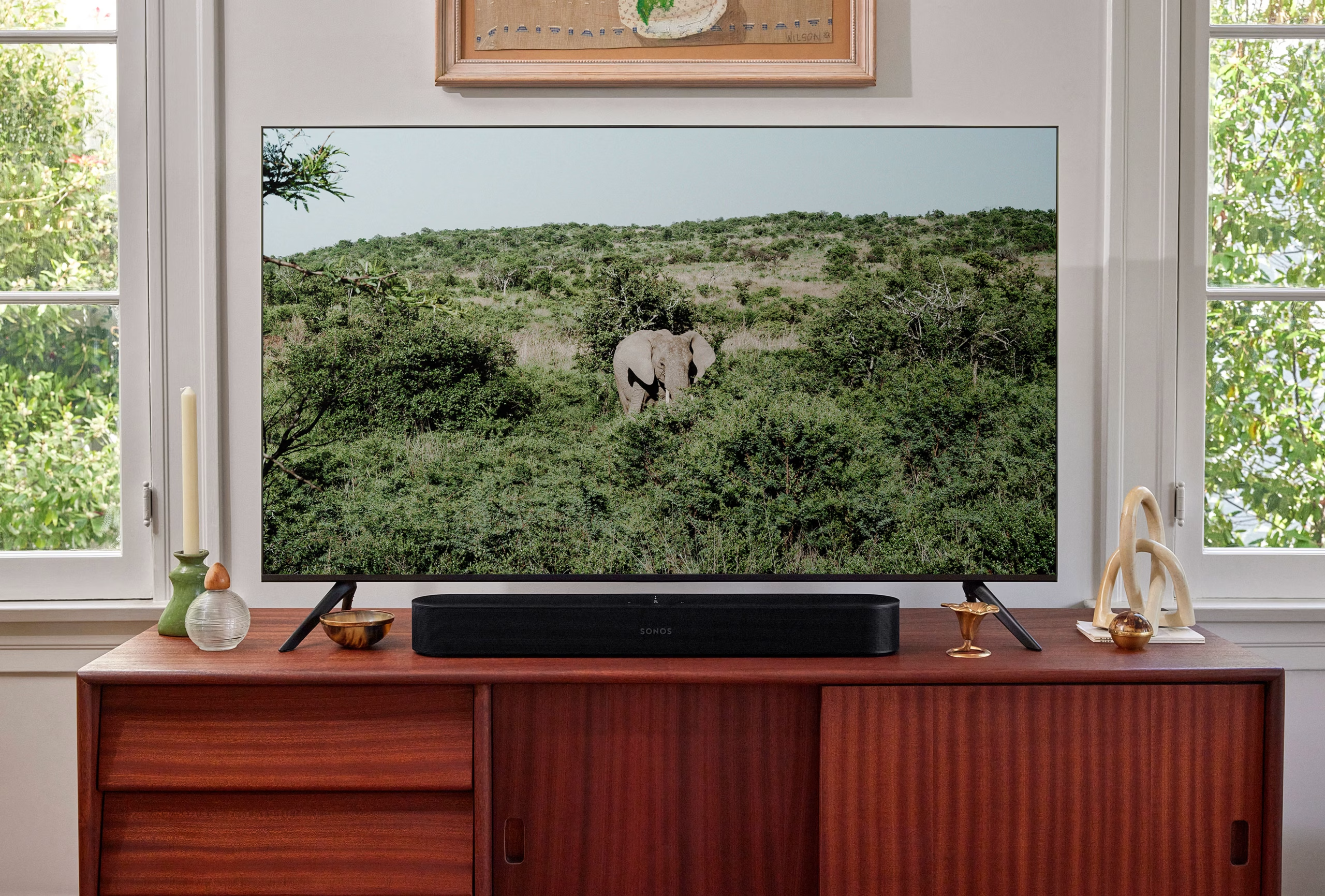
The way consumers build home entertainment systems is changing, with television manufacturers increasingly turning their TVs into wireless audio hubs capable of connecting speakers without the need for a soundbar or traditional AV receiver.
Rather than relying on long speaker cables running across the lounge room, the latest generation of smart TVs can wirelessly pair with compatible rear speakers and subwoofers to create surround sound systems that are simpler to install and easier to expand over time.
While wireless rear speakers have existed for years through soundbars and home theatre receivers, the latest trend shifts that technology directly into the television itself. This allows the TV to become the centre of the audio system, eliminating the need for additional hardware in many setups.
Several manufacturers are now pursuing their own ecosystems.
Samsung continues to develop its Q-Symphony platform, Sony has introduced Direct Connect for wireless surround audio, while Google has launched a wireless audio solution for Google TV devices. Apple also supports wireless speaker pairing through the Apple TV 4K and HomePod, while AirPlay 2 enables stereo playback through compatible speakers from brands including Sonos, Bose and Bowers & Wilkins.
One of the most closely watched developments is Dolby Atmos FlexConnect, which is being adopted by manufacturers including LG and TCL.
The platform allows users to wirelessly connect up to four speakers and a subwoofer directly to compatible televisions while automatically adjusting the sound field to suit the placement of each speaker in the room. The technology is designed to deliver immersive surround sound even when speakers cannot be positioned in ideal locations.
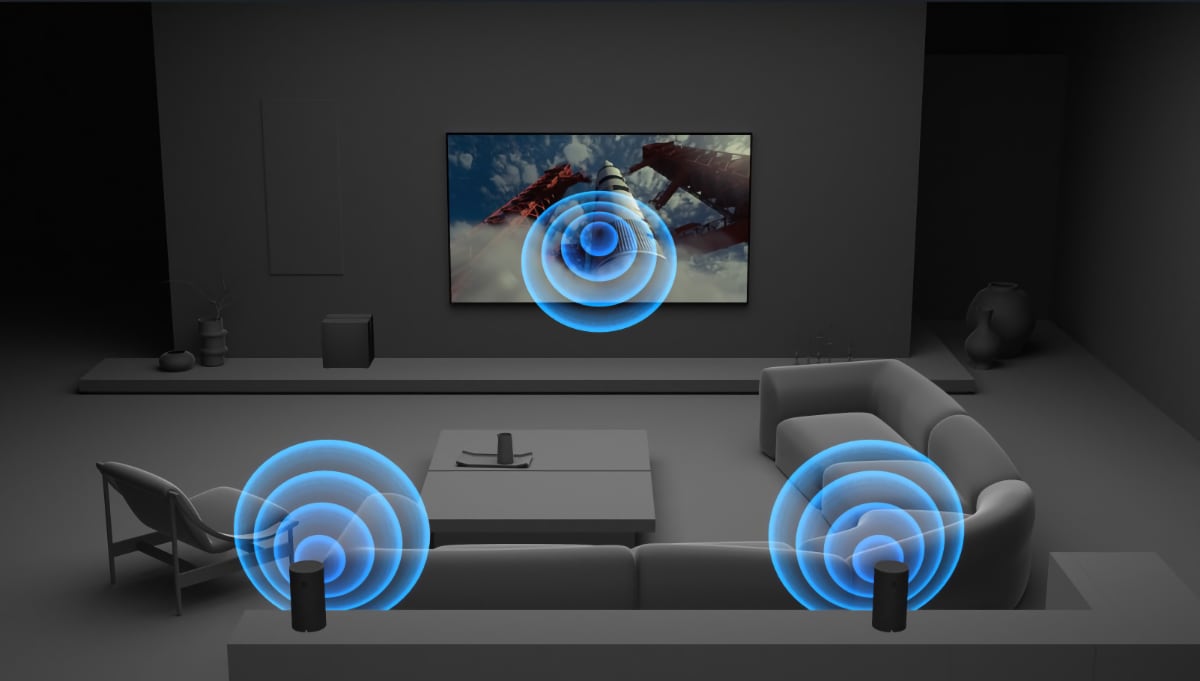
Sony Direct Connect
Although current implementations generally require speakers from the same manufacturer as the television, this limitation is based on commercial decisions rather than technical restrictions, leaving open the possibility of broader compatibility in the future.
The move towards proprietary wireless platforms also creates new challenges for consumers. Many manufacturers currently restrict compatibility to their own speaker ecosystems, making it difficult to mix products from different brands.
Bluetooth remains an option for connecting external speakers, but it has significant limitations for home theatre use. Bandwidth constraints reduce audio quality, only a single speaker or speaker pair can usually be connected, and latency can result in sound falling out of sync with on-screen action.
As a result, dedicated wireless audio platforms are emerging as the preferred solution for consumers seeking cable-free surround sound without sacrificing performance.
Sonos, long recognised for pioneering wireless multi-room audio and surround sound through its soundbars, had reportedly been developing its own streaming device capable of acting as a wireless home theatre hub. Although that product never reached the market, the concept highlighted growing industry interest in moving beyond conventional soundbar-based systems.
The rapid expansion of wireless TV audio technologies suggests manufacturers see significant demand for simpler home theatre solutions. As these platforms mature and compatibility improves, wireless speaker systems are expected to become an increasingly common feature in living rooms, offering consumers greater flexibility without the complexity of traditional wired installations.
Featured photo by Sonos