What Will Happen To The Nine Network If DANZ Foxtel & Partner Clean Up All The NRL Rights?
 David Richards
01 Jun 2026
David Richards
01 Jun 2026
Nine Entertainment could be staring down a potentially devastating defeat in the battle for the National Rugby League’s next broadcast deal, with DAZN-owned Foxtel emerging as the favourite to secure control of Australia’s most valuable rugby league rights package and reshape the future of sports broadcasting according to sources.
As negotiations intensify over the NRL’s post-2027 media rights, industry sources believe the contest has evolved into a high-stakes showdown between a financially constrained Nine Entertainment and a cashed-up global sports streaming giant backed by billionaire capital and sovereign wealth.
The Australian Rugby League Commission is seeking a record-breaking deal worth up to $4 billion over five years, almost double the value of the current agreement. For Nine, which relies heavily on NRL and State of Origin as cornerstone programming, losing the rights would represent one of the biggest strategic setbacks in the company’s modern history.
The timing could hardly be worse.
Nine’s free-to-air television business remains under pressure from declining advertising markets and shifting audience behaviour.
The broadcaster’s free to air television division suffered a sharp revenue decline during the latest reporting period as advertising conditions weakened, while the company’s market capitalisation has fallen to just over $1 billion.
Industry observers note that the NRL’s desired $4 billion valuation now exceeds Nine’s entire market value.
Standing opposite Nine is DAZN, the global sports streaming platform controlled by Access Industries founder Sir Len Blavatnik and supported by investment from Saudi Arabia’s Public Investment Fund.
Unlike traditional broadcasters grappling with structural decline, DAZN is pursuing aggressive global expansion and is understood to be happy to invest significantly in Australian codes. 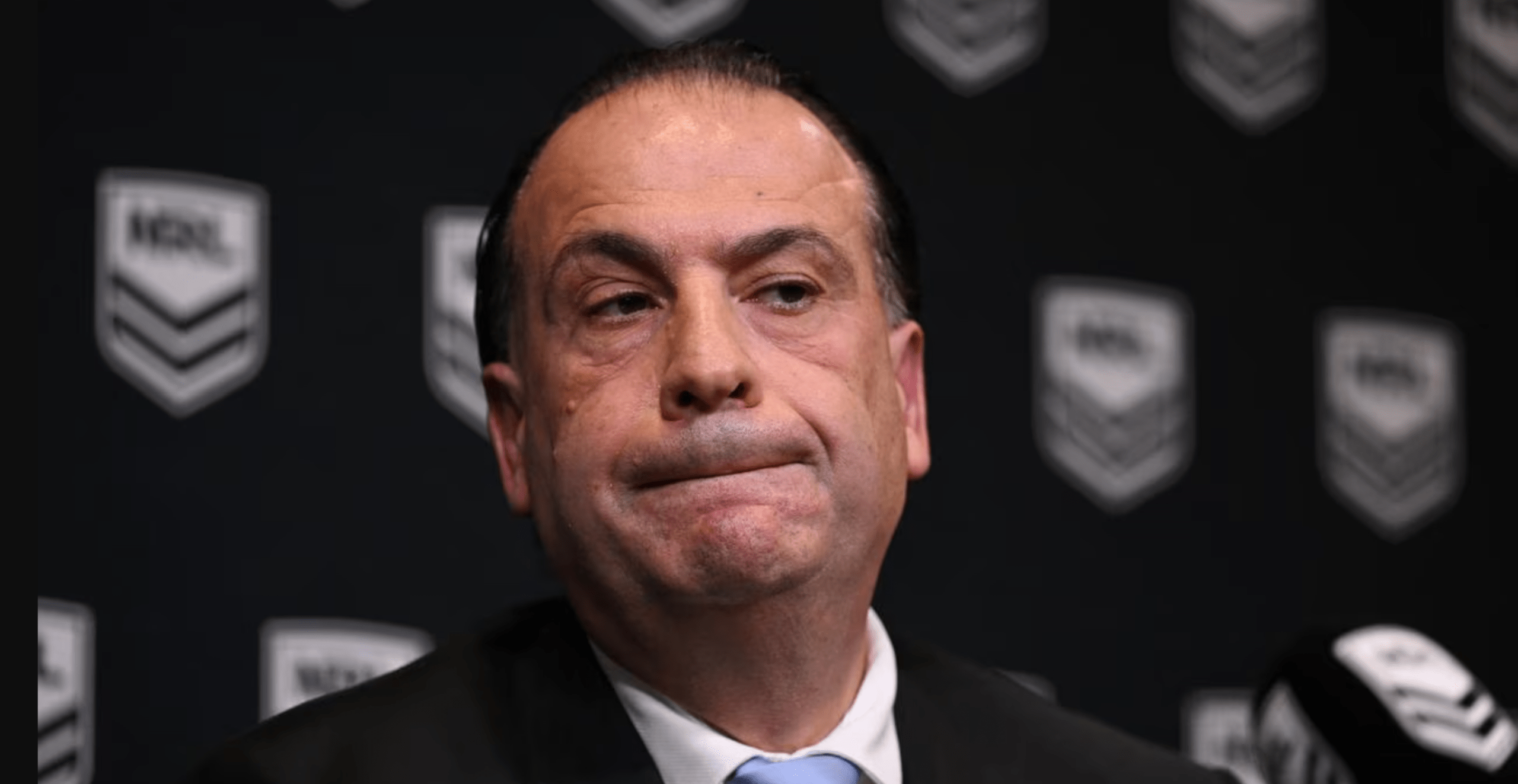
The company’s acquisition of Foxtel has transformed the Australian rights contest.
Through Kayo Sports, Foxtel already controls a dominant share of the nation’s subscription sports audience and now has access to DAZN’s international technology platform, distribution network and global sports expertise.
Industry insiders say that combination has resonated strongly with NRL executives.
Sources familiar with recent presentations to the league say Foxtel has positioned itself as the partner capable of delivering both higher revenues and international growth. DAZN currently streams more than 140,000 live sporting events annually across more than 200 markets, a reach that some within rugby league view as a significant opportunity to expand the game’s profile beyond Australia and New Zealand.
“That global footprint is difficult for the NRL to ignore,” one industry source said.
The battle is increasingly being viewed as a referendum on the future of sports broadcasting itself.
Nine is understood to be pitching a combined free-to-air and Stan Sport model that would require fans to pay separately to access a substantial portion of NRL content. Critics question whether consumers already paying for Kayo and Foxtel would migrate to Stan in sufficient numbers to justify the economics of such a deal.
Foxtel, meanwhile, is believed to have presented an alternative vision centred on Kayo, DAZN’s global infrastructure and a free-to-air partnership designed to satisfy Australia’s anti-siphoning requirements.
Industry sources claim discussions have already taken place with potential free-to-air partners should Foxtel secure primary rights control, with Seven West Media widely viewed as a potential beneficiary. Recent corporate manoeuvring around Seven and Southern Cross Media has only fuelled speculation that a broader sports broadcasting realignment may be underway.
The stakes extend well beyond television ratings.
NRL chairman Peter V’landys has repeatedly stated his ambition to secure a rights agreement comparable to the AFL’s landmark $4.5 billion broadcast deal. The league’s current arrangement generates approximately $400 million annually, and administrators are determined to close the gap with their southern rival.
Foxtel executives have publicly acknowledged that the NRL deserves a significant increase in rights revenue. Sources say DAZN management has authorised Foxtel chief executive Patrick Delany to pursue a sweeping package that could include every NRL match, State of Origin and the Grand Final.
For Nine, the consequences of failure could be profound.
NRL broadcasts remain among the highest-rating programs on Australian television and underpin the network’s advertising strength. State of Origin and the NRL Grand Final continue to deliver some of the largest audiences in the country, making the sport one of Nine’s most valuable commercial assets.
As negotiations enter their critical phase, the central question confronting the market is becoming increasingly blunt: can Nine afford to meet the NRL’s demands, or has DAZN’s financial firepower fundamentally changed the game?
The financial challenge confronting Nine is becoming increasingly difficult to ignore.
The media company has spent the past two years battling a weakening advertising market, declining free-to-air television revenues and mounting pressure on earnings across its traditional broadcasting operations. For the six months to December 2025, Nine reported group revenue of $1.14 billion, down 18.5 per cent from $1.4 billion a year earlier, while its flagship television division saw revenue fall 14 per cent to $400.7 million as advertisers cut spending.
The deterioration has been particularly acute in free-to-air television, where metropolitan advertising revenue fell almost 10 per cent during the period. While Nine continues to dominate key sporting events, investors remain concerned about the structural decline of traditional television audiences and the ability of broadcasters to fund increasingly expensive sports rights packages.
The market’s verdict has been brutal. Nine’s market capitalisation has slumped to approximately $1.06 billion, a fraction of what the company was worth several years ago and significantly below the valuation being sought by the NRL for its next broadcast agreement. Industry analysts note that the league’s ambition for a $4 billion rights deal over five years would equate to almost four times Nine’s current market value.
Compounding the challenge is Nine’s growing list of premium sports commitments. The company has already committed substantial capital to the Olympics, Rugby Australia and cricket rights, while continuing to invest heavily in Stan Sport in an attempt to build a sustainable streaming business. Any significant increase in NRL rights costs would place further pressure on management to demonstrate a clear pathway to monetisation and subscriber growth.
Several media analysts have questioned whether Nine can economically justify a dramatic increase in its NRL investment without either materially increasing subscription prices, extracting significantly higher advertising yields or accepting lower returns from its broadcasting division.
The concern for investors is that sport remains essential to audience growth, but increasingly expensive to acquire.
By contrast, DAZN enters the negotiations with a balance sheet measured in billions rather than millions. The global sports streaming giant is backed by billionaire industrialist Sir Len Blavatnik, whose personal fortune is estimated at more than US$38 billion, as well as capital from Saudi Arabia’s Public Investment Fund. That financial backing gives DAZN a level of flexibility that few traditional broadcasters can match, particularly when bidding for strategic sports rights.
The answer could determine not only the future broadcaster of rugby league, but the future shape of Australia’s entire sports media landscape.