TPG Vodafone Choose Hubbl Overr Fetch Will Optus Be Next?
 David Richards
02 Jul 2024
David Richards
02 Jul 2024

Networking group TPG and Vodafone has chosen to go with the 4K Hubbl streaming controller as opposed to the Telstra owned Fetch whose CEO Scott Lorson, recently quit the business weeks out from the launch of a new puck.
Telstra acquired 51% of Fetch TV despite owning a major share in Foxtel Group with industry executives still mystified as to why they made the move to acquire Fetch in the first place considering their holding in Foxtel.
Up until now TPG has chosen not to offer a streaming content solution, now the Vodafone business is set to take on Optus and Telstra with the Hubbl puck after a strategic review of both offerings.
The Australian claims that both Telstra and Optus have invested billions of dollars buying content, including sport broadcast rights, and partnering with streaming platforms such as Fetch without the same success as Foxtel who dominate the sports streaming industry in Australia.
The launch of Fetch into the Telstra customer base has seen the big telco who is struggling to work out where future growth will come from now playing in two sides of the same aggregation market.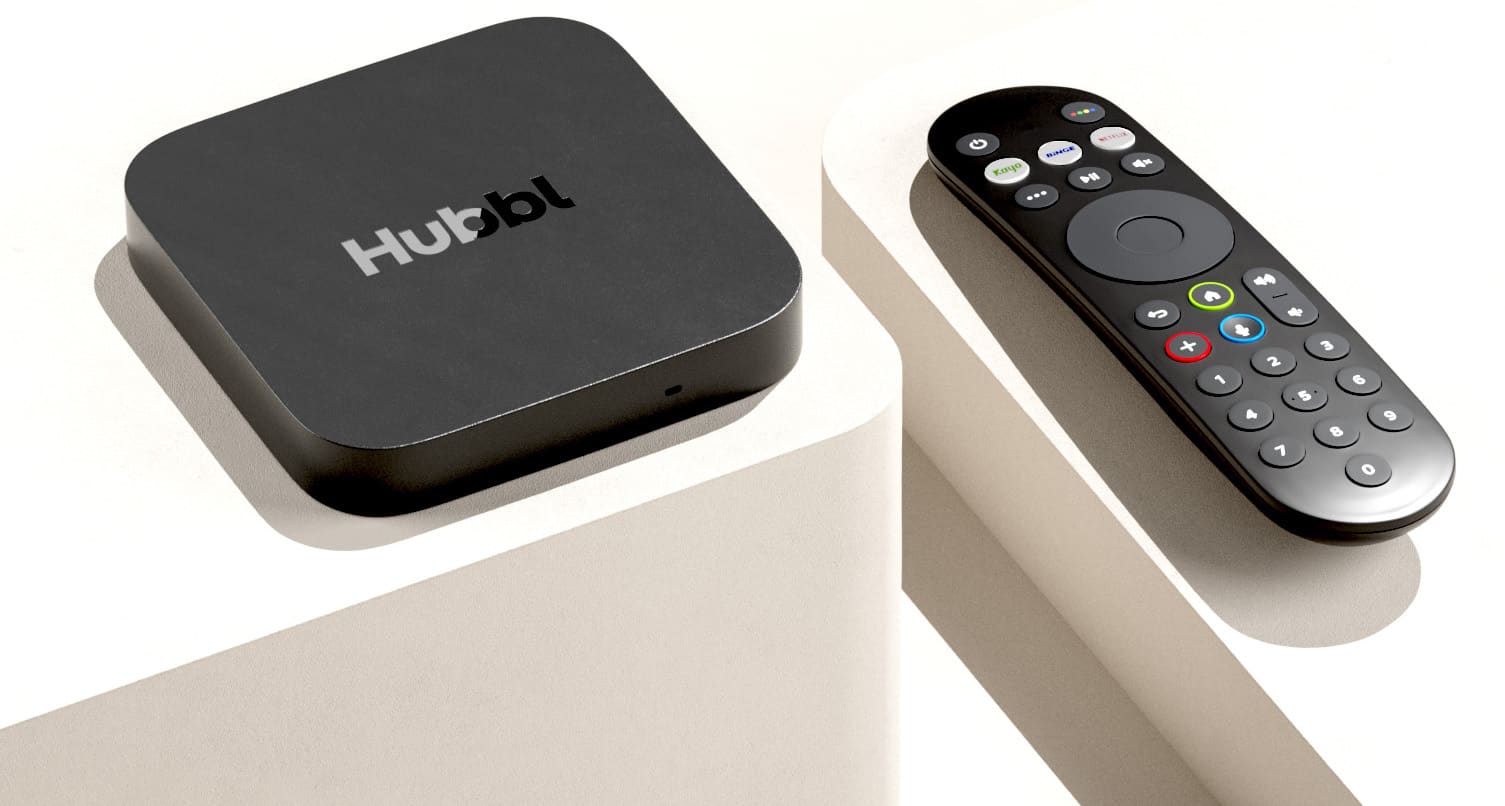
Fetch has traditionally competed against the likes of Amazon with their Fire Stick, Apple and Google, as well as smart TV manufacturers like Samsung and their Tizen operating system, now they are having to compete against Hubbl who has a significantly bigger sport and entertainment offering.
While Telstra owns a stake in Fetch, the company operates independently and works with other internet providers and select retailers who are selling more TVs with content access similar to the Fetch offering.
Their failure to convince Vodafone and TPG to go with Fetch could trigger other broadband partners including Aussie Broadband to jump ship.
New investor in the Hubbl platform, TPG Telecom has been moving to “simplify” its brands recently to boost profit margins.
The company, which manages brands such as Vodafone, iiNet, AAPT, Internode, Lebara and Felix, is currently pursuing the overhaul under Vodafone boss Inaki Berroeta.
At this stage iiNet is a Fetch TV customer.
Fetch Marketing Director Sue Brenchley once said ‘The days of $100 month subscriptions are all gone. Telco is king’.
that has proved to be wrong with consumers now paying for multiple subscription offerings with many paying over $100 a month for access to content.
She said at the time “Our target audience middle aged women with kids, is super broad but just not Foxtel customers. If you have Foxtel in your life and you’re happy with it, then Fetch isn’t for you. We’re after the other 70%.”
“You have to be the first and only remote that people pick up when they get home. Don’t give them a reason to have to go anywhere else. We believe in more or less, we only integrate content that has broad appeal, we’re not looking to be a connected TV widget with a thousand apps, we just want the ones that the most people love, and we want to deliver excellent appearances.
Since making those statements Fetch struggled to grow with Hubbl now an alternate offering to the Fetch box with the added bonus of integrated free tv streaming channels and more sport.
After initially launching a brand campaign for the Hubble puck, management are now moving to demonstrate the clear benefits of Hubbl, over other competitors in the market, with Hubbl customers able to manage both free to air and a multitude of streaming services with a one-off payment of $79 for the new puck with customers getting daily updates of streaming services and programs, ongoing without any additional payment, unlike a monthly subscription for a box.
Hubbl will be available for Vodafone customers with consumer executive Kieren Cooney claiming the deal with Hubbl was about creating more value.
“By connecting our customers to a premium entertainment experience with Vodafone’s great value broadband, we are setting a new standard for what Australians can expect from their home entertainment set up,” Mr Cooney said.
There was speculation at one stage that Optus could drop Fetch for the new Hubbl offering after arch rival Telstra acquired a controlling stake in the business.
Optus previously had a partnership with Fetch but that ended after Telstra secured a stake in the company.

Credit: Fetch TV
Telstra who at one stage was making more money selling Foxtel has a shocking track record in the streaming market.
After failing with their initial broadband connected Telstra TV box, they cut a deal with US giant Roku to deliver a new puck which they said at the time was going to “Change the TV Streaming landscape”.
The Roku puck offering failed, despite Telstra customers getting the box for free, most failed to activate the free puck, instead they invested in a Foxtel subscription because of the superior sports streaming offering that Foxtel delivered.
TPG’s move into the content space comes after Telstra decommissions its “Telstra TV” and the rebranded Roku streaming box for the Fetch offering.
Despite owning 35 per cent of Foxtel – with News Corp, owner of The Australian, holding the remaining 65 per cent – Telstra has invested about $50m in Fetch with analysts still trying to work out how Telstra will get a return on the Fetch deal especially as Foxtel and Hubbl also bundles the popular Kayo and Binge apps and have a superior sports offering.
At the time of the Fetch acquisition, Telstra’s executive in charge of technology, Kim Krogh Andersen, said while the current Telstra TV product remained popular, the underlying technology platform needed to “evolve to support a deeper level of engagement”.
“It also needs to support future entertainment options and be delivered via the hardware options customers want, including Smart TVs,” Mr Krogh Andersen said at the time.
“After a strategic review of our options, we have selected Fetch TV for its ability to deliver this functionality at scale for our customers, given Fetch’s software development capability, innovative road map and strong track record delivering capability for other Australian telco partners.”
The problem for both Telstra and Fetch, is that Hubbl has been hailed as the next generation of streaming, giving consumers a single user interface to view different streaming apps, eliminating the need to jump in and out of apps to hunt for new content.
Hubbl executive director Dani Simpson said it aimed to create a “unique product that simplifies the TV and streaming experience”.
At Telstra questions are also being asked as to why Fetch Marketing Director Sue Brenchley who was recently exposed by the Daily Telegraph as having started a relationship with former CEO Scott Lorson who was separated at the time, is not quitting the Company with Telstra management not supporting inter Company relationships at “any level” according to sources.
Recently Brenchley rolled out a new marketing campaign for Fetch, with insiders tipping key partner Optus “To be seriously considering an investment in Hubble”.
They are also tipped to be looking at dropping Optus Sport due to rising costs.