Telstra Flags Mobile Price Hikes Amid Dispute Over Proposed Spectrum Fees
 April Ossington
11 Feb 2026
April Ossington
11 Feb 2026

Telstra has cautioned that mobile customers could end up paying more if the federal government moves forward with plans to charge telecommunications companies A$7.2 billion for continued access to Australia’s mobile spectrum.
In a pre-budget submission to Treasury, an unusual step for the company, Telstra argued that a revised pricing framework would see it pay well above what it considers a reasonable amount. The telco said it would be charged around A$2.7 billion under the proposal, which it claims is about A$1.3 billion more than its fair share, and warned that the extra burden would likely be passed on to consumers already dealing with cost-of-living pressures.
The issue centres on how much carriers should pay to renew spectrum licences that expire between 2028 and 2032. Spectrum refers to the radio frequencies that allow mobile devices to communicate with network infrastructure, forming the backbone of modern mobile services. Demand for these frequencies has grown sharply as Australians rely more heavily on data, with mobile data usage increasing sixteen fold over the past decade.
Last year, the Australian Communications and Media Authority suggested a combined renewal cost of between A$5 billion and A$6.2 billion for major players including Telstra, Optus, TPG Telecom and NBN Co, down from the A$8.2 billion previously charged. That proposal satisfied few stakeholders. Consumer advocates and some academics argued it undervalued a public asset and short-changed taxpayers, while the telcos maintained it was still too expensive.
The regulator has since released updated pricing, setting the total cost at A$7.2 billion. According to ACMA, the increase reflects changes in valuation methodology and updated international benchmarks. Around 80 per cent of spectrum licences currently in use fall under this renewal window.
Telstra disputes the revised figures, saying they are almost double its own estimate of fair market value of A$3.9 billion. The company says its share should be closer to A$1.4 billion and argues the gap represents a significant financial hit. It equated the difference to 7.3 per cent of its postpaid mobile revenue over three years or the wages of about 9 per cent of its workforce, roughly 2,890 full-time roles, over the same period.
Telstra chief executive Vicki Brady has previously warned that higher spectrum costs could limit investment in network upgrades. Speaking at the National Press Club last year, she said money diverted to spectrum fees would either reduce spending on infrastructure or be recovered through higher prices for customers.
Communications Minister Anika Wells responded this week by describing the disagreement as a normal part of negotiations between the industry and the regulator, noting that it was expected telcos would push back against higher charges.
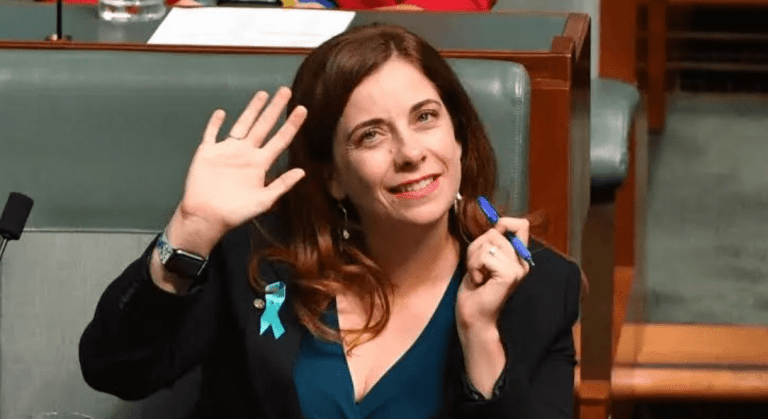
Communications Minister, Anika Wells
The debate comes against a backdrop of rising mobile prices in recent years. During the inflation surge between late 2021 and late 2024, Telstra lifted plan prices in line with the consumer price index, which peaked at 7.8 per cent. Although the company announced in mid-2024 that it would move away from inflation-linked increases as inflation eased to about 3.8 per cent, it later raised prices by more than CPI.
In August 2025, Telstra reported a 31 per cent jump in annual net profit to A$2.34 billion after a combination of price rises and cost-cutting measures. At the same time, the broader telco sector has faced intense scrutiny following major service failures and data breaches, including high-profile incidents at Optus.
In its submission, Telstra acknowledged calls for greater accountability from mobile network operators but argued that spectrum pricing was the wrong tool to achieve that goal. The company said licence fees should be based on fair market value in the interests of consumers, rather than used as a penalty for past industry shortcomings.