Stagnating New Smartphone Sales & Now Rising Costs Driving Pre Owned Market
 David Richards
02 Mar 2026
David Richards
02 Mar 2026
The Australian smartphone market is facing a seismic shift as a “perfect storm” of rising component costs and domestic economic pressure forces consumers to abandon new flagship models in favor of a rapidly expanding second-hand economy.
Market analysts and industry heavyweights, including IDC Research who are tipping a 12% price rise and and 6W Research, who are warning that the “incredibly resilient” demand for new devices is finally softening.
The primary culprit: a significant spike in the cost of memory, which is driving the retail price of new handsets to record highs.
The Death of the Annual Upgrade
The era of the frequent upgrade appears to be over. Last week, Samsung Australia signaled the new reality by slapping a $150 price hike on its base Galaxy S26 model. Competitors like Motorola are expected to follow suit.
Under pressure from high mortgage rates and a rising cost of living, Australians are now holding onto their devices longer than ever.
This trend is mirroring a shift already cemented in the United States, where pre-owned smartphones now command 12% of the total market.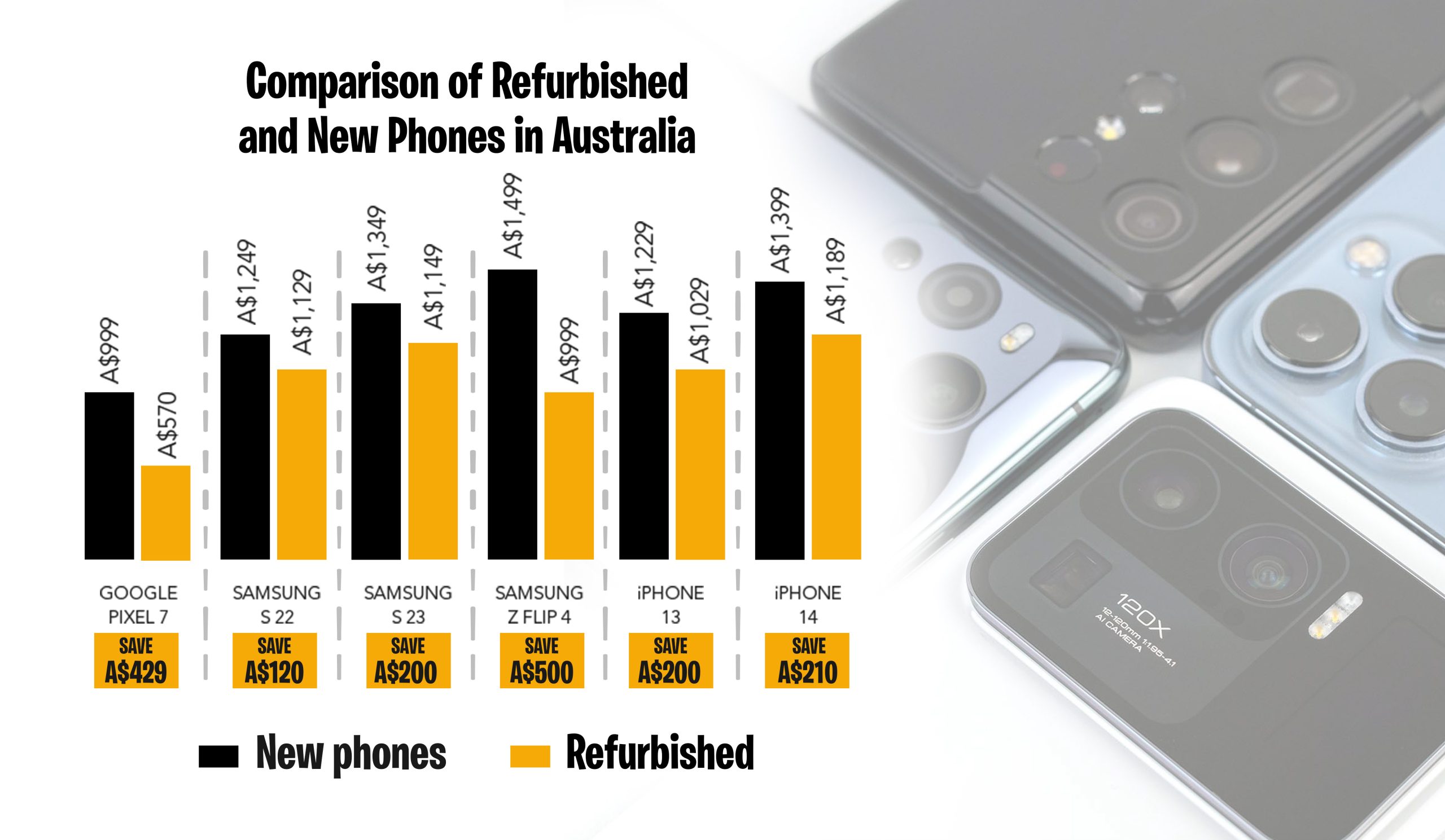
The Rise of the “Refurbished” Giant
As new sales stall, the refurbished segment is exploding, with a forecasted 9% compound annual growth rate (CAGR) through 2029. Major retailers and carriers are no longer sitting on the sidelines:
Retailers JB Hi-Fi, Kogan, and Harvey Norman have pivoted into the pre-owned space to capture budget-conscious shoppers.
Specialist Disruption: Players like Mobile Guru, Reebelo, and Back Market are gaining consumer trust by offering up to 24-month warranties—effectively neutralizing the “risk” of buying used.
The “CPO” Factor: Certified Pre-Owned (CPO) programs are gaining massive traction.
Data from some researchers reveals that 75% of consumers who currently own new phones would now consider a refurbished device for their next purchase especially if they can upgrade to a more advanced model than the one they currently own.
A Market Under Siege
Despite the boom, the secondary market is hitting its own supply-chain bottleneck. Data from B-Stock indicates that because users are keeping phones longer, the “trade-in” inventory is aging rapidly.
“Devices five generations old or older now account for 19% of the pre-owned supply—a 75% increase since 2022,” the report states, noting a record high in “lower-quality” inventory.
The Global Tug-of-War
Domestic resellers are now locked in a bidding war with international refurbishers. Approximately 80% of global pre-owned volume is being sucked into hubs like Dubai and Hong Kong, where cheaper labor and parts give international players a competitive edge.
Furthermore, industry observers have raised red flags regarding “grey market” stock being imported back into Australia. These overseas units often lack the correct software configurations for Australian networks, potentially leaving unsuspecting bargain hunters with connectivity issues.
The Bottom Line: As the “price sticker shock” for new technology intensifies, the Australian mobile landscape is being permanently redefined by a trade-in culture that prioritizes value over the “latest and greatest.”