Sony Wearable Cooler Gets Scientific Backing As Researchers Test Personal Cooling
 April Ossington
21 Aug 2026
April Ossington
21 Aug 2026
Sony’s wearable cooling technology has received some scientific support after new research found that directing airflow at the face and neck can deliver thermal comfort close to that of much larger desk fans.
Researchers at Concordia University compared wearable face and neck fans with conventional bladed and bladeless desktop fans in a controlled office environment set to 25 degrees Celsius.
The study used a 23-segment thermal manikin to measure skin temperature, heat loss and overall comfort. Researchers found that wearable devices could provide effective cooling despite targeting only a relatively small part of the body.
The face and neck represent about 5.5 per cent of the body’s surface area, but both regions are particularly sensitive to changes in temperature.
By concentrating airflow on these areas, wearable fans achieved whole-body comfort levels that were comparable with a bladeless desk fan or a conventional bladed fan operating at low speed.
A face-mounted fan increased heat loss from the face by as much as seven watts during testing.
Traditional desk fans still produced the strongest overall cooling effect, but the researchers found they also generated much greater airflow around the surrounding area. In shared offices, that can mean people sitting nearby are exposed to unwanted drafts.
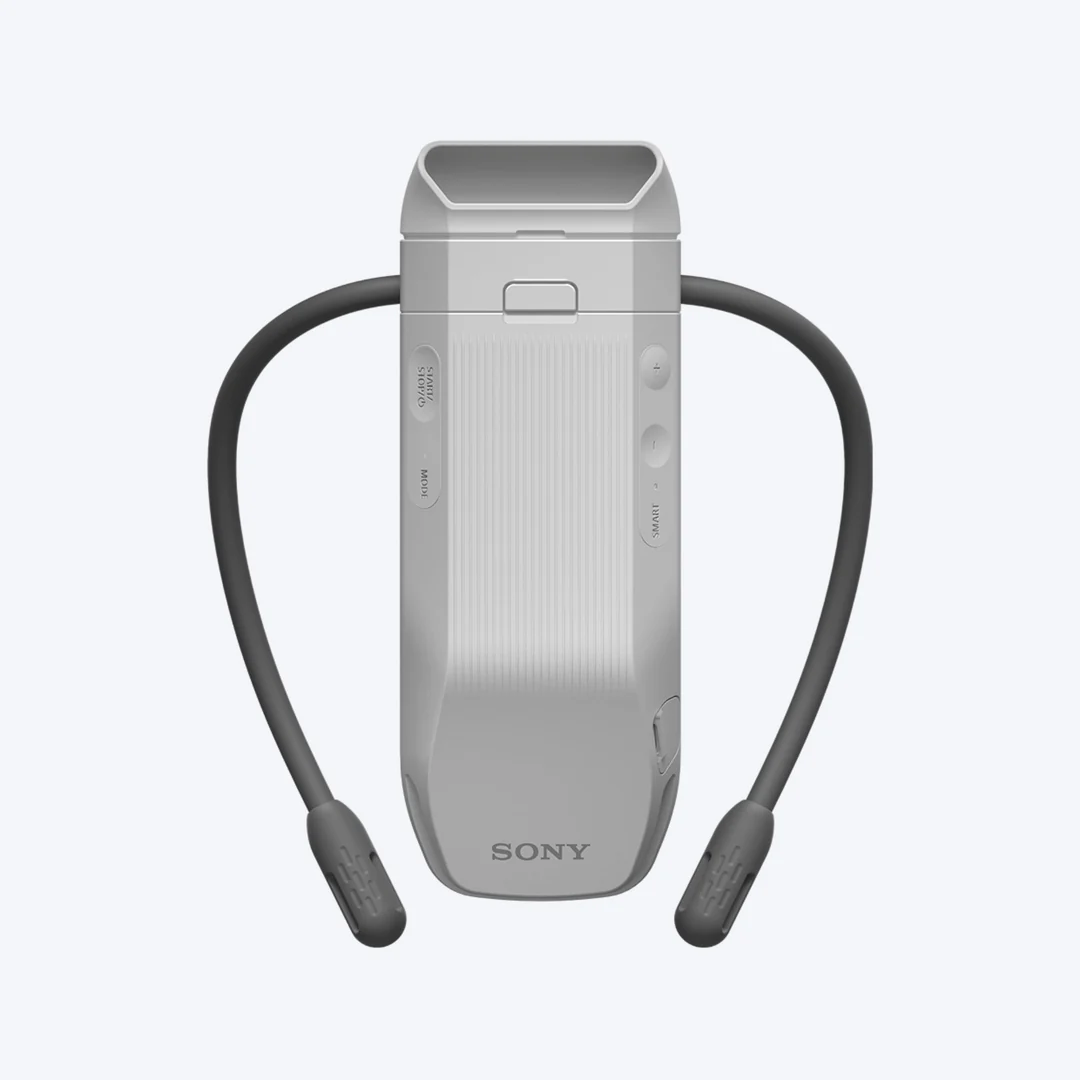
The results add weight to the concept behind Sony’s Reon Pocket Pro Plus, a wearable cooling device designed to sit against the back of the neck.
Rather than relying entirely on airflow, Sony’s device uses two thermoelectric modules to directly cool the wearer.
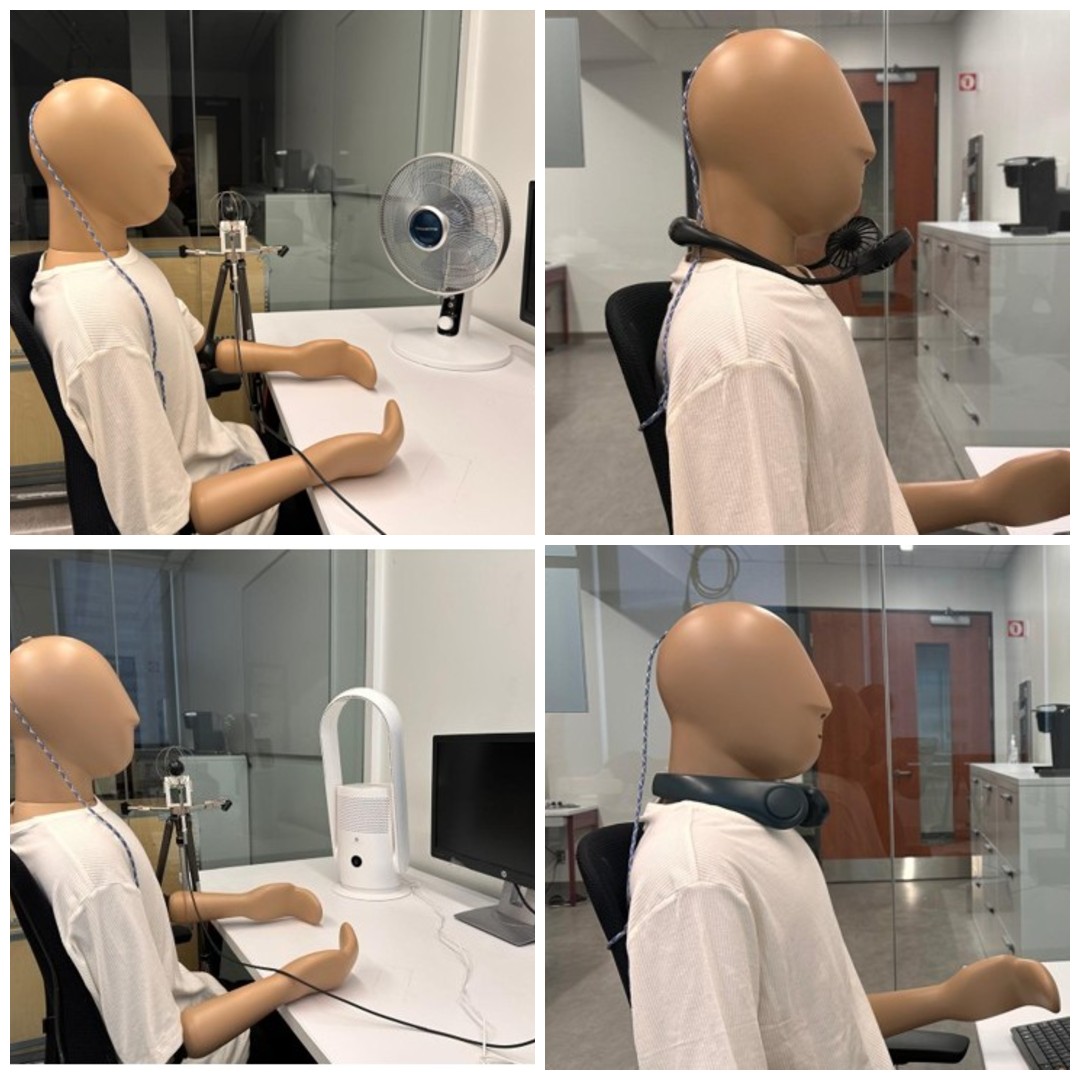
Tazia Rahman / Concordia University
Sony claims the latest Reon Pocket Pro Plus provides more than 20 per cent stronger cooling than its predecessor, with the cooling plate capable of reaching a surface temperature about two degrees Celsius lower under the company’s testing conditions.
The device also monitors surrounding conditions and automatically adjusts its cooling output. Sony rates its Smart Cool mode for up to 15 hours of battery life, although actual endurance varies depending on conditions and settings.
The Reon Pocket Pro Plus is priced at about A$381 based on current currency conversion from its £199 UK price, so it remains a relatively expensive alternative to a conventional desk fan.
Researchers argue that the potential value of targeted cooling could extend beyond individual comfort.
If employees can remain comfortable using personal cooling devices, workplaces may be able to reduce their reliance on central air-conditioning systems, particularly in hybrid offices where only a small number of employees are present at any one time.
That could allow buildings to use less energy instead of cooling large spaces uniformly for a limited number of occupants.
While wearable cooling devices are unlikely to replace full-size fans or air-conditioning in all situations, the study suggests that focusing cooling on temperature-sensitive areas of the body can produce meaningful results with less airflow and potentially lower energy use.
The research could also strengthen the case for products such as Sony’s Reon range as wearable climate-control technology moves from a niche gadget category towards a more practical personal cooling option.