Sony Loses Bid To Bury Smart TV Spying Case As Samsung Opt-Out Fails Under Test
 David Richards
05 Nov 2026

Sony’s attempt to keep a class action over the secret tracking of Bravia TV owners out of the public courts has collapsed, after a US federal judge ruled the company had effectively hidden its arbitration clause inside a warranty leaflet.
Senior US District Judge Marilyn Huff, has denied Sony Electronics’ bid to force the case into private arbitration, a move critics saw as an attempt to keep the details of how Sony tracked viewing habits and shared them with advertisers away from public scrutiny.
The case, In re Sony Electronics Litigation, will now proceed in open court.
The ruling lands as smart TV makers face mounting pressure worldwide over Automatic Content Recognition (ACR), the technology that fingerprints what is on screen.
This is the same technology being used on multiple TV’s from brands sold at the likes of Harvey Norman, JB Hi Fi, The Good Guys, Betta Stores and The Good Guys.
In other disturbing news a new US University study has found Samsung TVs continued sending ACR-style traffic to their servers even after owners switched tracking off.
What Sony Is Accused Of
The plaintiffs claim Sony embedded ACR technology in its smart TVs that captures audio and video, converts it into a digital fingerprint and shares it with third parties for targeted advertising.
They allege the technology also builds viewing profiles that can be linked across other connected devices, such as phones, and that Sony failed to meaningfully disclose any of this.
Sony has used ACR since at least 2017.
The complaint alleges invasion of privacy under the California Constitution, claiming Sony continuously monitored in-home viewing and collected information that could reveal political or religious beliefs, family composition, sexual orientation and health conditions.
The Hidden Arbitration Clause
Sony argued buyers were bound by a clause in the TVs’ limited warranty requiring disputes to go to arbitration rather than court.
Owners who did not opt out within 30 days of purchase were deemed to have accepted it simply by using the TV.
Judge Huff rejected that.
She found nothing on or outside the box alerted buyers to additional terms, the clause sat in a document titled “limited warranty”, and nothing in it warned consumers it contained binding terms accepted by using the TV.
“On these facts, a reasonable person receiving Sony’s Limited Warranty had no fair notice that he should read the document for binding terms and conditions before using his Sony Smart TV, or that an arbitration provision contained therein would extend beyond the scope of the warranty,” the judge wrote.
She noted the arbitration wording was bolded under its own heading, but so were other sections, and it was in the same small print as the rest of a dense one-page document.
Sony also sought to have all claims thrown out as out of time under the statute of limitations. Huff declined to dismiss on that basis at this stage, saying the argument was better suited to a summary judgment motion.
Sony is not the only brand under fire.
Four researchers from Northeastern University in Boston examined eight smart TV operating systems across 12 TVs from 10 brands, including Hisense, LG, Samsung, Sony and TCL, running 5,943 controlled experiments.
ACR works by repeatedly capturing what is on screen, including content from devices plugged in via HDMI such as game consoles, Blu-ray players and laptops, and matching it against a database to identify what is being watched.
The researchers found that on Samsung’s Tizen platform, traffic consistent with ACR continued in all 30 opted-out tests of Samsung’s own streaming service, in 41 of 60 antenna tests involving moving video and in 18 of 30 HDMI tests.
By contrast, opting out fully suppressed the identified ACR traffic on LG webOS, and Hisense’s platform.
The researchers warn ACR poses a particular privacy risk because it lets manufacturers and their partners learn otherwise private viewing habits and monetise them through targeted advertising and data sharing, yet little is publicly known about how deployed systems actually behave.
In Australia several brands and advertising agencies are buying the data netting millions of dollars for the TV brands.
Texas Takes On Five TV Giants
The Sony class action follows a broader legal assault in the US. In December 2025, Texas Attorney General Ken Paxton sued Sony, Samsung, LG, Hisense and TCL, alleging their TVs unlawfully collect personal data through ACR without proper notice or consent.
Texas alleges the software can capture an image of the screen every 500 milliseconds and track viewing in real time, including content from cable boxes and other HDMI-connected devices. Its petition against Sony claims some Bravia models integrate ACR through a third-party provider.
The suits against Hisense and TCL go further, claiming Chinese law could require the companies to hand Texans’ viewing data to the Chinese government.
Texas has already secured an early win requiring Hisense to switch off ACR for Texas residents.
The lawsuits also target how brands label the feature.
The Texas State Government argues the actions of TV Companies are obscure and what is actually happening is that set-up screens are designed to steer users into agreeing without them understanding that they are letting spying to take place without their knowledge.
Why It Matters
Smart TV makers increasingly rely on advertising and data revenue rather than hardware margins, making viewing data a valuable asset.
Global: Samsung is still clear number one, holding over 30% revenue share in Q1 2026, up 1.3 percentage points from a year earlier, more than double second-placed LG.
When measuring TV sets sold Samsung only has a 17% share of global TV shipments in Q1 2026, and TCL reached 14%, narrowing the gap from around 4 points in Q1 2025 to roughly 2.8 points.
In the premium market Samsung captured a 54.3% share of the segment priced above $3,500.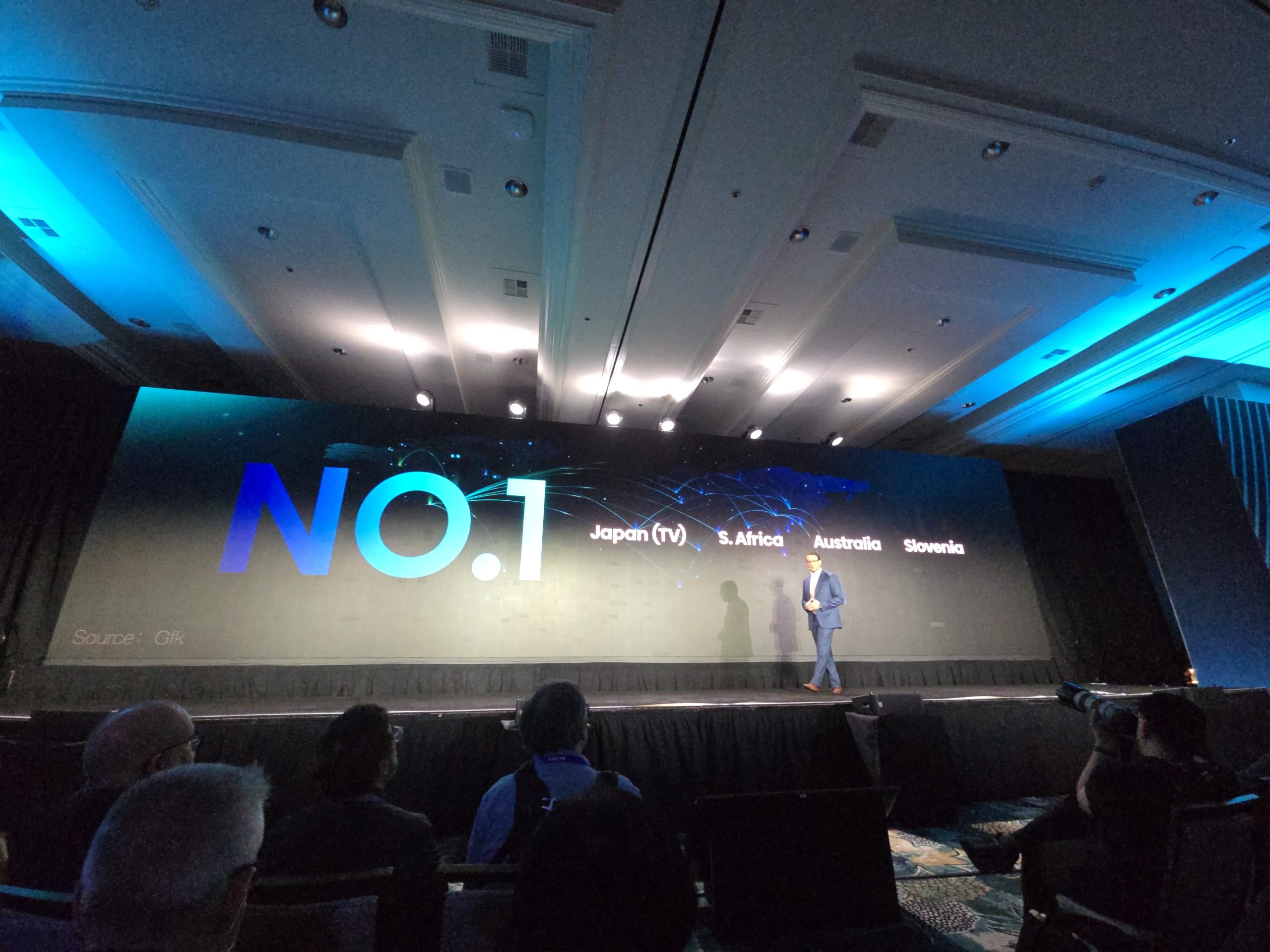
In Australia Samsung has around 29% share.
An earlier 2024 study by researchers from UCL, UC Davis and Universidad Carlos III de Madrid found ACR operated on Samsung and LG TVs even when they were used purely as an external display via HDMI.
The Australian Angle
The same brands dominate the Australian market, and Samsung Australia states that where users consent it can collect viewing history including channels, programs and time spent watching.
Most TVs sold in Australia allow owners to opt out of ACR during set-up or later in settings though most TV owners are not aware of how to opted out claim observers.
Researchers claim that data can be collected twice, once by the streaming apps and again by the TV itself.
Australia’s new smart device cyber security rules, in force since March 2026, focus on device security rather than consent to data collection, leaving ACR largely a matter for the Privacy Act and the OAIC.
How To Switch It Off
ACR settings are typically buried in privacy or terms menus under names such as Viewing Information Services (Samsung), Live Plus (LG), or Smart TV Experience or similar.
Owners should check these during set-up rather than accepting all agreements.
The only certain way to stop ACR traffic is to keep the TV offline and use an external streaming device that is deemed secure with Fire Sticks seen as a risk.