Smart Rings And AI Glasses Drive New Phase Of Wearables Growth
 April Ossington
The global wearables sector is expected to continue expanding over the next year, although industry momentum is increasingly shifting away from traditional fitness trackers and towards more specialised AI-driven devices.
New forecasts from Futuresource Consulting predict worldwide wearable shipments will reach 229 million units in 2026, representing annual growth of 5.1 per cent. Total retail value is expected to climb even faster, rising 6 per cent to approximately A$87 billion.
While smartwatches remain the dominant category, analysts say the structure of the market is beginning to change as consumers seek devices with more advanced health tracking, stronger AI integration and closer links to broader technology ecosystems.
Futuresource market analyst Kavish Patel said the sector is evolving into several distinct segments rather than relying almost entirely on smartwatch demand as it did in previous years.
Smartwatch shipments reached 93.2 million units during 2025 and are still forecast to grow steadily, supported by strong demand in North America and Europe alongside increasing adoption across China and Latin America.
However, newer wearable categories are starting to attract greater attention from both manufacturers and consumers.
Smart glasses in particular are emerging as one of the fastest-growing segments. Shipments reached 6.1 million units in 2025, with Futuresource expecting rapid expansion through the remainder of the decade as improvements in AI processing, voice controls and miniaturised hardware continue to improve usability.
Smart rings are also gaining momentum. The category reached 4.1 million shipments last year, fuelled by growing interest in discreet health monitoring devices focused on sleep tracking, stress management and women’s health applications.
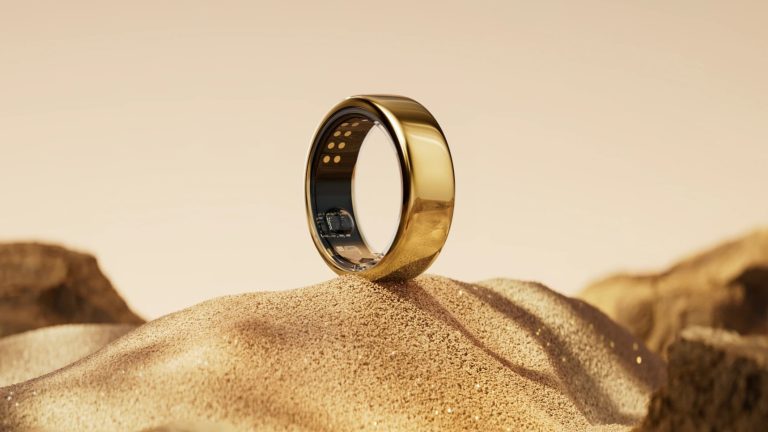
Samsung Galaxy ring
Patel said the popularity of smart rings and glasses reflects changing consumer preferences towards technology that feels less intrusive while still offering meaningful functionality throughout the day.
The report suggests the broader wearables market is increasingly being shaped by connected ecosystems rather than standalone products. Watches, rings, glasses and smartphones are becoming more tightly integrated, allowing companies to build larger networks of services, data and AI-powered experiences around users.
Advances in on-device artificial intelligence, sensor technology and next-generation chipsets are also giving wearables more autonomy and expanding the range of tasks they can perform independently from smartphones.
For manufacturers, competition is shifting beyond hardware specifications alone towards creating seamless digital ecosystems that combine multiple devices and services together.
Not every category is benefiting equally from the shift. Futuresource expects activity tracker shipments to continue declining sharply, forecasting an 8.9 per cent drop in volume compound annual growth rate through to 2030.
The decline highlights growing pressure on lower-cost wearable devices that lack advanced features or deeper ecosystem integration. Consumers are increasingly gravitating towards products capable of delivering more comprehensive health insights, AI-driven functionality and stronger connectivity with other devices.
Patel said the wearables market is becoming far more selective as buyers place greater emphasis on devices that can justify their long-term role in everyday life rather than serving as simple accessory products.
Futuresource Consulting, which has tracked technology and media industries for more than three decades, said the next phase of wearables growth will likely be driven less by raw shipment volumes and more by the ability of companies to create connected experiences spanning multiple devices and platforms.