Samsung Shares Fall Despite Record A$114 Billion Quarterly Profit
 April Ossington
30 Oct 2026
Samsung Electronics shares fell more than 4 per cent despite the technology giant delivering record third-quarter revenue and operating profit, as investors appeared unimpressed by another blockbuster result driven heavily by artificial intelligence demand.
The South Korean company reported consolidated revenue of KRW 195.3 trillion, equivalent to around A$206.4 billion, for the three months to September 30, while operating profit reached KRW 107.4 trillion, or approximately A$113.5 billion.
Revenue climbed around 14 per cent from the previous quarter, while operating profit increased about 20 per cent. Compared with the same period a year earlier, sales jumped more than 126 per cent and operating profit surged approximately 783 per cent.
The result made Samsung the first global technology company to exceed KRW 100 trillion in quarterly operating profit, while also marking its fourth consecutive quarter of record revenue and profit.
Despite those numbers, Samsung shares finished Thursday 4.13 per cent lower after falling as much as 5 per cent earlier in the session.
The performance was overwhelmingly driven by Samsung’s semiconductor operation, which continues to benefit from soaring demand for memory used in artificial intelligence infrastructure.
Its Device Solutions division generated KRW 147.1 trillion, or about A$155.5 billion, in quarterly revenue and KRW 106.5 trillion, equivalent to roughly A$112.6 billion, in operating profit.
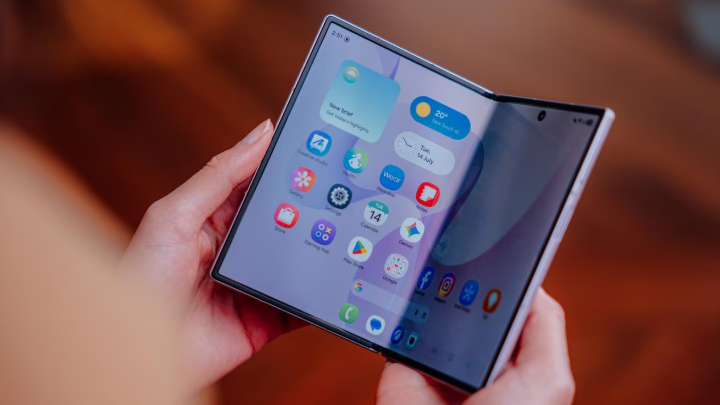
Samsung said its memory business achieved record quarterly revenue and operating profit as sales of HBM4 high-bandwidth memory increased and server demand remained strong.
The company expects investment in AI infrastructure to continue accelerating into 2027, potentially placing further pressure on global memory supply. Samsung plans to increase shipments of high-bandwidth memory alongside server and data storage products as customers expand AI computing capacity.
Samsung also announced a KRW 30 trillion quarterly cash dividend, worth approximately A$31.7 billion, equivalent to around A$4.86 per common and preferred share based on recent exchange rates.
Its board is also expected to determine additional shareholder returns as part of a broader capital return strategy.
The record earnings come as Samsung increases investment across the AI infrastructure sector.
Samsung Electronics and five affiliated companies announced a combined US$1 billion investment in KKR-backed Helix Digital Infrastructure in September, equivalent to roughly A$1.42 billion. Samsung Electronics itself committed US$500 million, or about A$710 million, with the balance coming from other Samsung companies.
Samsung has also entered a strategic partnership with French artificial intelligence company Mistral AI, with plans to apply AI technologies across semiconductor design and manufacturing. Samsung led Mistral AI’s Series D funding round and secured a strategic equity stake in the company.
The results underline how central memory chips have become to Samsung’s earnings as demand from AI data centres continues to rise. However, the share price reaction suggests investors are becoming increasingly demanding, with record profits no longer enough on their own to drive enthusiasm for companies benefiting from the AI boom.