Samsung Faces Safety Questions After Galaxy S25 FE Explosion Claims
 Joe Gallop
28 May 2026
Joe Gallop
28 May 2026
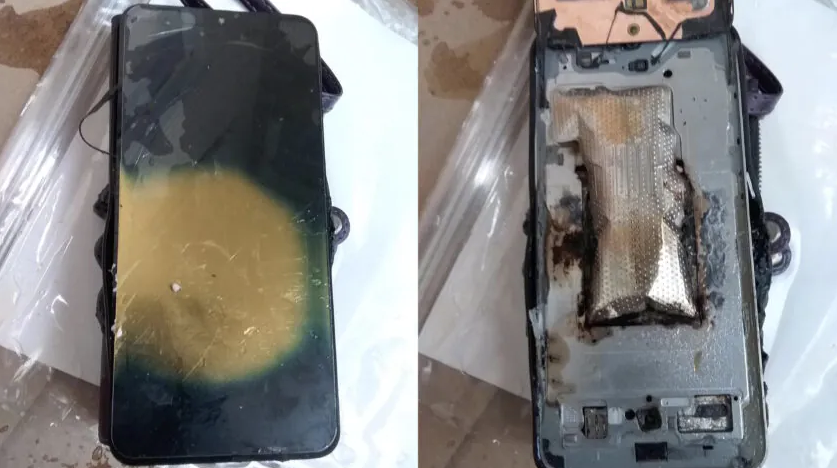
Samsung is facing scrutiny after multiple reports emerged online of Galaxy S-series smartphones allegedly catching fire or exploding while charging, including a dramatic overnight incident involving a Galaxy S25 FE.
A Reddit user (below) claimed her Galaxy S25 FE exploded while charging beside her bed as she slept next to her eight-year-old son.
The user described waking to “fireworks-like” popping sounds, with fragments of plastic and metal reportedly flying across the room. Firefighters were called to contain the smoke, while the owner suffered minor burns and singed hair.
My Samsung S25 FE Exploded behind my head during charging while my 8 year old son and I were sleeping!
byu/idgaf88__ insamsunggalaxy
The device was reportedly charging on a mattress using Samsung’s original USB cable connected to a third-party 20W USB-C charger. The phone was also inside a thick leather wallet case containing coins – factors that experts say may have trapped heat and contributed to a potential thermal runaway event involving the lithium-ion battery.
The incident marks at least the third widely reported Galaxy S-series battery fire this year, following separate claims involving a Galaxy S25 Plus and a Galaxy S24.
In an earlier US case, local fire investigators reportedly classified the incident as thermal runaway, although Samsung attributed the damage to “external force”.

Samsung has not issued a public statement regarding the latest alleged S25 FE incident. The user said she received a support ticket number but had not heard back from the company at the time of posting.
While the number of reported incidents remains extremely small compared to the millions of Galaxy devices sold globally, the reports hark back to Samsung’s 2016 Galaxy Note 7 battery crisis, which led to a global recall and permanent discontinuation of the device.
Safety experts continue to advise consumers against charging smartphones on soft surfaces such as beds or couches, where heat can build up more easily.
Users are also encouraged to avoid low-quality charging accessories and bulky cases that may restrict heat dissipation during charging.