REVIEW: Has Samsung New 82 Inch OLED TV Got What It Takes In The Premium TV Battle
 David Richards
09 Apr 2025
David Richards
09 Apr 2025

What defines a premium TV? It’s a category where Samsung has held court for the past 20 years, having carved out a strong position in a battle against Japanese brands such as Sony, Pioneer, and the likes of Sharp – whose TVs were once deemed the best.
This week I got to review Samsung’s new 83” OLED S95F TV which at $11,499 or $9,281 for the 77” model by default puts it up there in the premium market when it comes to price.
But the big question is whether it stacks up when it comes to premium functionality, display and overall performance.
As for the premium TV market five brands are competing in this space, LG, Sony, Loewe, TCL and Hisense, three of those brands source their display from LG Display for the simple reason that OLED technology is expensive to produce and the fact that a TV has an LG panel does not mean that LG has a better TV, in the same way it does not mean that Apple is necessarily a better smartphone because it has a Samsung OLED display.
The final judgement is going to come down to display, processing capability, artificial intelligence and functionality. 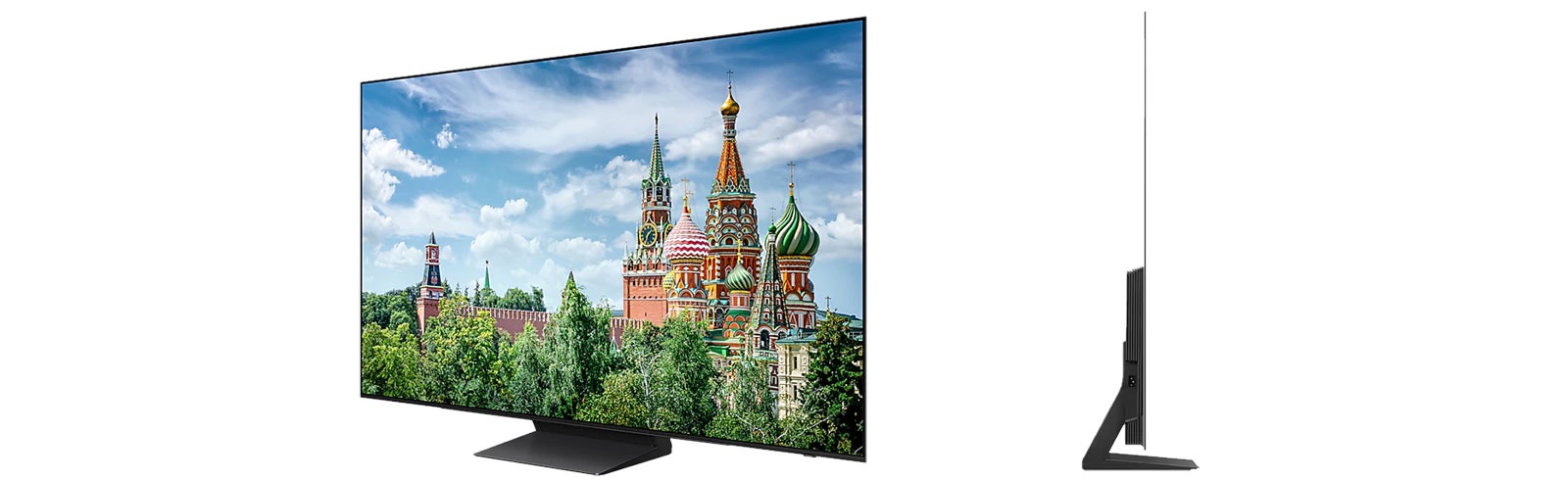
While LG and Samsung are battling it out in the OLED market, TCL and Hisense are investing in other display technology including mini-LED.
Hisense claims that 2025 ULED TV range include “advanced” Quantum Dot colour technology, improved local dimming systems, deeper and more natural black tones, richer colours and more brightness.
In Australia the company is sticking with their house brand developed engine that is known as Hi-View Engine X, they will also launch Mini LED Backlighting technology with a battle emerging as to whose display technology is best.
So where does that leave Samsung?
I have just spent several hours reviewing the S95F TV.
And if you do end up buying this TV, I strongly suggest that you get the distance between where you sit and where the TV is right because there is a difference.
When I first saw this TV, I was sitting on a settee with the distance set by Samsung product management.
Later when I moved to a position further away from the screen the dynamics changed, the pictured looked better, was more balanced and I actually was impressed by two key factors.
They included the exceptional image detail and how the hidden AI upscaling, was kicking in particularly with documentaries where quick animal movement or a soccer ball being kicked was enhanced by the combination of the new Samsung NQ4 AI Gen3 Processor and their own AI technology which is the same technology powering their Galaxy S25 Ultra smartphone, as well as Samsung tablets and PC’s.
During my briefing the Samsung executive became tongue tied when I dared to mention that their new TV was using a top end LG Display panel
.
But so, what? The top end Apple smartphones have a Samsung OLED panel and that’s not stopped consumers buying an Apple phone.
LG is a component trade who will sell an OLED LG panel to anyone who wants to buy one, the real issue is what happens when you combine, Samsung’s AI technology that LG does not have or the Samsung processor which LG also doesn’t have with the LG panel.
The answer is a big difference.
Because of the use of the new Samsung processor AI and their brightness control software, Samsung has been able to integrate into their 2025 TV range brand new technology that is able to deliver 30 per cent brighter display than last year’s model, and while 8K has been eliminated from their OLED lineup the quality of their 82” OLED TV is significantly superior to what we have ever seen from a Samsung or LG TV in the past.
Personally, I am against LG’s warranty policies that has resulted in their TVs now being used to scape confidential content viewing data, often unbeknown to an owner.
LG then sells this confidential data to third parties who want to know how an LG TV owner will vote based on their viewing preferences, or what they are most likely to buy with ads then sent to the TV by LG even before you open a streaming app.
After reviewing several modes in the new Samsung OLED TV, it was filmmaker mode that delivered the best movie experience which was enhanced using Samsung’s new $2K HW Q Series soundbar.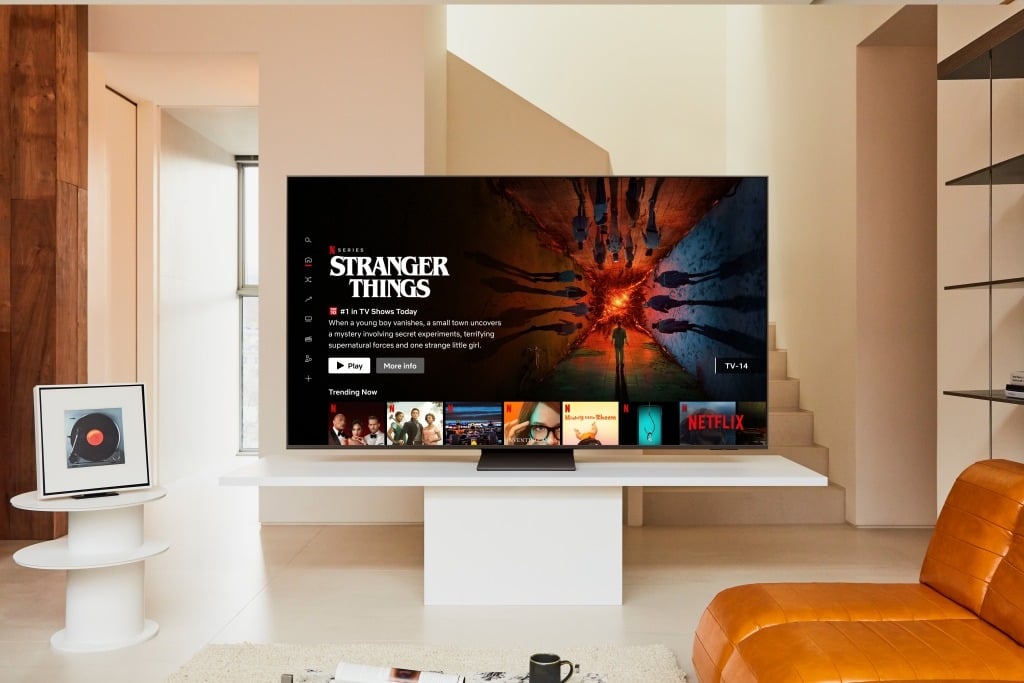
What I did notice was that their new AI technology which thankfully sits in the background and does not need human intervention was also able to enhance the audio experience.
As for the display which most TVs are judged by, one of the impressive new features is the introduction of an anti-glare layer on top of the panel which when combined with the increased brightness, delivers a distinct difference and a superiority not seen before in a TV.
What I was not able to test was how the TV responded in a bright room. I am told that the AI built into the TV is able to adjust the display to obtain an optimum picture based on the light in a room.
My personal preference was filmmaker mode but for those who want something different, you can also switch to standard, dynamic or AI mode with all modes delivering an excellent entertainment experience.
Design
If cosmetics and looks are your thing you are not going to be let down because the 83-inch model is wafer thin at 12.6mm thick while the 77-inch is just 11.2mm thick.
This is achieved by putting the guts of the TV into a separate housing that sits on the back of the TV out of site. or if you want in a separate cabinet.
Also contributing to the designer look is the elimination of backlighting which in a nutshell is because OLED pixels are self-illuminating so there is no need to build in extra depth to the panel.
For gamers this TV operates at 165Hz with a variable refresh from 144Hz.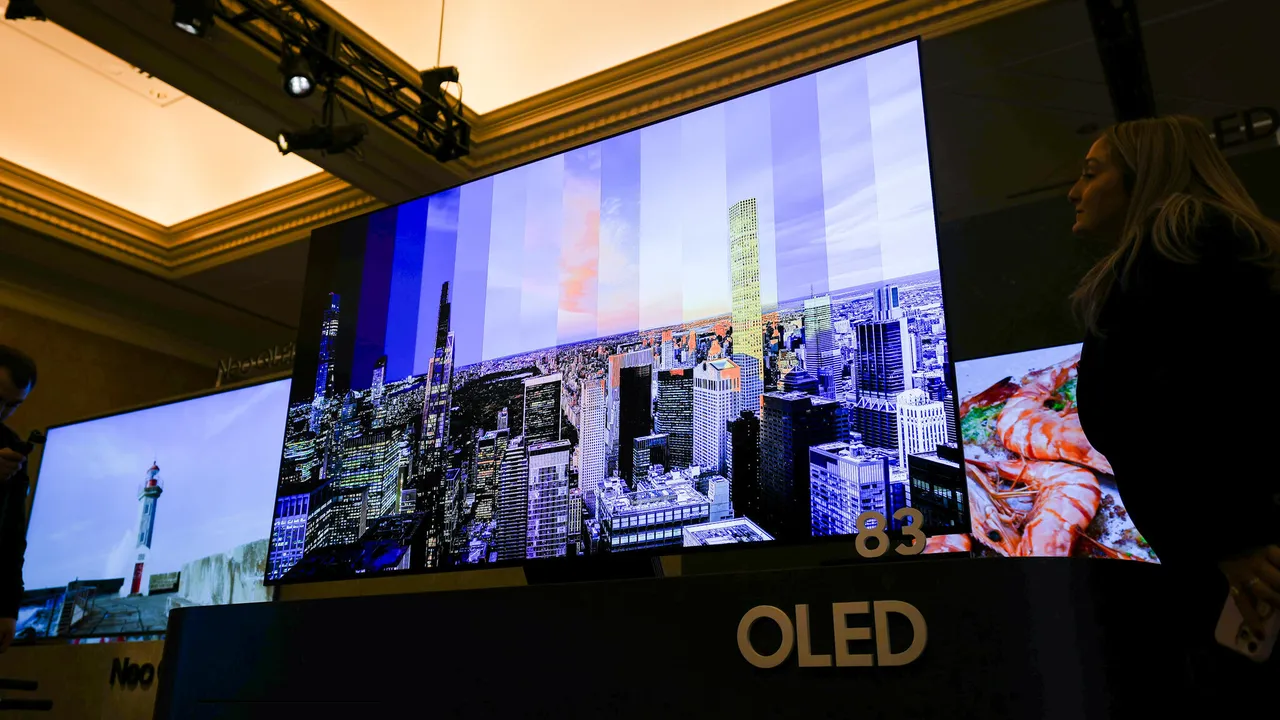
And because most gamers are streaming content the TV comes with HDMI 2.1 connectors which does make a difference from past models.
As for AI its able to set auto game mode for an optimal gaming experience.
And AI also kicks in here with Auto Game Mode which can detect the sort of game you’re playing and optimise the settings to improve its performance.
Where this TV has a problem is when you start trying to navigate the UI.
In the past Samsung had an easy-to-use navigation system, main apps were right in front of you, and you could manage the sequence of the apps.
If you wanted additional apps, you simply scrolled along to the app’s downloads area.
Now all that interface has been re-engineered and this time it’s potluck as to where something is located with users having to scroll up to an information bar, then scroll along to find ‘Apps’.
Conclusion
At the end of the day this TV is a superbly engineered TV, and worthy of being branded premium. There is no doubt that when it comes to AI Samsung is ahead especially when it comes to integration across multiple products, smartphones, appliances, TVs, tablet and computers.
The engine driving this TV is managing a multitude of capabilities and has been upgraded to handle both AI and new display technology such as the delivery of 30% better brightness. Unlike LG TVs, the Samsung colours look real, realistic and bright as opposed to being over cooked or a tad too fluorescent, as what was happening with last year’s TVs from Hisense and TCL. This is most likely because they are using different engines and LED technology.
2025 could be totally different with the battle set to be whether you buy an OLED or mini-LED TV or a Quantum Dot TV.
Where this Samsung TV still needs more work is when it comes to navigation. I am a firm believer that if something is not broken there is no need to make a change, and Samsung has fiddled with their menus and layout.
All up this TV is seriously premium with Samsung’s engineering and years of knowledge gleaned from decades manufacturing TV’s showing through, what they have to do is simply convince consumers is that they are still the top brand in the premium TV market.
Rating 9.5/10
Pros
-
Excellent AI upscaling and processing
-
30% brighter display with anti-glare layer
-
Superb cinematic performance in Filmmaker Mode
-
Gamer-friendly: 165Hz, HDMI 2.1, auto game mode
-
Sleek, ultra-thin premium design
Cons
-
Clunky, less intuitive UI
-
High price point
-
Bright room performance untested