Retail Sector Faces Deeper Slump As RBA Keeps Pressure On Consumers
 Dominic Bayley
29 Sep 2026
Dominic Bayley
29 Sep 2026
Australian retailers are facing an increasingly difficult outlook as higher interest rates, falling house prices and weakening household spending pile pressure on a sector already suffering steep sharemarket losses.
According to a report in the AFR, the S&P/ASX 200 consumer discretionary index has fallen 23.2 per cent over the past year, making it one of the worst-performing sectors on the Australian market. Only technology has performed worse, declining 45.3 per cent over the same period.
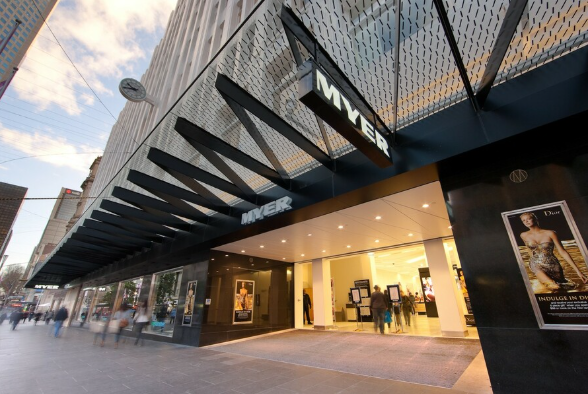
Investors received further evidence of the retail slowdown this week as Myer, Premier Investments and KMD Brands delivered disappointing trading updates.
And conditions could deteriorate further.
Financial markets are pricing in a near-certain Reserve Bank of Australia rate increase to 4.6 per cent at its next policy meeting, with another rise expected early next year. Markets also see a meaningful possibility of a third increase by the middle of next year, which would push the cash rate above 5 per cent for the first time since 2008.
Regal Partners investment director Charlie Aitken told the AFR investors should resist the temptation to buy retail stocks simply because their share prices have fallen sharply.
“Don’t be a hero,” Aitken warned.
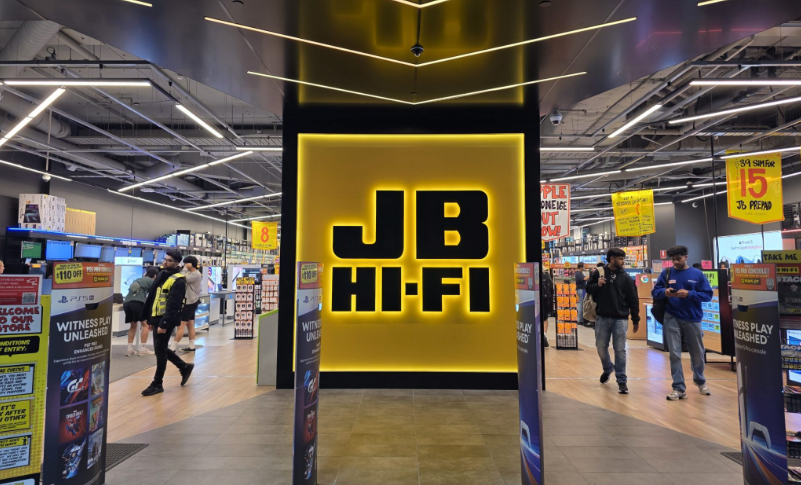
JB Hi-Fi, often regarded as one of the strongest operators in Australian retail, has lost 43.4 per cent of its market value over the past 12 months. Myer has fallen almost 60 per cent, while four-wheel-drive accessories company ARB is down 53.2 per cent.
Households in Australia’s mortgage-heavy suburbs are likely to come under increasing pressure as borrowing costs rise. That could encourage consumers to trade down to cheaper products, cut discretionary purchases and choose domestic holidays over overseas travel.
Falling property prices are adding another challenge. National home values have declined 4.5 per cent from their April peak, according to Cotality, potentially creating a negative wealth effect as homeowners become more cautious about spending.
Analysts are also watching unemployment closely. The jobless rate climbed to 4.6 per cent in August, its highest level since 2021, after sitting at 4.5 per cent in July.
Conditions could become considerably worse for retailers if unemployment reaches 5 per cent and businesses begin shedding workers more aggressively.
Online retailers and travel businesses such as Kogan, Temple & Webster and Flight Centre are particularly exposed, with the possibility that artificial intelligence could disrupt their existing business models.
The pressure on retailers is already showing up in industry earnings. Australian Bureau of Statistics data showed retail industry gross profits declined 5.2 per cent in the June quarter, the largest quarterly fall since March 2024.
In the ABS’s June business survey, 31 per cent of retail businesses said revenue had declined during the previous four weeks, while 26 per cent expected revenue to fall over the following four weeks.
September brought further signs of stress.
Cue Clothing Company entered administration, while David Jones has faced complaints from suppliers over late payments. KMD Brands, which owns Kathmandu and Rip Curl, said it would consider takeover proposals after reporting a full-year loss exceeding $300 million.
Myer also reported an annual loss of almost $300 million, accompanied by weak sales early in the new financial year.
Premier Investments, meanwhile, said profit had more than halved. The company has been affected by declining sales as well as structural changes following the sale of five fashion brands to Myer and the closure of Peter Alexander stores in the UK.
Speaking to the AFR, centennial Asset Management’s Matthew Kidman said one of the most concerning developments was the deterioration in sales even among retailers that had previously performed strongly.
“What has been really noticeable is that even the really good operators have seen sales growth tail away in the opening weeks of the new financial year,” he said.
Kidman said inflation had already eroded household purchasing power, while tighter monetary policy was now creating another major obstacle.
He expects retail earnings to remain under pressure for at least another year and potentially two, saying there is still little indication that the sector has reached a bottom.
Kidman would consider returning to retail stocks once the outlook for RBA interest rates becomes clearer and there are signs that the housing downturn has stabilised. JB Hi-Fi and Universal Store would be among the companies he would consider at that point.
The housing slowdown could create particular difficulties for retailers exposed to furniture and household spending.
Property developer Mirvac has warned that new housing supply could “fall off a cliff” within six months as higher construction costs, rising rates and weaker buyer demand make developments increasingly difficult.
Other professional investors are similarly cautious.
Solaris Investment Management portfolio manager Andrew McLennan recently closed a short position in JB Hi-Fi but remains sceptical that a broader recovery in consumer spending is imminent.
McLennan pointed to a combination of higher interest rates, declining property values, conflict in the Middle East and turmoil in global bond markets as reasons for caution.
Bond yields have risen sharply, reinforcing expectations that inflation and borrowing costs could remain elevated for longer. Australian 10-year government bond yields have climbed to around 5.4 per cent, while US long-term yields have reached levels not seen in roughly two decades.
“Retail is not a good area to be investing for us at the moment,” McLennan, told the AFR.
Some fund managers are instead looking toward businesses less dependent on Australian discretionary spending.
With interest rates potentially heading above 5 per cent, unemployment edging higher and the housing market weakening, investors are increasingly waiting for clearer signs that the pressure on Australian households has peaked before betting on a recovery in retail.