OZ Airports Expansions For WHSmith Amid Global Store Closures
 Joe Gallop
04 Mar 2025
Joe Gallop
04 Mar 2025

WHSmith, a familiar name in Australian airports, rail stations and universities, is doubling down on its travel retail business as it continues shutting down high street stores overseas.
While its UK operations face major cutbacks, the company remains focused on expanding in international markets, including Australia.
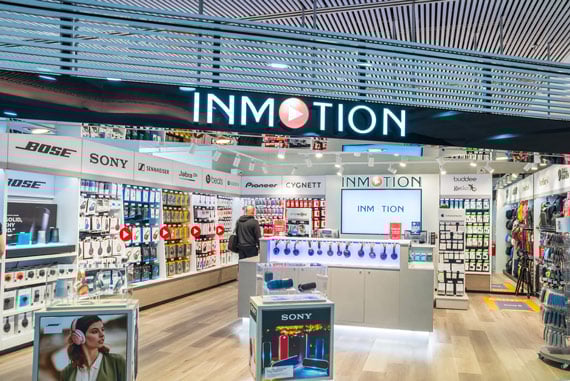
With over 60 stores across the country, WHSmith has been expanding its presence in key travel hubs, with a growing focus on consumer technology. Late last year, it launched a new store at Gold Coast Airport, integrating tech retail into its offering. The store features a dedicated section for consumer electronics, including smartphones and a range of gadgets, aligning with WHSmith’s ownership of InMotion – a specialist tech retailer that carries brands like Bose, Sony, JBL and Logitech.
WHSmith has been aggressively closing its high street stores elsewhere. In 2024 alone, the company permanently shut down 13,479 stores globally, a 28% increase from the previous year. Its latest restructuring plan includes closing an additional 17 stores in the UK by May, reflecting its shift toward more profitable travel retail locations.
The retailer has also embraced in-store advertising, following a rollout in its U.S. stores, where it launched the “first travel-focused, in-store” Retail Media Network (RMN). With in-store digital displays reaching millions of travellers, this could be a model the company eventually introduces to its Australian operations.
As part of its shift towards travel retail, WHSmith is preparing to sell off its UK high street division, potentially losing its iconic brand name in the process. The company, which has been trading on British high streets since 1792, is in talks to sell its 500-store high street arm, reportedly without the rights to the WHSmith brand name.
According to The Times, CEO Carl Cowling believes it is “not practical” for two separately owned businesses to trade under the same name. The sale, managed by bankers at Greenhill, has attracted interest from investment firms Alteri and Modella Capital. Prospective buyers will likely have to rebrand the stores within a set timeframe, making it increasingly unlikely that the WHSmith name will survive on UK high streets.
WHSmith is now prioritising growth in airports, rail stations and international markets. Over half of WHSmith’s UK stores are already located in travel hubs, and its expansion in Australia signals a clear strategic direction.
For now, WHSmith’s Australian stores remain unaffected by the global closures, with the brand continuing to thrive in high-traffic travel locations.