Notebook War Breaks Out As Google Takes On Windows OS & Dodgy MS 365
 David Richards
13 May 2026
David Richards
13 May 2026
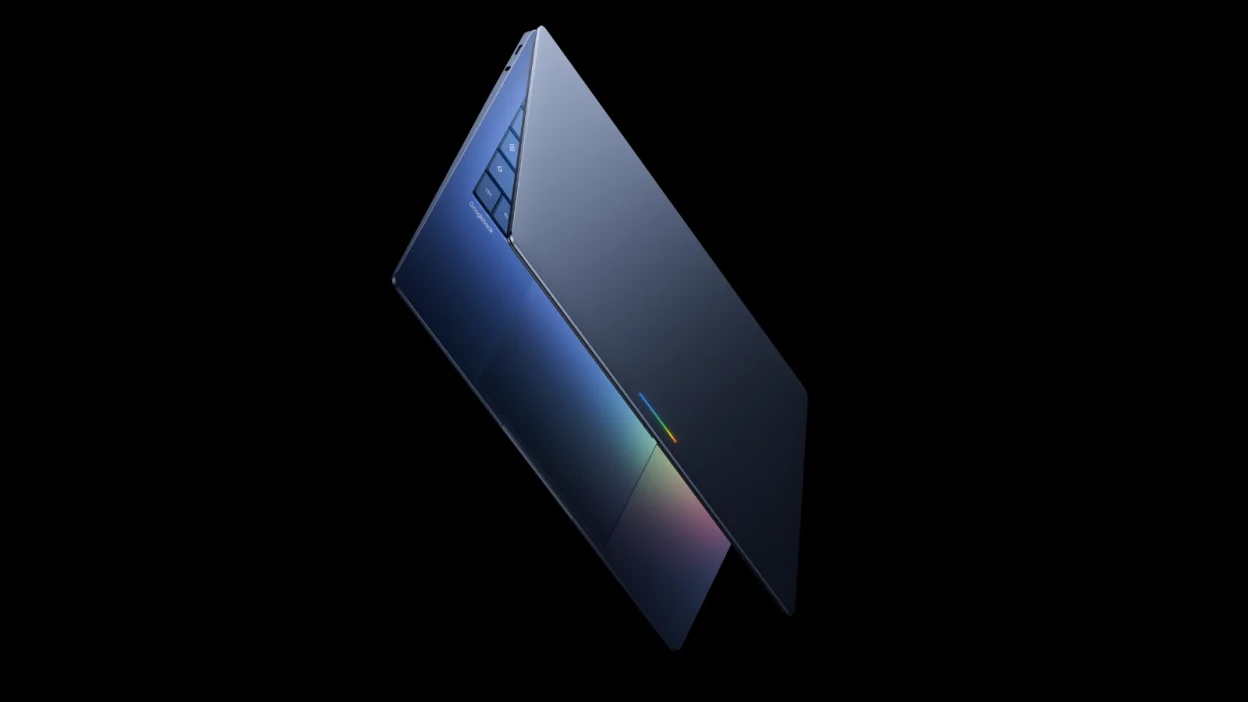
CE retailers could emerge as the big winners in a high end notebook war now breaking out between Microsoft and Google, as consumers fed up with Windows problems and unreliable MS365 software look for an alternative premium operating system in the form of a new generation of Googlebook notebooks.
Major PC brands including Lenovo, Dell, HP, Asus and Acer are already backing Google’s aggressive push into the premium notebook market, with the company overnight unveiling a powerful new notebook platform built around Android and its advanced Gemini AI technology.
The move signals the biggest direct assault yet on Microsoft’s dominance of the notebook market, with Google positioning its new Googlebook devices as smarter, faster and more intuitive alternatives to Windows notebooks.
Retailers including JB Hi Fi, The Good Guys and Harvey Norman are expected to heavily promote the new devices when they land in Australia later this year.
The launch comes at a critical time for the notebook market, where sales have slowed amid rising component and memory prices.
Analysts claim the heart of the new offering is a vastly improved Android operating system combined with AI driven functionality designed specifically for premium notebooks.
Google finally pulled the trigger overnight on the long rumoured merger between Android and ChromeOS, a move that has been speculated about for years.
Consumers are now being told to forget Chromebooks. The new premium category is being branded Googlebook.
Unlike traditional browser focused Chromebooks, Googlebook is being pitched as the world’s first “Intelligence System” notebook, purpose built around Gemini AI.
The new platform runs what Google describes internally as a “modern OS”, codenamed Project Aluminum, replacing key parts of the ChromeOS foundation with Android based technology.
Among the standout features is a new Magic Pointer capability where moving the cursor across content automatically activates Gemini assistance. Users can drag a photo of a couch into an image of their living room and instantly visualise how it would look.
Google also claims users will be able to create custom widgets simply by typing prompts into Gemini.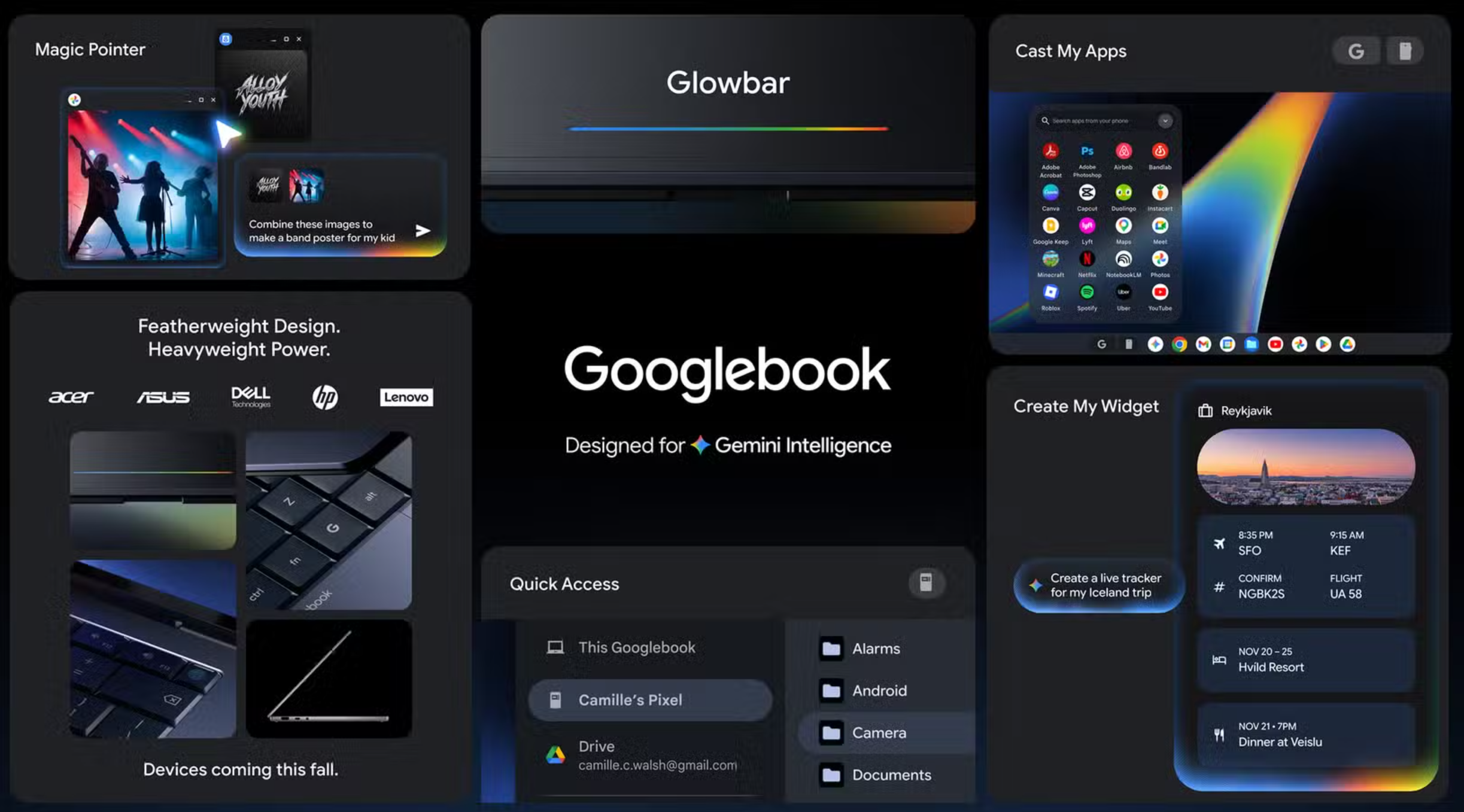
Hardware manufacturers are expected to differentiate devices with premium industrial designs, including new “glowbar” lighting effects built into notebook lids.
The first wave of Googlebook devices from Acer, Asus, Dell, HP and Lenovo is expected later this year.
At the same time, Android 17 is set to bring a notebook style experience to smartphones, allowing users to connect phones to monitors and access a full desktop style interface complete with multi tasking windows, taskbars and window snapping.
Google is also heavily focused on security, with a major overhaul that includes “Live Threat Detection”, an AI powered system designed to identify banking scams, suspicious applications and unauthorised SMS forwarding in real time.
A new biometric app lock system will also allow users to completely hide folders and applications from the rest of the operating system.
Google executives are positioning the new notebooks as the next evolution of ChromeOS and Android convergence.
Chromebooks have been popular for years in education and among consumers with basic web browsing needs, but Googlebook devices are designed to deliver dramatically better performance, premium hardware and a more advanced experience than both Chromebooks and traditional Windows notebooks.
The first Googlebook notebooks are expected to hit the Australian market in the final quarter of this year.
Google’s move also comes as Apple gains traction with lower priced notebook offerings such as the MacBook Neo, which recently helped drive a six per cent increase in Mac sales.
Google says more details will be revealed later this year as manufacturing partners formally unveil their products.
“There is an opportunity to bring more innovation back to laptops, especially at the higher end,” said Sameer Samat, the Google executive overseeing the Android ecosystem.
Samat declined to reveal whether Google itself plans to release a branded Googlebook device similar to Microsoft’s Surface range, notebooks that have recently come under fire from consumers over quality concerns.
Google executives believe AI integration will fundamentally change the way consumers use notebooks.
“Google has a chance to build AI into the laptop in a different way that no one else has really hit on,” Samat said.
Among the key innovations is Magic Pointer, a context aware system that automatically detects when Gemini assistance could improve workflow or productivity.
Hovering over a message could trigger suggested replies, while hovering over a meeting invitation may instantly provide location recommendations or scheduling options.
“Things like Magic Pointer are simple once you see them, but are actually hard to really perfect,” Samat said. “We did that with Circle to Search on the phone and we’re really excited to use things like that on the notebook as well.”
Another major feature allows users to generate highly customised widgets for almost any purpose using natural language prompts through Gemini AI.