Narta Faces “Perfect Storm” as Revenues Fall and Market Conditions Tighten
 David Richards
23 Oct 2025
David Richards
23 Oct 2025
Narta executives have returned from their $2.5 million European cruise liner junket painting a grim outlook for the consumer electronics and appliance sectors, warning of falling revenues, shrinking margins, and what Chairperson Director Peter Harris described as “a perfect storm” of challenges ahead.
Chairperson Kate Spencer admitted that “sales growth in 2025 was difficult to find,” with the group suffering significant margin erosion as market pressures intensified.
Once known primarily as a buying group, Narta today operates more as a services and data analytics organisation. However, the group’s 2025 financial results paint a challenging picture: profit from ordinary activities before tax plunged from $1.2 million to just $75,685.
To tackle what executives labelled “industry pain points,” Narta has begun rolling out Snowflake, an AI-powered data cloud platform that promises faster and more flexible analytics than traditional systems. Several member retailers and appliance brands view Narta Intelligence — powered by Snowflake — as a potential replacement for GfK’s retail data service.
Revenue for 2025 came in at $35.6 million, down from $38.1 million in the previous year.
The remuneration paid to key management came in at $4,340,171 in 2025 Vs $4,588,652 in 2024.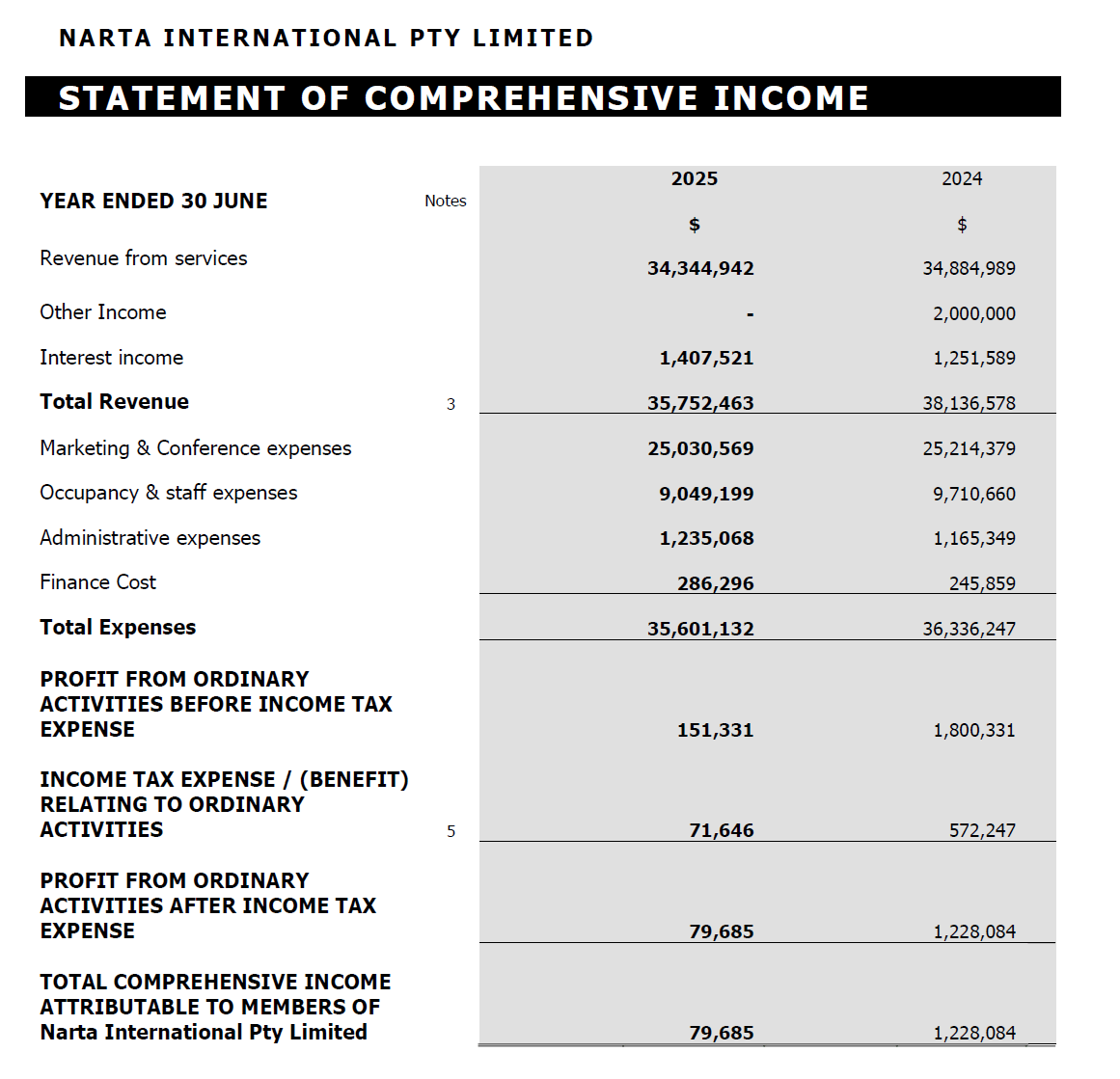
Board member Peter Harris, General Manager of Bing Lee who replaced Lionel Lee on the board, described the current trading environment as “a perfect storm,” citing “challenging market conditions, intense competition, and mounting global pressures.”
“The first half of the year showed smaller declines than 2023 across both Australia and New Zealand,” Harris said. “But from January to June 2025, the market flattened again.”
He warned that 2026 remains difficult to forecast, noting there are “no clear economic indicators suggesting growth globally, or in Australia and New Zealand.”
Consumers, he added, have already made significant purchases in key categories and are showing “less urgency to repurchase.”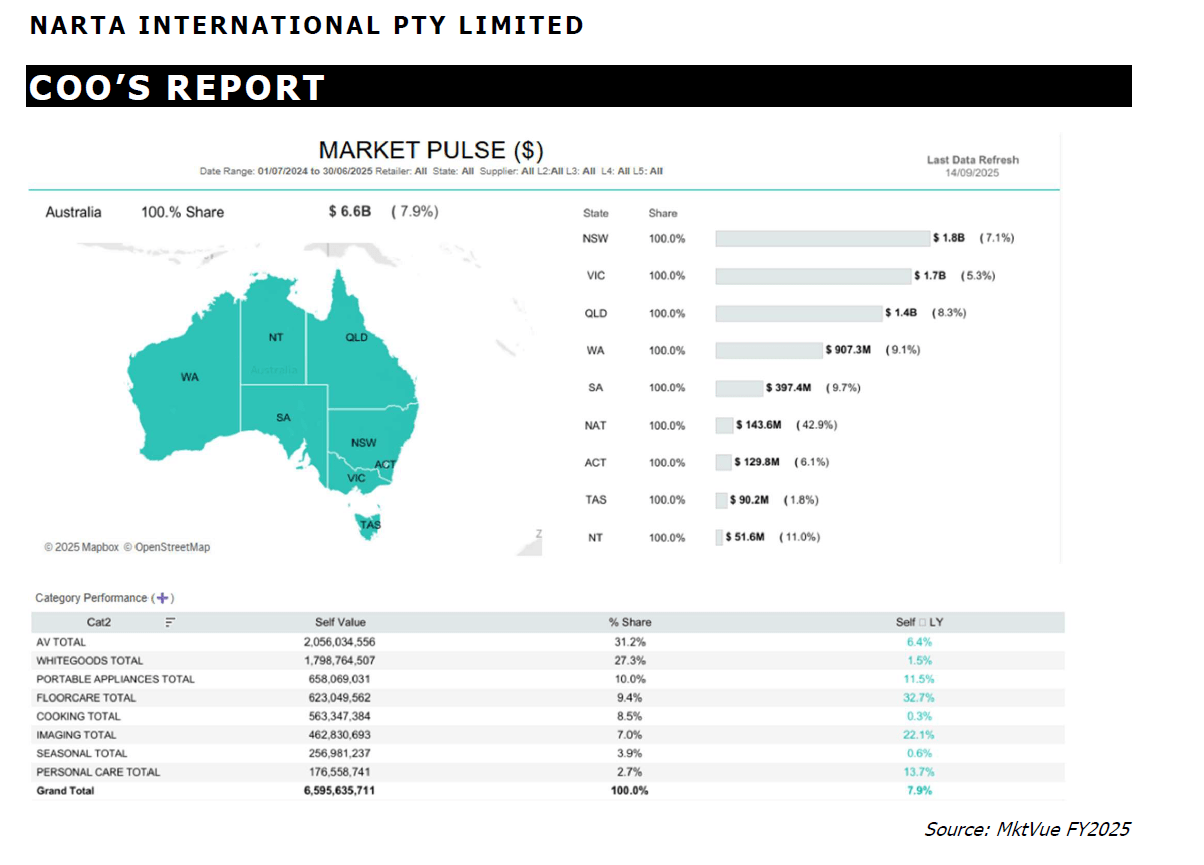
Both Narta and its member retailers — including JB Hi-Fi, The Good Guys, Myer, and David Jones — are contending with freight and logistics disruptions, currency volatility, weakening global demand (especially in Europe and China), and tariff uncertainty, all contributing to what Harris described as a “perfect storm.”
Growth that does exist, he said, is coming from mass-market categories, which carry lower average selling prices and require higher unit sales to achieve modest revenue increases.
Looking ahead to FY2025–26, Narta says it will focus on maximising revenues through better forecasting, planning, range management, and exclusive buying opportunities.
However, several retailers — including Narta members — have told ChannelNews they expect this year’s Black Friday sales to underperform compared to previous years.
Meanwhile, new research from Sinch suggests that while Australians are increasingly open to AI-powered retail experiences during major sales events like Black Friday and Cyber Monday, most remain wary about how their data is used.
The study found that:
29% of shoppers believe AI will make their experience easier.
32% say it will make no difference.
43% cite privacy and data use as their top concern.
25% feel that personalisation sometimes becomes intrusive.
Despite this, AI is rapidly becoming a standard feature of retail communications, echoing Narta’s own shift toward data-driven retail intelligence.