Microsoft Guts Xbox: 3,200 Jobs Axed, Five Studios Dumped As A$108 Billion Activision Gamble Crumbles
 David Richards
07 Jul 2026
David Richards
07 Jul 2026

As tipped by ChannelNews, Microsoft has moved to sack more than 3,200 staff in its struggling Xbox division and offload five game studios, as the Company’s A$108 billion (US$75.4 billion) Activision Blizzard mega deal from 2023 unravels and Microsoft shares, down more than 18% this year, deliver the worst performance of any megacap technology stock.
The dumping of 20% of Xbox staff and the exit of five internal studios, Compulsion Games, Double Fine, Ninja Theory, Undead Labs and Arkane, follows the laying off of thousands of other employees across other Microsoft divisions in recent months.
According to an internal email from Xbox CEO Asha Sharma, which was also posted to X, more than 3,200 people have been handed the pink slip, taking total layoffs for the division to 4,800 this year alone.
The cuts will be spread across the entire Xbox games empire, including Activision, Bethesda/ZeniMax, Blizzard, King, Mojang and Xbox Game Studios, in line with Sharma’s previously announced strategy of “shifting investment to focus on higher priority projects”.
At this stage she has not spelt out what those higher priority projects are.
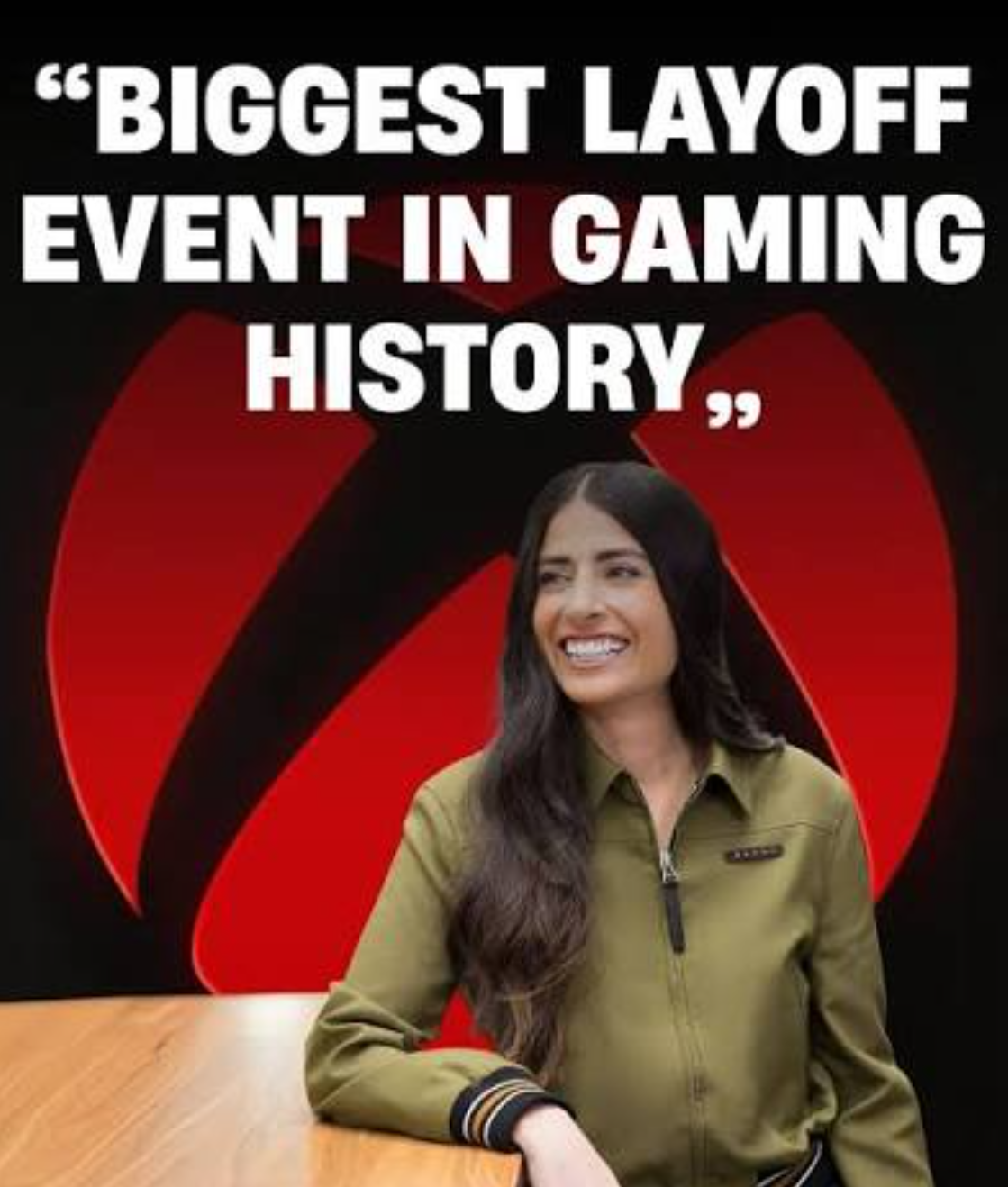
Xbox boss Asha Sharma is still smiling despite the trashing of Xbox workers and their gaming partners.
A series of staffers across Bethesda, ZeniMax and Obsidian subsequently revealed they had also been made redundant as the drama unfolded overnight.
Microsoft completed its historic A$108 billion acquisition of Activision Blizzard on October 13, 2023, a deal that handed the Redmond giant ownership of iconic franchises including Call of Duty, World of Warcraft, Diablo, Overwatch and mobile powerhouse Candy Crush, propelling it to the third largest gaming company in the world by revenue.
Now it is all crumbling, with the business struggling as gamers switch away from Xbox consoles to mobile and PC gaming.
In her memo to staff, Sharma said she had made the decision to reduce the team by approximately 3,200 roles throughout FY27, with roughly 1,600 role eliminations on day one and four studios leaving Xbox for new management.
The remaining 1,600 will go over the rest of the fiscal year, with Sharma acknowledging that the year long restructure creates additional challenges, but claiming it was not possible to make all the changes in a single day.
Critics claim Microsoft’s actions are brutal, with people seen as being easily disposable at the software giant.
The Studio Sell Off
The studio divestments are significant in their own right.
Compulsion Games, the studio behind South of Midnight, and Double Fine Productions, maker of Psychonauts, are being forced to transition into independent studios, while Ninja Theory and Undead Labs have entered agreements to move under new ownership.
There are also unconfirmed reports that Arkane Lyon, the studio behind Dishonored and Deathloop, is facing both closure and the cancellation of Marvel’s Blade, a title that had already slipped from 2026 to late 2027, though Microsoft has not confirmed this.
Sharma has stated that none of the publicly announced first party games or projects are being cancelled, with cuts varying in size across Activision, Bethesda/ZeniMax, Blizzard, King, Mojang and Xbox Game Studios.
Management Shake Up
The changes come alongside sweeping structural changes inside the Xbox organisation, with Mojang and King, the most consistently successful arms of the Xbox games empire, now reporting directly to Sharma.
Xbox corporate VP of Product Services Dave McCarthy, who had been in the role for eight years, has left the business, and Helen Chiang, who previously oversaw Minecraft, has been installed in the newly created role of Xbox COO.
Sharma said Chiang’s role “for the first time” would include end to end profit and loss responsibility across content, hardware, platform and services.
The COO position marks a major departure from the Company’s previous structure, which saw many teams, studios and functions operating independently of one another, with management layers now being slashed from as many as 14 down to five or fewer.
The Numbers Behind The Reset
Sharma’s own memo amounted to an admission that the acquisition heavy strategy has failed.
Xbox’s accountability margin had slipped to just 3%, and she wrote that “it is neither possible nor desirable to own every great independent studio”, conceding that in a typical year the division lost 64 cents for every dollar it invested.
Excluding Activision Blizzard King, Microsoft spent more than A$29 billion (US$20 billion) on content, platform and hardware subsidy over five years, while annual revenue declined by nearly A$720 million (US$500 million), a situation Sharma said “cannot continue”.
Despite platform headcount rising 40% since the pandemic, player numbers on Xbox platforms have declined.
Analyst commentary has been even harsher, with D.A. Davidson’s Gil Luria describing the gaming business as having become “almost irrelevant” to Microsoft, whose stock is down 19% this year, the worst performer among the megacap tech names.
The cuts come as Microsoft spends heavily on AI infrastructure and uses the technology to try to drive efficiency across the business.
Since paying roughly A$108 billion for Activision Blizzard, the division has now shed well over 10,000 roles across successive rounds of layoffs.
Union Anger
Microsoft rejected a layoff protection proposal from the Communications Workers of America before the cuts began, though unionised employees at ZeniMax, Raven Software and Blizzard QA, who ratified a contract in January 2026, have secured contractual protections.
Recent reporting in gaming media also suggests that Game Pass accounting denied studios retail revenue recognition despite hitting player milestones, a mechanism claimed to have made even successful studios look like failures internally.
Where Xbox Goes From Here
The strategic direction Sharma is signalling appears to be built on fewer owned studios, a leaner platform organisation, a shift toward supporting independent creators with open development tools rather than outright ownership, and continued prioritisation of mobile and cloud gaming as the highest growth areas, essentially repositioning Xbox as a publisher and platform business rather than a console first hardware ecosystem.
For Australian retailers the implications are significant, with hardware subsidy explicitly named as a cost being wound back, a move that feeds directly into the console retail decline that ChannelNews has identified alongside Sony’s PlayStation disc discontinuation and the financial troubles engulfing EB Games.