LG Electronics Australia: Shooting the Messenger While the House Smoulders
 David Richards
18 Feb 2026
David Richards
18 Feb 2026
Management at LG Electronics Australia — a proud subsidiary of the sprawling LG Group empire — appear to have developed a sudden sensitivity to journalism. Specifically, ours.
The latest outbreak of corporate discomfort stems from our reporting on two issues: a struggling air conditioning division and a global subscription strategy that looks suspiciously like it’s heading for Australian shores.
First, a correction. We reported that seasoned executive Ian Robertson — a man whose CV reads like a who’s who of appliance heavyweights (LG, Samsung, Daikin) — had been approached locally for a role at LG Electronics Australia.
Close. But not quite.
Robertson contacted ChannelNews directly to clarify: he was approached by global LG executives, not the Australian outpost — and he declined. Fair enough. We got it wrong, and we say so.
What’s curious is that this minor geographic misalignment seems to have triggered a disproportionate corporate reaction.
Right of Reply… Eventually
Senior LG Electronics Australia executives were given every opportunity to comment before publication. The stories were based on information from LG insiders — not tea leaves, not tarot cards, insiders.
Weeks later, after the dust had settled, the PR cavalry was deployed.
Objection number one: our reporting on LG’s global push into subscription-based sales models for TVs and appliances.
Let’s examine the facts.
Kim Jaesung, Regional CEO of LG Electronics Asia Pacific and Australia, publicly stated that LG is rolling out five new sales models to accelerate growth.
A key priority for 2026? Expanding direct-to-consumer (DTC) sales via LG’s own website.
Another major initiative? Subscription-based models — recurring payments for appliances bundled with after-sales services.
At CES, we raised the issue with a senior LG executive. The response was blunt: subscription revenue is a priority for LG. Rollout is happening across key markets. Australia is a key market.
LG’s own full-year 2025 earnings reinforce this. “Qualitative growth” businesses — subscriptions, D2C, webOS platform services — are now a significant and rapidly expanding portion of total revenue.
Subscription revenues reportedly rose approximately 29% year-on-year, approaching US$1.8 billion. That’s not loose change found in the couch.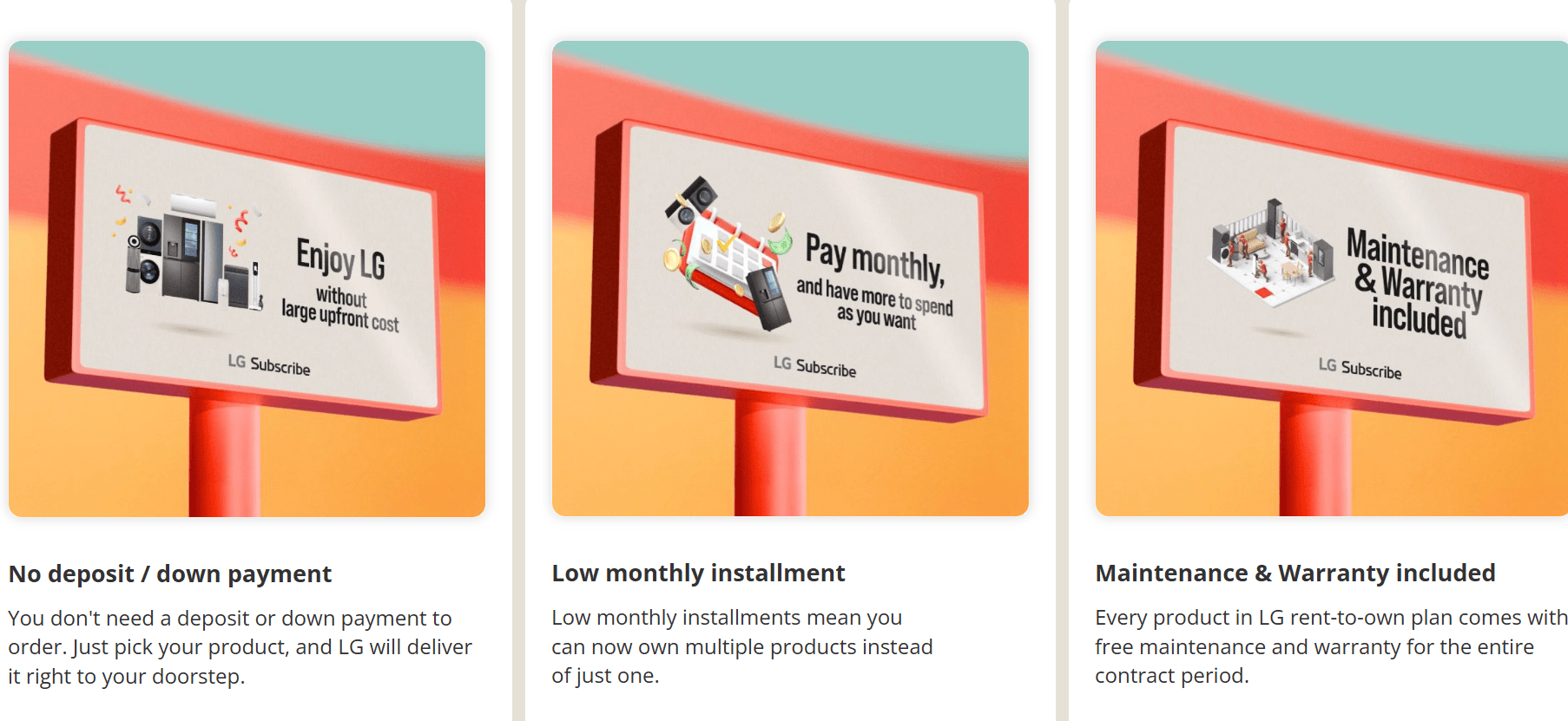
And yet, LG Electronics Australia now insists:
“LG Electronics Australia has not announced, nor are they planning, any such sales model in Australia. We confirm there are no changes to LG Australia’s go-to-market approach.”
Translation: Nothing to see here.
Possibly.
The Global Push That’s Not a Push
Globally, LG treats subscription and service revenue as a strategic pillar — part of its “qualitative growth” portfolio designed to stabilise income beyond one-off hardware sales.
Subscription models first rolled out in Malaysia, Taiwan, Thailand, India. Then expanded to larger appliances, TVs, laptops. Then to the UK — LG’s first major consumer electronics subscription push outside traditional appliance markets.
The UK launch signals something fairly obvious: hardware-as-a-service is no longer an Asian experiment. It’s a Western strategy.
Press releases and corporate statements make clear that LG intends to expand subscriptions worldwide.
But Australia? Apparently immune.
Insiders suggest Australian retailers — who might find themselves politely side-stepped if LG goes direct or subscription — are less than thrilled at the prospect of a global parent company reshaping distribution economics.
Still, according to the local line, no changes are planned.
Meanwhile, in the Solar Battery Department…
As if air-conditioning headwinds and subscription sensitivities weren’t enough, there’s also the matter of solar batteries manufactured by LG Energy Solution (LGES), a 100% owned LG Group subsidiary.
Those would be the batteries that had an unfortunate habit of bursting into flames and burning houses down in Australia.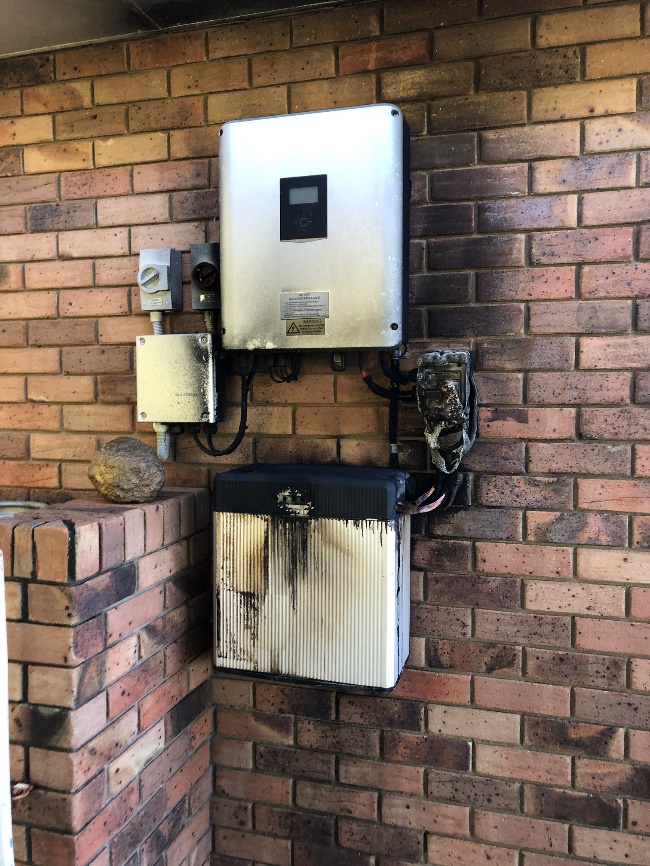
To be clear — LG Electronics Australia says it wasn’t them. It was the energy arm of the Group.
Technically correct. Different entity. Same corporate surname.
On 17 May 2024, after concerns that recall advertising was inadequate, the ACCC accepted an enforceable undertaking from LGES requiring additional action to advertise and recall affected products.
On 24 November 2025, the ACCC accepted a further variation:
Expedited access to replacements or refunds
An optimised communications campaign to locate recalled units
Apparently, locating potentially combustible batteries requires optimisation.
A Familiar Name at the ACCC
LG Electronics Australia, for its part, is no stranger to regulatory attention.
The Federal Court once imposed $160,000 in penalties for misleading representations about consumer guarantee rights. The Court found that LG implied to consumers with faulty televisions that their only rights were under manufacturer warranties — not broader statutory guarantees.
This was not LG’s first brush with the ACCC spotlight.
So when the corporate messaging now leans heavily on distinctions between subsidiaries and technical separations, one could forgive observers for noticing a pattern: distance the brand from the problem, challenge the reporting, and let the PR team do the heavy lifting.
The Real Question
Is LG globally pushing subscriptions as a strategic growth engine? Absolutely. They say so themselves.
Is Australia a key market? Public statements suggest yes.
Is LG Electronics Australia currently rolling it out? They say no.
Both things can be true — temporarily.
What appears to be causing friction is not the reporting of facts, but the timing of their interpretation.
In the meantime, air conditioning struggles, subscription ambitions, retailer anxieties, ACCC undertakings, and corporate sensitivities all swirl together in what might best be described as “qualitative growth in drama.”
If pointing that out makes management uncomfortable, perhaps the problem isn’t the messenger.
After all, we only report the heat.
LG, as we understand it, manufactures devices designed to handle that.