Lenovo’s New Modular Laptop Concept Lets You Swap the Keyboard for a Second Screen
 Joe Gallop
02 Mar 2026
Joe Gallop
02 Mar 2026
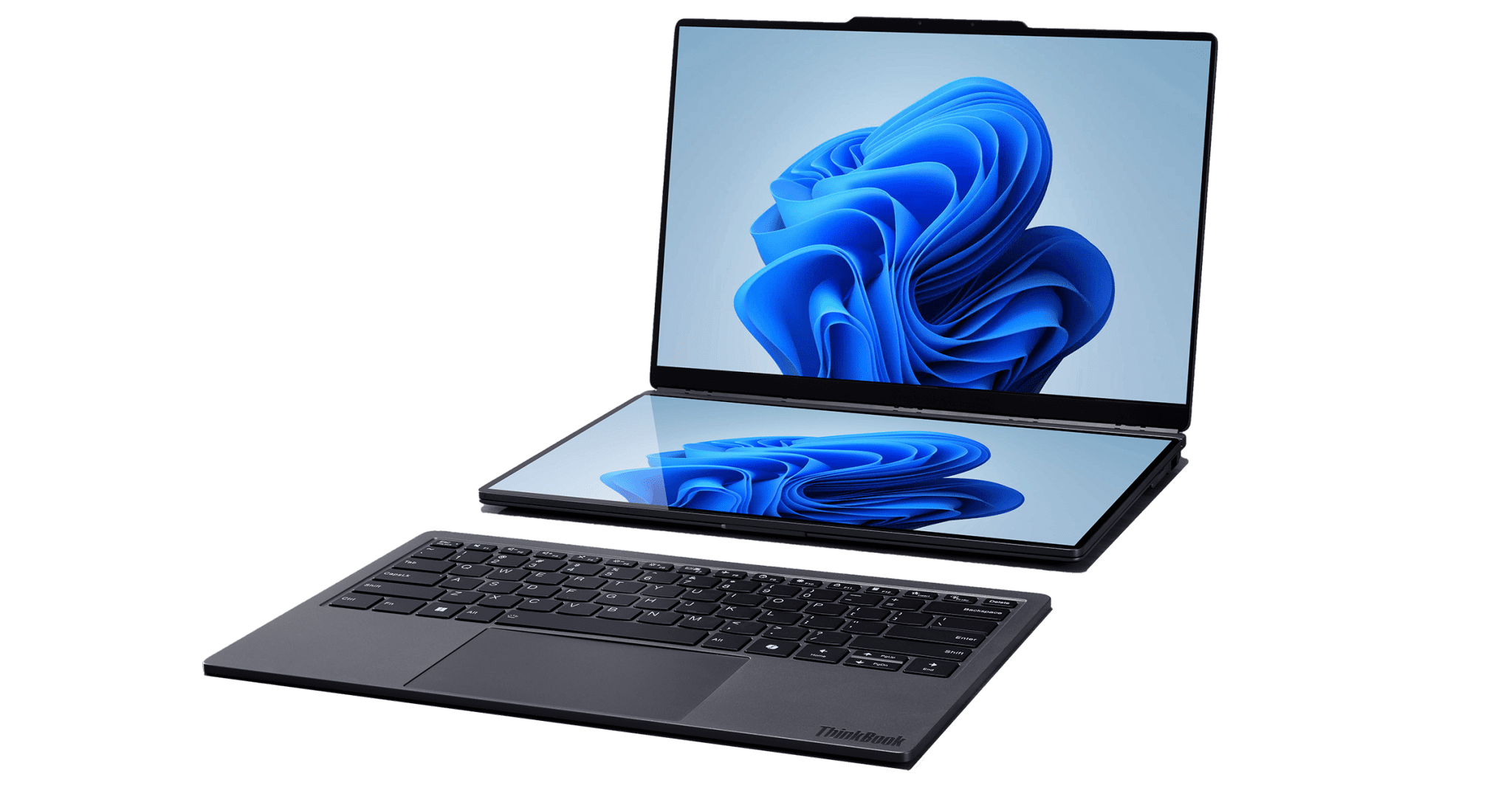
Lenovo’s latest laptop concept doesn’t just add a second screen, it lets you move it, swap it and even trade places with the keyboard.
Ahead of (and now during) MWC 2026 in Barcelona, images and hands-on reports have surfaced around the ThinkBook Modular AI PC concept, a business-oriented laptop prototype built around swappable parts, dual screens and hot-swappable ports.
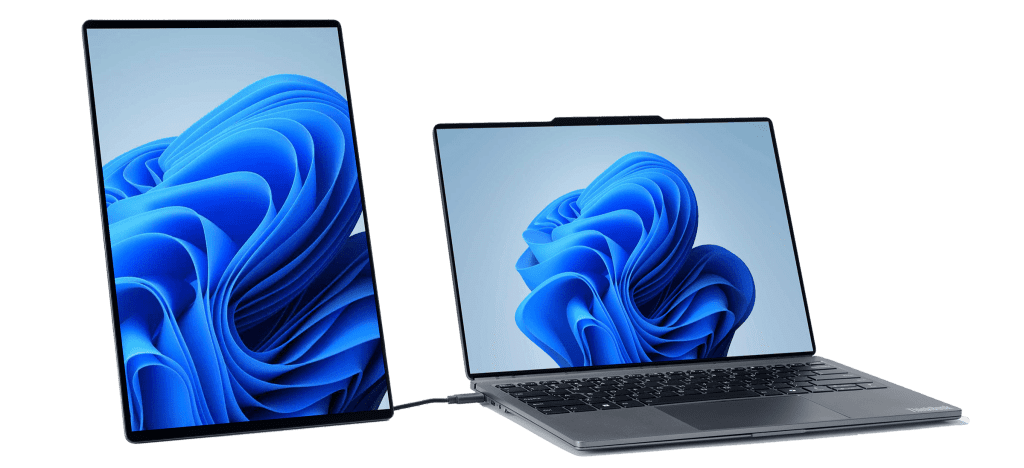
At first glance it looks like a conventional 14-inch clamshell. The twist is the modular “deck”. Lenovo’s concept lets users remove the keyboard and drop in a secondary display in its place, effectively turning the machine into a dual-screen notebook.
That keyboard can then be used wirelessly (via pogo-pin docking or Bluetooth, depending on setup), giving users extra screen real estate without losing a physical typing experience.
The second display can also be repositioned. In one configuration, it mounts to the outside of the laptop lid for face-to-face sharing, which is handy for quick presentations or collaborating across a table.
In another, it can be detached and propped up beside the laptop like a portable monitor, connected over USB-C and usable in portrait or landscape orientation.
Lenovo also appears to be borrowing from the modular playbook popularised by repair-focused laptop maker Framework, with the ThinkBook concept featuring hot-swappable I/O modules including USB-C, USB-A and HDMI, and hints of future add-ons depending on demand.
Despite the ‘AI PC’ branding, even reviewers who tried the device say the AI element is unclear so far – the headline feature is really the physical adaptability.
Lenovo positions it as a way to “carry small, use big”, expanding workspace when needed and packing down when it’s time to move.
As always with Lenovo concept hardware, there’s no guarantee this becomes a retail product, but the company has a history of turning experimental ideas into shipping features over time.

Lenovo also previewed its AI Workmate concept, an always-on desk companion that uses on-device AI to assist with documents, notes and presentations through voice, gesture and spatial interaction.
Designed to function more like a proactive workplace assistant than a traditional chatbot, the system can scan and summarise documents, organise information and help generate content, while even projecting visuals onto nearby surfaces.