Judge Kicks Out Six Claims, In Apple Watch Patent Case
 David Richards
28 Apr 2023
David Richards
28 Apr 2023
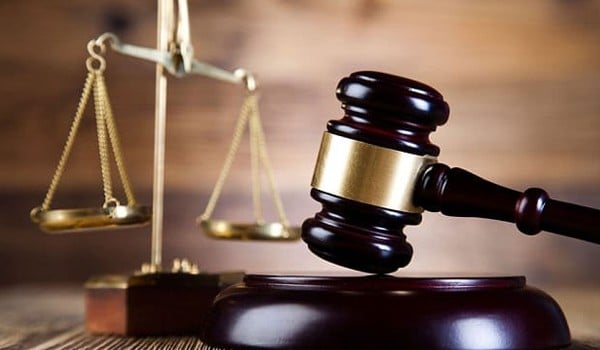
The judge in the Masimo v. Apple trade secrets trial has narrowed down the claim by kicking out six of the Masimo claims. This will result in Masimo’s potential damages being reduced to A$1.7 billion.
Masimo, who also own Sound United, has accused Apple of poaching employees and stealing trade secrets for the Apple Watch. Masimo believes Apple developed five pulse oximetry patents using trade information stolen from Masimo. Masimo wants co-ownership of the patents and a payout of $3.1 billion.
U.S. District Judge James V. Selna trimmed down the claims, with the jury now deliberating on the remaining six claims.
The cut down of claims came after both sides in the case filed what’s known as Rule 50(a) motions – common motions at the end of a trial seeking judgment before turning the matter over to the jury.
Apple attorneys succeeded in convincing Judge Selna that six of the 12 initially asserted Masimo claims would not go to the jury for determination and would instead be dismissed from the case.
The judge agreed with the Apple attorney’s suggestion that no reasonable jury could find liability on these six items.
The dismissed claims centred around business and marketing strategies that Apple used in promoting the electrocardiogram features in certain Apple Watch models.
Masimo’s technology covers both blood oximetry and electrocardiogram capabilities as well, and the Company further maintained that these marketing and business strategies were their own intellectual property that was misappropriated by Apple.
Judge Selna did not agree with Apple on the remaining six claims, which are more specific to the technology that Apple is alleged to have stolen.
The value of these claims, according to an intellectual property expert testifying for Masimo, is $1.8 billion.
Apple’s intellectual property expert calculates that Masimo’s remaining claims are worth only around $34.1 million.
Judge Selna told Apple’s attorneys that while he is dismissing six of the claims from Masimo’s lawsuit, he would not inform the jurors of his decision.
Rather, he would simply remove those claims from the verdict form the jurors used to report the results of their deliberations. I would imagine that the reason the judge chose this route is that he wants to avoid inadvertently influencing the jurors by perhaps causing them to interpret his action as negative to Masimo’s claims and positive for Apple’s defence.