iPhone 17 Pro’s Aluminium Design Shows Marks from MagSafe Stands, Apple Admits
 Isabella Alexiou
25 Sep 2025
Isabella Alexiou
25 Sep 2025
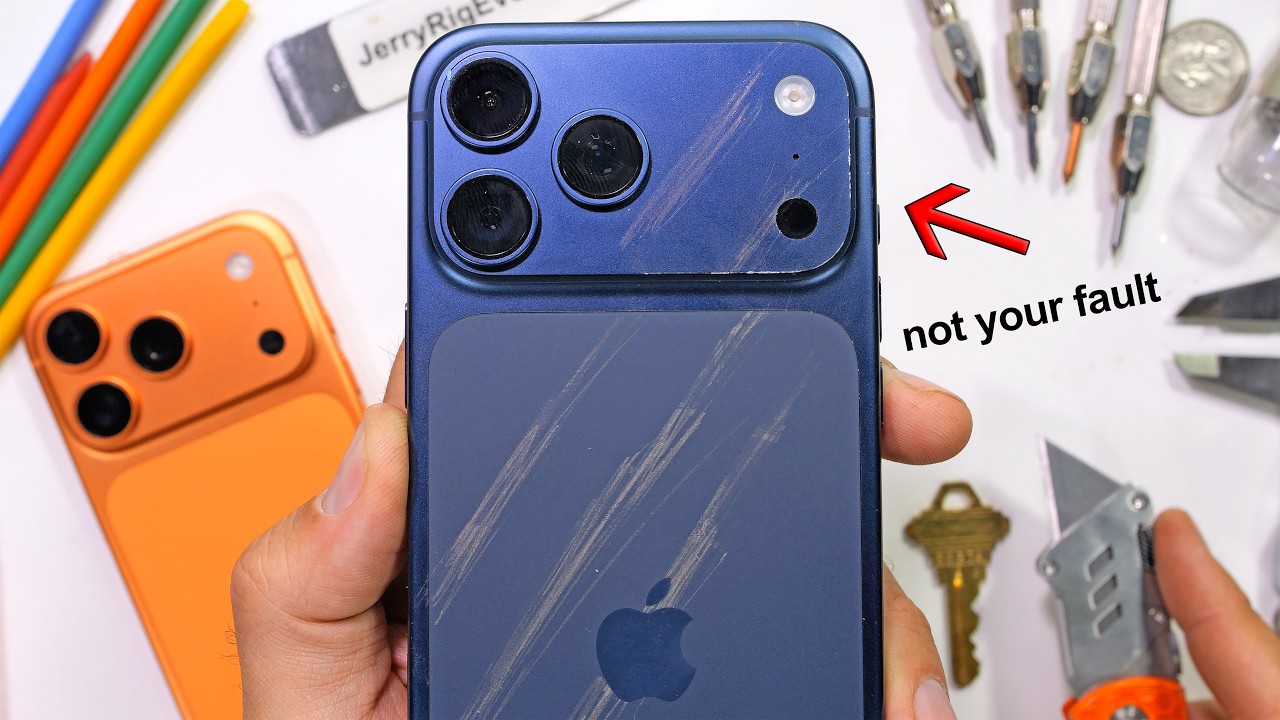
Apple has responded to reports of scratching on iPhone 17 Pro models, claiming that circular marks on in-store demo units are “material transfer” from MagSafe stands rather than actual scratches, while acknowledging the aluminium camera bump may show small abrasions over time.
Following Bloomberg’s September 19 report that display models were showing scratches including circular marks from MagSafe mounting points, Apple told 9to5Mac the marks were residue transferred from the stands to the phone body that could be cleaned off.
The clarification addresses only one category of reported damage.
Apple’s explanation suggests cleaning demo units and replacing old MagSafe stands would prevent the circular markings, which the company insists aren’t scratches but rather material deposited on the phone’s surface.
However, this doesn’t explain scratches some iPhone 17 Pro owners have reported around the camera bump.
YouTuber JerryRigEverything speculated in a recent video that Apple’s decision to eliminate the chamfer or fillet on the camera bump’s edges left it more vulnerable to damage.
Apple told 9to5Mac it designed the aluminium camera bump using the same approach as other aluminium products, describing it as durable but acknowledging it’s prone to “small abrasions” over time, effectively confirming some scratching is expected with normal use.
The iPhone 17 Pro’s switch from the iPhone 16 Pro’s titanium frame to unibody aluminium enables improved performance and battery life but comes with durability compromises.
Aluminium is inherently less scratch-resistant than titanium, potentially explaining the increased reports of surface damage.

For Australian consumers paying $1,799 and up for the iPhone 17 Pro, the distinction between “material transfer” and scratches may seem semantic if the result is visible marks on their premium device.
The aluminium construction represents a deliberate trade-off prioritising weight reduction and thermal management over scratch resistance.
Notably, 9to5Mac’s reporting doesn’t include direct quotes from Apple or any spokesperson, suggesting the company hasn’t committed to a firm public position on the issue.
The indirect nature of Apple’s response indicates ongoing internal assessment of whether this represents a genuine problem requiring action.
Apple has historically been selective about acknowledging hardware issues, typically waiting for sufficient data before making official statements or implementing repair programs.
The current non-committal stance follows this pattern.
For iPhone 17 Pro owners and prospective buyers:
- Circular marks from MagSafe accessories may be cleanable surface residue
- Camera bump scratches appear to be inherent to the aluminium design
- Case usage becomes more important with the softer aluminium construction
- Demo unit condition may not reflect long-term durability
The reports highlight an apparent consequence of Apple’s engineering choices.
While the aluminium design enables the iPhone 17 Pro’s improved performance metrics, it may require users to accept increased susceptibility to cosmetic damage compared to previous titanium models.
Whether this represents a significant issue or typical launch-period scrutiny remains unclear.
Apple’s partial acknowledgment suggests some marking is expected, though the company maintains this falls within normal parameters for aluminium products.