Intel Reportedly Readies Cheaper Panther Lake Chip For Gaming Handhelds
 April Ossington
17 Aug 2026
April Ossington
17 Aug 2026

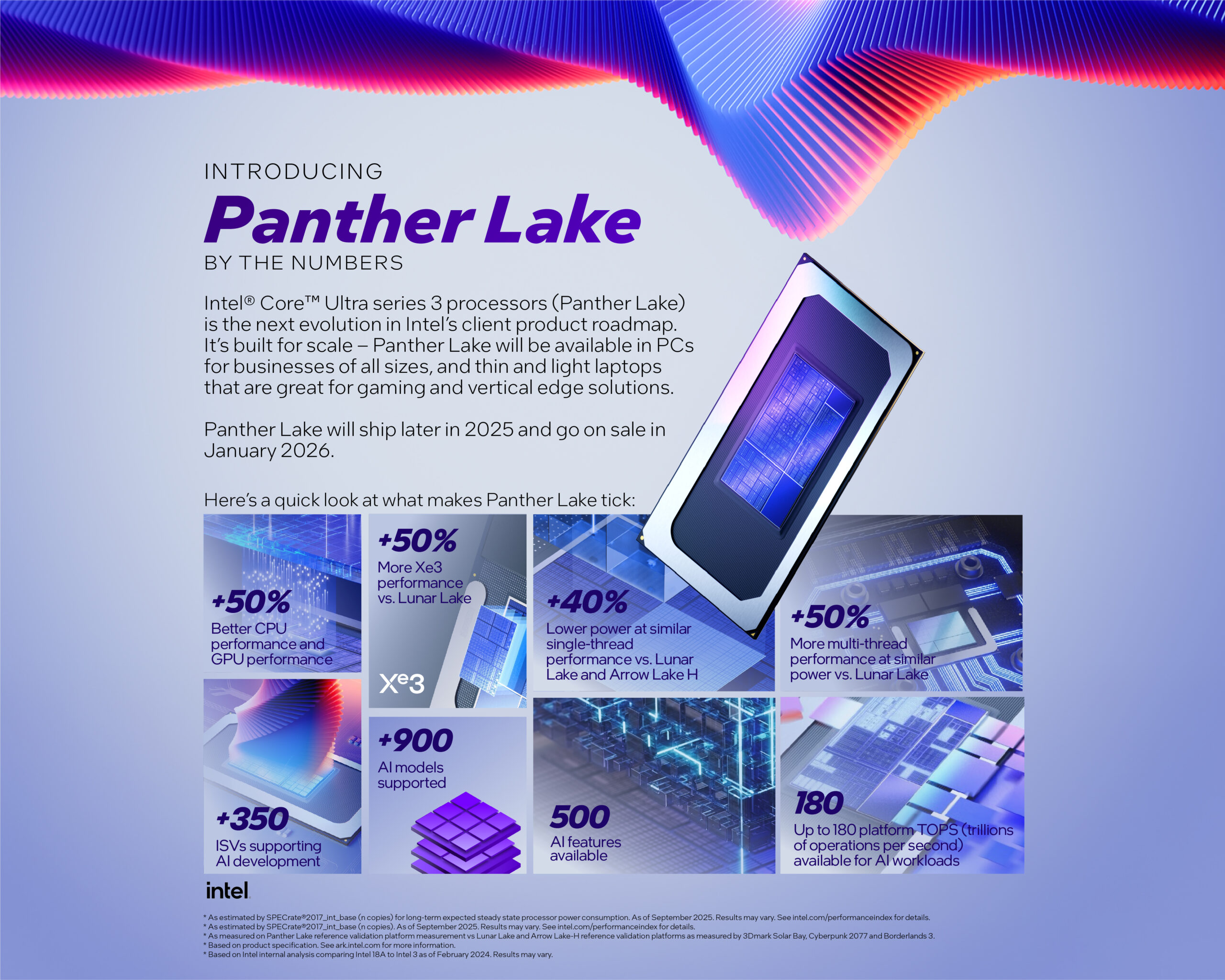
Intel could be developing a more affordable Panther Lake processor aimed at portable gaming PCs, potentially giving manufacturers a cheaper alternative to the company’s high-performance Arc G3 chips.
According to leaker Jaykihn, the rumoured processor features eight CPU cores alongside four Xe3 GPU cores. The configuration reportedly combines four performance cores with four low-power efficiency cores and could be positioned specifically for gaming handhelds.
The proposed chip would be considerably less powerful than Intel’s premium handheld processors. The Arc G3 Extreme combines 14 CPU cores with a 12-Xe3 Arc B390 GPU, while the standard Arc G3 retains the 14-core CPU configuration but uses 10 Xe3 GPU cores.
Reducing the specifications could help Intel target a broader section of the handheld market. Rather than focusing on demanding AAA games at high settings, devices using the smaller Panther Lake processor could appeal to players interested in indie titles, older games and less demanding releases.
Intel has already demonstrated strong handheld performance with its higher-end silicon. The Arc G3 Extreme has delivered impressive results in devices including the MSI Claw 8 EX AI+, although the cost of these machines remains a significant obstacle.
The MSI Claw launched at US$1,799, equivalent to approximately A$2,550, placing it firmly within the premium end of the portable gaming market. A less complex Panther Lake processor could potentially help manufacturers bring Intel-based handhelds to consumers at lower prices.
However, reducing processor costs will not necessarily result in inexpensive devices. Rising memory and storage prices continue to increase manufacturing costs, while current Intel G3-powered handhelds are expected to sit around US$1,000, or approximately A$1,420. More powerful G3 Extreme products, including the MSI Claw and Acer Predator Atlas, are expected to command substantially higher prices.
The rumoured four-Xe3 Panther Lake processor could therefore provide Intel with a way to expand beyond premium handheld gaming without sacrificing its latest architecture.
Whether manufacturers can translate those savings into genuinely affordable products remains uncertain. Reaching price levels comparable with Valve’s Steam Deck could prove difficult, but offering separate premium and mainstream processor options may give Intel a stronger position in the increasingly competitive handheld gaming PC market.