Board Shakeup At JB Hi-Fi As Uechtritz Quits And Former CEO Smart Returns
 David Richards
17 Aug 2026
David Richards
17 Aug 2026
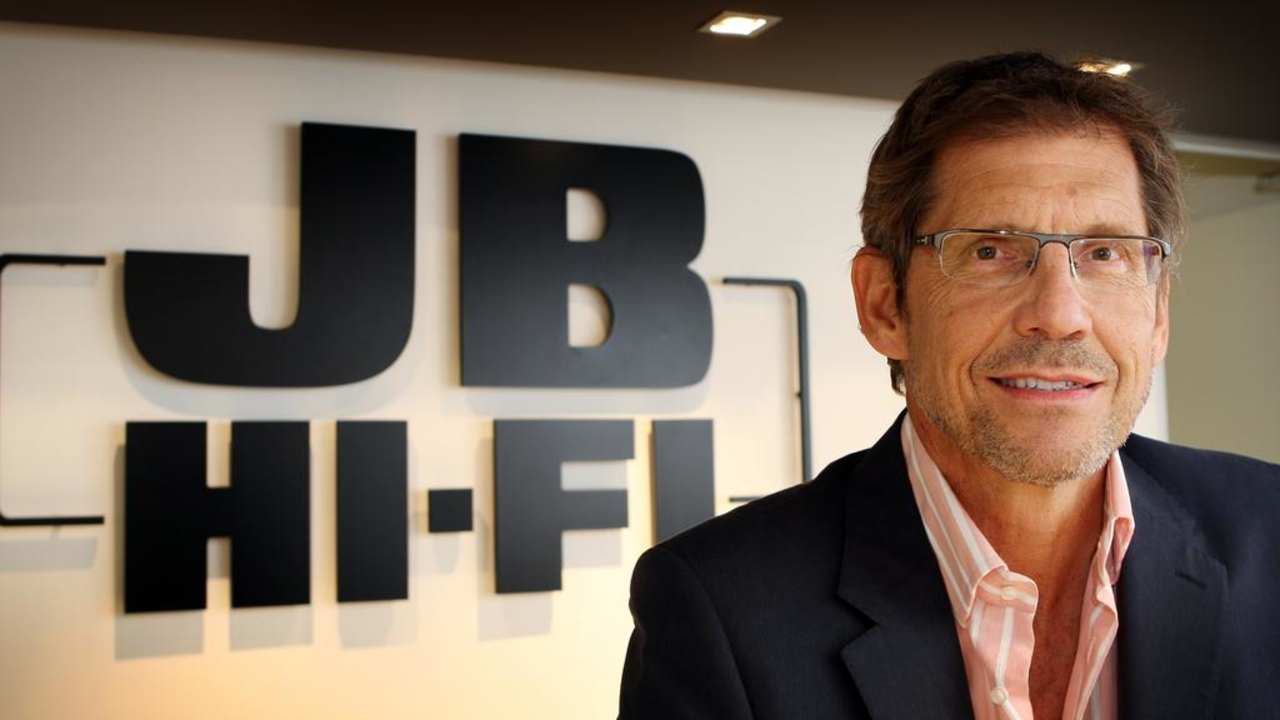
JB Hi-Fi is facing a major boardroom shakeup with Richard Uechtritz, the man who transformed a ten-store Melbourne and Sydney chain into one of Australia’s most successful retailers, retiring from the board after a quarter of a century with the business, while former Group CEO Terry Smart returns as a director barely a year after handing the top job to Nick Wells.
The move, announced today, hands the JB Hi-Fi board unusually deep retail and company-specific expertise, but it also raises hard questions about independence, an insider-heavy board culture, and whether Smart’s return will make it harder for Wells to establish complete ownership of strategy.
Smart will join the board as a non-executive director on 5 October 2026, almost exactly a year after he retired as Group CEO. Chair Stephen Goddard described him as “one of Australia’s best retailers”, citing his knowledge of the group and its markets.
The End Of An Era
Uechtritz’s exit is a genuine loss. He is one of the standout success stories of Australian retail, and his departure severs the last direct link to the July 2000 management buy-in that created the modern JB Hi-Fi.
His roots were photo retail, not consumer electronics. Before JB Hi-Fi he co-founded Australia’s two photo chains, Rabbit Photo and Smiths Kodak Express, and served as a director of Kodak (Australasia) Pty Ltd from 1998 to 2000.
In July 2000 he led a consortium of private equity investors in a management buy-in, with Terry Smart alongside him as COO. At the time JB Hi-Fi was a ten-store chain. Over the following decade revenue grew from $145 million to a forecast $2.8 billion, and the brand became one of the most recognised in Australian retail.
He floated the business in October 2003, and the shareholder returns were extraordinary. Investors who held from the IPO to his 2010 exit received an annual rate of return of 48%, versus 5.1% per annum for the ASX 200 over the same period. Uechtritz has called the buy-in the highlight of his career, noting the company went from a $22 million capitalisation to $1.8 billion.
His formula was famously unflashy: low-cost store fits, sharp pricing, heavy stock density, staff culture and discipline. He also built a team of experts around him, including Cameron Trainor, the former Coles executive who now runs the JB Hi-Fi brand, and Scott Browning, who created the now famous JB Hi-Fi branding. He told me there were no magic tricks, and advised retailers to stick to doing a few things well.
When he retired as CEO in 2010, with Smart succeeding him, he still held about $30 million worth of JB Hi-Fi shares and retained a three-year consulting arrangement. He rejoined the board as an independent non-executive director in April 2011 and remained there until today’s announcement. He was also a non-executive director of Kerry Stokes’s Seven Group Holdings from 2010 until September 2024.
Why Smart Is Back

Nick Wells left, with new board director Terry Smart
The business Smart returns to oversee is still growing. Sales for the 12 months to 30 June rose 4.8% year-on-year, up from the $10.6 billion the group posted in FY25.
The early read from analysts on Smart’s return is broadly positive. Smart progressed through operations rather than a purely financial or governance background. He understands pricing, ranging, inventory, suppliers, store productivity and JB Hi-Fi’s low-cost culture. He has run JB Hi-Fi, led The Good Guys and, as Group CEO, oversaw the move into premium appliances through the e&s acquisition.
During his second stint as CEO, JB Hi-Fi passed $10 billion in annual sales and its share price rose about 150%. His reputation rests on consistent execution through difficult consumer conditions, and his retail operating judgement, coupled with that of Trainor, is seen as unequalled in the industry.
From the board table he can assess whether management is preserving the operating disciplines behind JB Hi-Fi’s margins and returns, while providing institutional memory as Uechtritz departs. His experience should be especially useful in overseeing The Good Guys, e&s and further expansion into premium appliances and commercial customers.
The Governance Question
The reservation is obvious. Smart is returning only a year after handing the CEO role to Nick Wells. He will not be considered independent in the ordinary governance sense, and his authority could make it harder for Wells to establish complete ownership of strategy.
There is also a broader question about whether replacing one former CEO with another perpetuates an insider-heavy board culture at a company that has long prized continuity over fresh eyes.
The bottom line: Smart delivers excellent retail expertise and continuity, but the success of the appointment depends on him acting as a challenging non-executive director, not a shadow CEO.
As the announcement is only hours old, most published coverage so far repeats the company’s rationale rather than offering substantial analyst criticism.