Dyson Pulls $799 Toothbrush From Sale Days After Launch Because Of Major Problems
 David Richards
20 Sep 2026
David Richards
20 Sep 2026
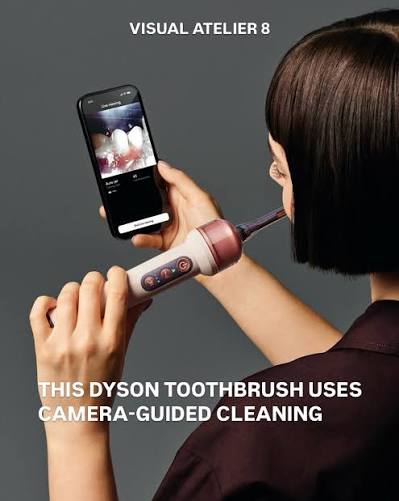
Dyson has suspended sales of the CameraJet, the A$799 camera equipped electric toothbrush it launched with considerable fanfare in Paris on 1 September, after buyers in several markets reported water inside the battery compartment, charging failures and overheating.
The product went on sale in Australia on 2 September through Dyson’s local website, Dyson Demo Stores and selected retailers.
It has since disappeared from Dyson listings in the UK, the US and France.
What Dyson is saying
A Dyson spokesperson told Singapore publication Mothership that some early batches “may have experienced a component issue” and that the company was working to isolate it. Dyson has separately told UK dental practice Smile Solutions that the move is not a formal recall.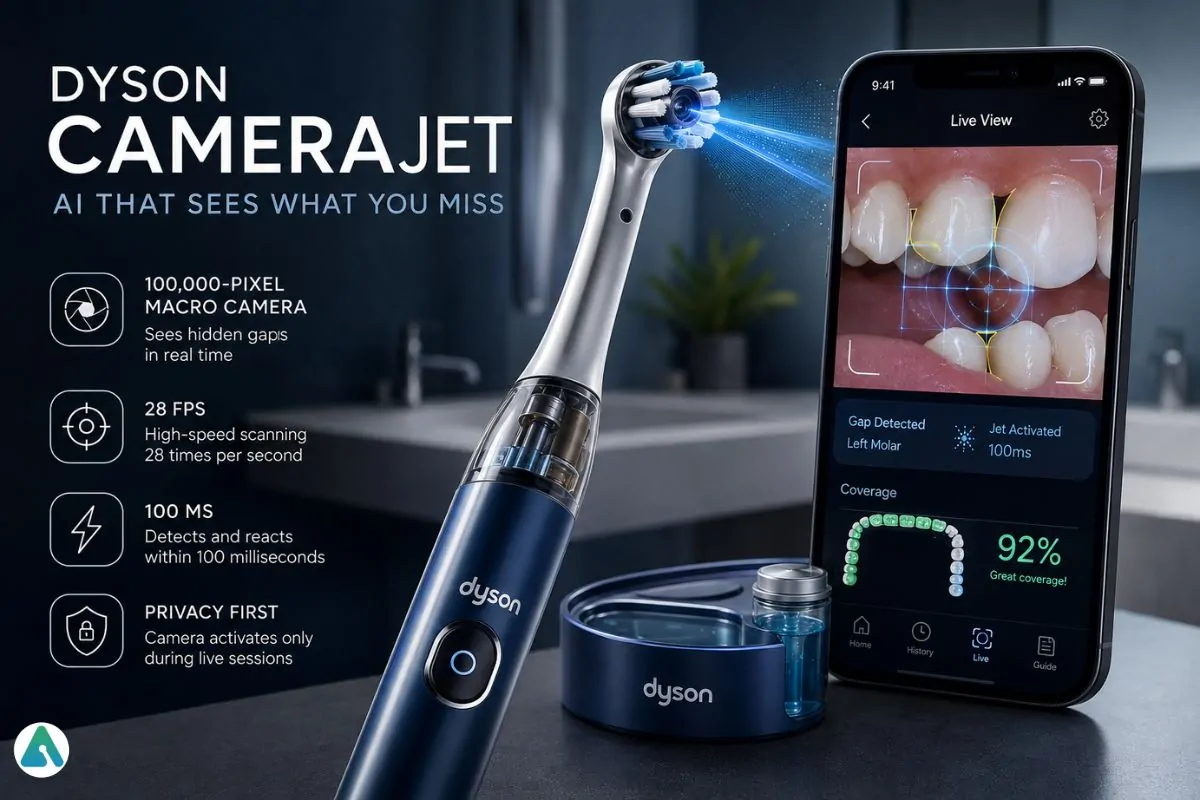
What owners are reporting
The complaints surfacing publicly are consistent.
Posts in the Dyson subreddit describe liquid found inside the device after removing the battery, docks that fault, and jets that stop working.
One owner described the experience as closer to alpha testing than a finished product.
A user identifying as a retail employee claimed sales had been halted over an overheating fault and a defect in the brush head change mechanism.
A French product designer posted on X that a recall and sales ban were under way, alongside a screenshot of a Dyson email confirming a returned unit had reached the company’s warehouse.
None of this has been confirmed by Dyson, despite social media posts.
But the volume and the consistency of the reports, across three markets, is what has given the story legs.
The water resistance claim
At the Paris launch, James Dyson told a media roundtable the device carried an IPX7 rating, meaning it should survive immersion in one metre of water for 30 minutes. Reports of liquid inside the battery housing sit awkwardly against that claim, and the sealing of the unit is the obvious question for Dyson to answer.
Owners who believe their device is faulty should stop using it and contact Dyson or their retailer rather than attempt any repair themselves.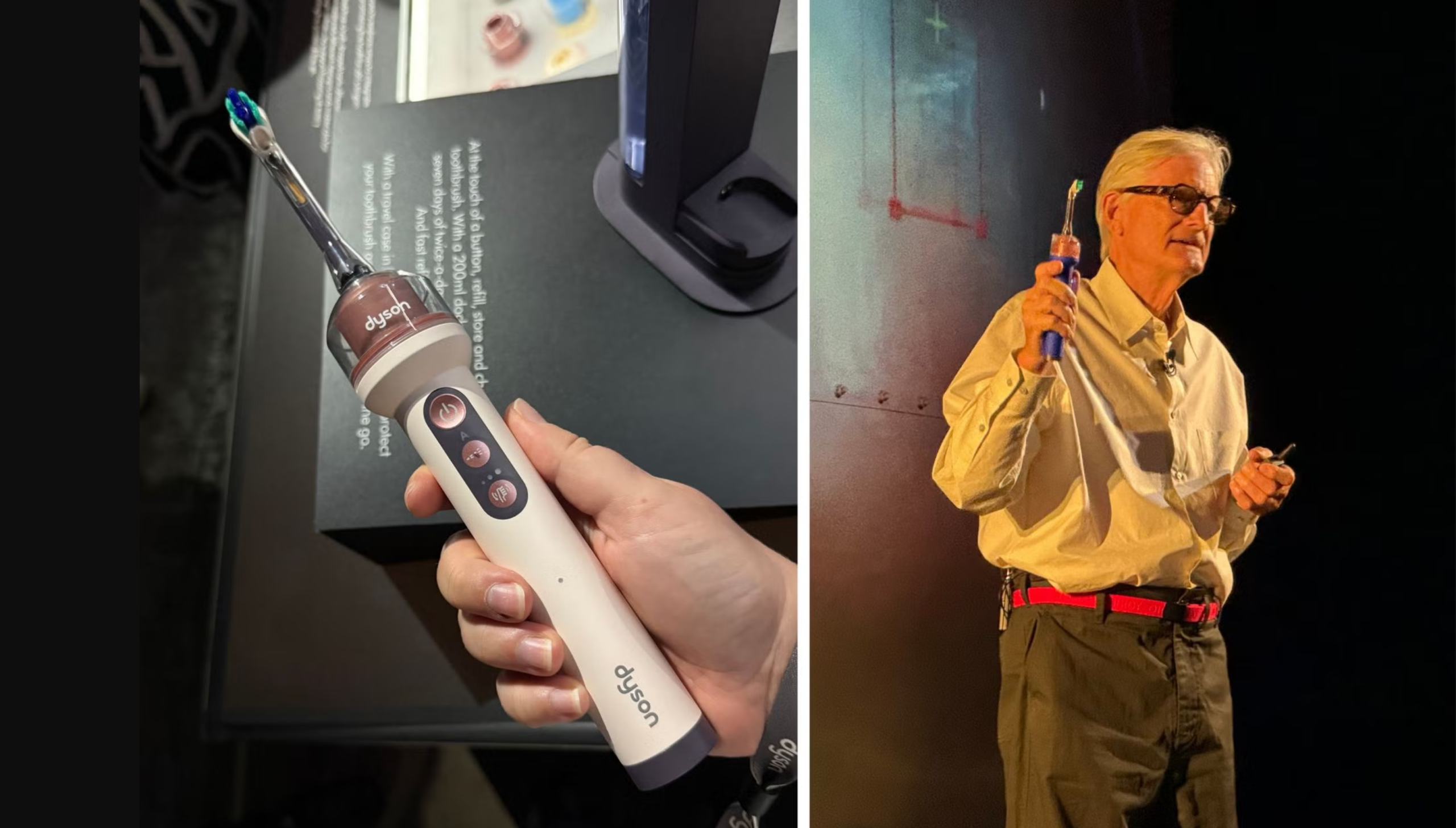
Where Australian buyers stand
Anyone who bought a CameraJet in Australia has rights under the Australian Consumer Law that are separate from, and stronger than, Dyson’s own warranty.
A device that leaks or overheats is very likely a major failure, which entitles the buyer to choose a refund or a replacement rather than accept a repair. That claim can be made against the retailer, not only against Dyson.
The product itself
The CameraJet was pitched as a reinvention of brushing, combining brushing, flossing and rinsing in a single two minute session. A 100,000 pixel macro camera scans the mouth 28 times a second, machine learning trained on more than 470,000 dental images identifies the gaps between teeth, and a conical jet fires 12.5ml of Dyson mouthrinse at the plaque sitting in them.
Dyson says the device took six years, 661 engineers and 38 patent filings. It sells for A$799 here, US$499.99 in the States and 479 euros in France, with replacement brush heads at A$49 for two.
Reviewers who tested pre launch units were broadly positive on the engineering while consistently flagging the price and a steep learning curve. TechRadar noted the difficulty of keeping 12.5ml of liquid in your mouth for a full two minute cycle, and several reviewers reported spray escaping onto the bathroom.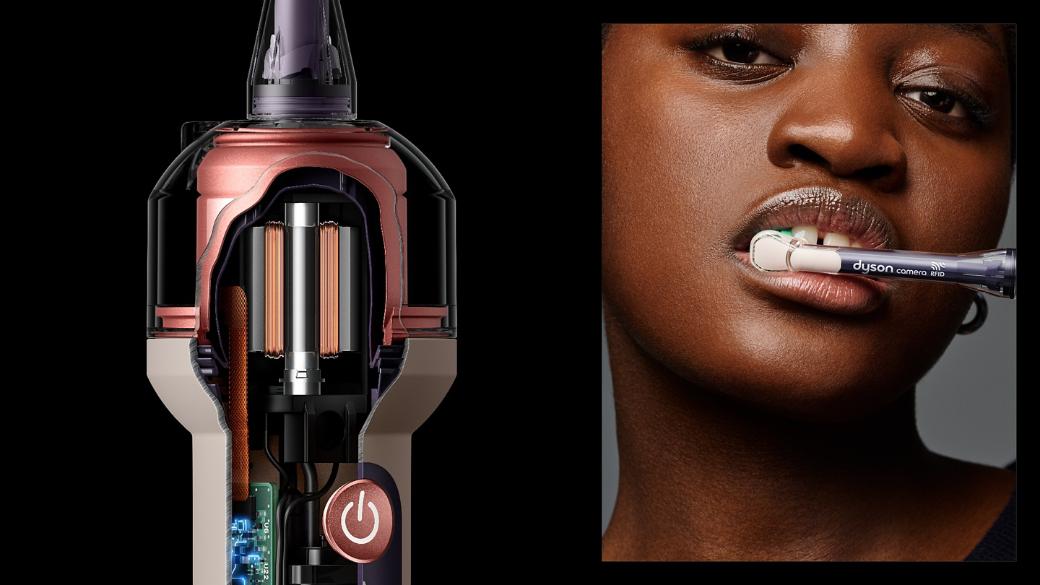
Why it matters
Oral care was Dyson’s fourth category expansion in five years, after headphones, the Zone wearable purifier and hair care.
Hair care worked.
The others have been harder, with their headphones hard to find at the likes og JB Hi Fi.
A product withdrawn a fortnight after a global launch event, at a price point four times the premium electric toothbrush category, is a reputational problem well beyond the units affected.