Dolby Vision 2 Begins Rolling Out To Hisense TVs
 April Ossington
17 Aug 2026
April Ossington
17 Aug 2026
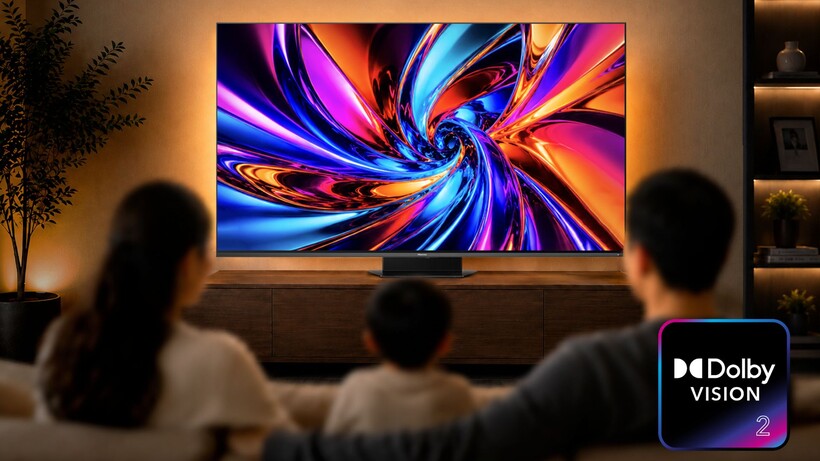
Hisense has started bringing Dolby Vision 2 to selected 2026 televisions, making the brand one of the first to introduce Dolby’s next-generation HDR technology through a firmware update.
The rollout began on 6 August across North America, Europe and Asia-Pacific, with the update expected to reach compatible televisions progressively over several weeks. Streaming services iQIYI and Peacock have also confirmed support for the new format.
Dolby Vision 2 introduces upgraded image processing that can improve both newly produced content and existing titles created for the original Dolby Vision format. Dolby says the changes are designed to deliver more realistic and engaging images.
Hisense’s initial rollout covers selected 2026 Google TV and VIDAA models equipped with compatible hardware. The UX, UR9 and UR8 are included, alongside the U7 in the US and U7 Pro across Europe and other markets. These televisions will receive Dolby Vision 2 Max, the premium version of the technology.
Support currently requires MediaTek’s Pentonic 800 chipset, although additional compatible processors are expected to become available. Dolby has also indicated that the Pentonic 800 is appearing in a broader selection of televisions than previously.
Screenshot
TCL and Philips are expected to introduce Dolby Vision 2 on selected European televisions later in 2026, although detailed rollout schedules have yet to be announced.
Content created specifically for Dolby Vision 2 can use Content Intelligence, allowing filmmakers and other creators to include scene-specific information that dynamically adjusts how images appear. Viewers will also have access to an intensity control for tailoring the HDR presentation to their room and viewing preferences.
Dolby Vision 2 Max adds capabilities intended to take advantage of the greater processing performance found in premium televisions. Authentic Motion aims to maintain a cinematic appearance while reducing unwanted judder without introducing an excessive motion-smoothing effect.
Light Sense 2 can adjust picture characteristics according to ambient lighting conditions, helping preserve visibility in darker scenes when a television is being watched in a brightly lit room.
The Hisense rollout arrives as competition between premium HDR formats intensifies. Samsung recently announced Prime Video support for HDR10+ Advanced, positioning the rival technology against Dolby’s latest HDR platform.