Disney+ Viewers Report Loss Of Premium HDR Formats On 4K Streams
 April Ossington
11 Feb 2026
April Ossington
11 Feb 2026
Disney+ subscribers across Europe are reporting a noticeable drop in picture quality after Dolby Vision and other advanced viewing features quietly disappeared from the streaming service. The issue first surfaced in Germany late last year and has since spread to multiple European markets, raising questions about whether a patent dispute is driving the changes.
German outlets including 4KFilme began reporting in December 2025 that Dolby Vision was no longer available on Disney+ titles that previously supported the format. Premium subscribers found themselves limited to standard HDR10, despite continuing to pay the full subscription price for what is marketed as a high-end streaming service.
In January 2026, technology publication Heise linked the sudden removal of Dolby Vision to a legal ruling in Germany. A court there upheld a patent infringement claim brought by US-based technology firm InterDigital, which argued that Disney+ was using patented technology related to high dynamic range video streaming without permission. The court granted an injunction in November 2025 ordering Disney+ to stop using the disputed technology.
Since then, reports of missing Dolby Vision have expanded beyond Germany. Users in France, the Netherlands, Belgium, Portugal and Poland have posted similar complaints online, while Dutch site Tweakers confirmed the issue locally. More recently, subscribers in Nordic countries have reported the same problem on Flatpanels forums, with FlatpanelsHD confirming that Dolby Vision no longer functions on its own test devices in the region.
Disney has acknowledged the issue but stopped short of confirming a link to the legal case. In a statement to FlatpanelsHD, the company said Dolby Vision support is currently unavailable in several European countries due to technical challenges and that it is working to restore the feature. Disney added that 4K UHD and HDR playback remain available on supported devices. The company has also stated that HDR10+ has not officially launched in Europe, despite some earlier confusion around its availability.
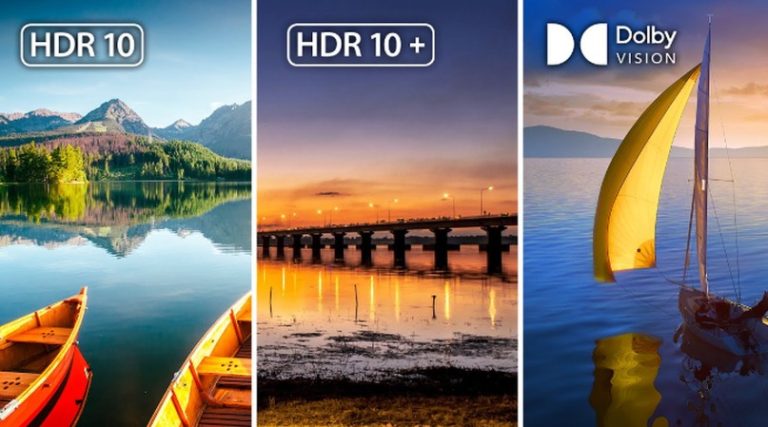
Further changes have also been noticed. Disney+ has removed references to Dolby Vision from its European support pages, and even from some US-facing documentation. In addition, 3D movies have vanished from the service in several European countries, as these titles rely on Dolby Vision when viewed on devices such as Apple Vision Pro.
For now, the impact appears limited to Europe. As of February 2026, Disney+ users in the United States can still access selected titles in Dolby Vision. It remains unclear whether this situation will change or whether the restrictions could eventually apply more broadly. Some European users have claimed online that using a virtual private network to appear as though they are streaming from the US restores Dolby Vision, though Disney has not commented on this practice.
The loss of dynamic HDR formats matters because picture quality is not defined by resolution alone. While 4K content offers four times as many pixels as full HD, much of the visual improvement comes from high dynamic range and wider colour reproduction. Films and series are often mastered at brightness levels of up to 4,000 nits, far beyond what most consumer televisions can display. Even high-end OLED TVs typically peak at around 1,000 to 2,000 nits.
Dynamic HDR formats such as Dolby Vision adjust brightness and contrast scene by scene to match the capabilities of the display. Without this dynamic metadata, content mastered at higher brightness levels can lose highlight detail or shadow information when shown on consumer screens. Standard HDR10 uses fixed settings for an entire programme, which can result in a less accurate image, depending on the TV’s own processing.
Disney says it is working on a solution, but if the changes are tied to an ongoing patent dispute, the situation may not be resolved quickly. InterDigital holds thousands of patents related to radio and video technologies and has previously taken legal action against major technology companies including Amazon, Microsoft and Samsung. In the meantime, European Disney+ subscribers continue to receive 4K streams, but without the advanced HDR formats many consider central to a premium viewing experience.