Cracking Up: Apple’s $3,599 iPhone Duo Hit By Hinge Failures As Critics Pile On
 David Richards
26 Oct 2026
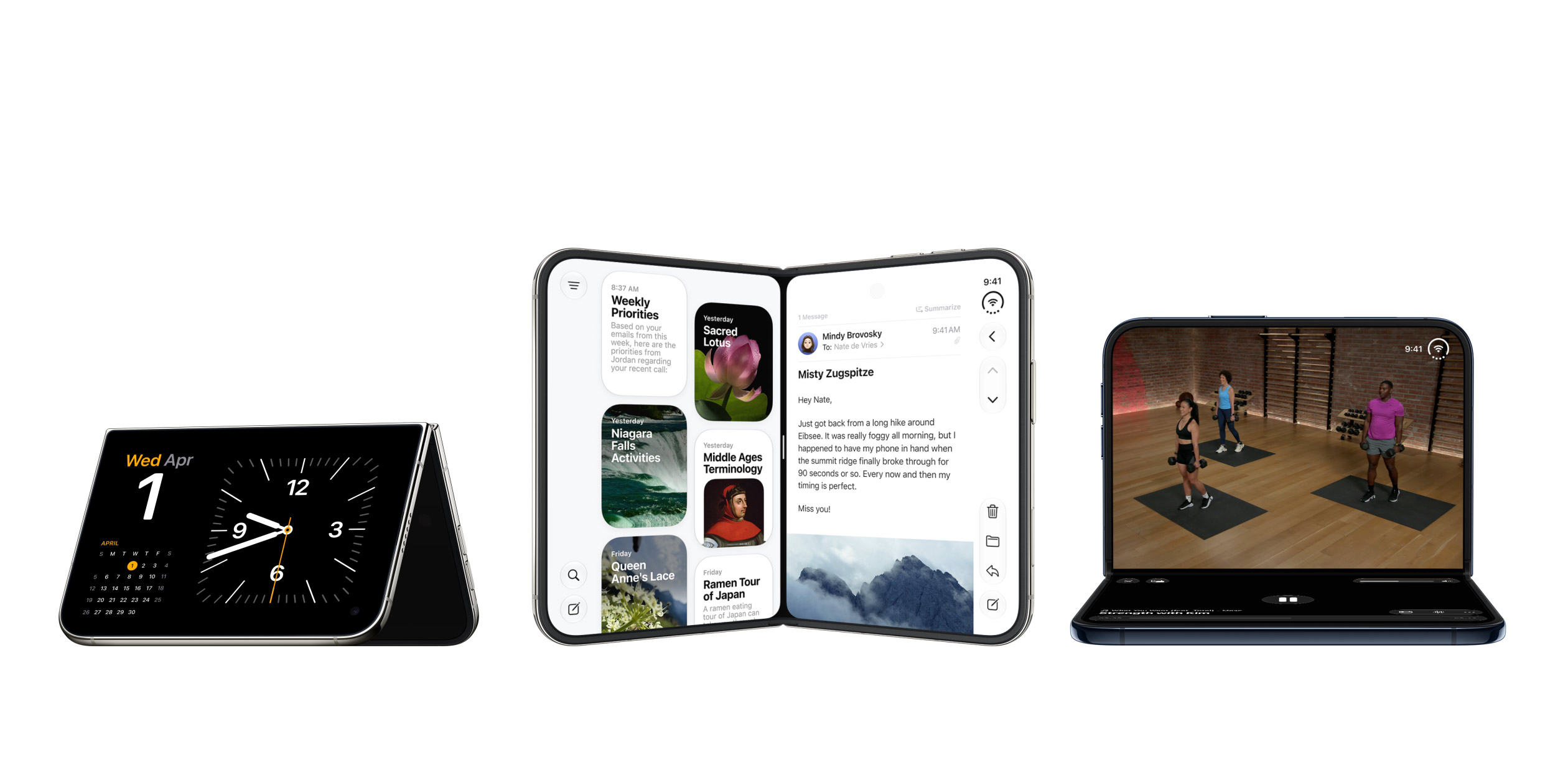
Apple’s first foldable is breaking within hours of purchase, with owners reporting inner screens cracking along the hinge in an echo of the failures that forced Samsung to pull its original Galaxy Fold in 2019.
The $3,599 iPhone Duo has barely reached customers, yet early buyers are flooding online forums with photographs of cracked displays, and the damage is turning up in strikingly similar positions near the fold.
Apple appears to know it has a problem. On 23 October the company quietly published support documentation covering hinge faults, including devices that will not fully open or close, unexpected mechanical noises, loose hinges and physical damage that affects operation. According to 9to5Mac, Apple is directing affected customers straight to hardware inspection rather than software troubleshooting.
“I heard an audible crack”
One Australian owner said his Duo failed after roughly six hours and fewer than 20 openings.
“I was showing it to a friend, and as I opened it, I felt something around the internal hinge, underneath the screen. As I continued opening it, I heard an audible crack, and the screen broke right along the hinge,” he wrote.
He said there were “no marks or damage on the inner screen’s surface or the external hinge to suggest anything had been caught or damaged.” 
The Apple Store swapped the handset for “a brand-new one on the spot,” but replacing a broken unit does not answer the bigger question: why is it breaking at all?
An independent durability test (see separate story) has also exposed potential weaknesses in both the hinge and the folding display.
A manufacturing fault?
The pattern of failures raises serious questions for Apple and its Australian reseller network. Is a particular production batch affected? Is a component supplier at fault? How many warranty replacements are being processed locally? And is Apple facing a common mechanical failure across the hinge assembly?
Apple has had seven years to watch Samsung refine the foldable category, learning from Samsung’s own painful 2019 launch. That makes the Duo’s apparent stumble all the harder to explain.
Heavier, and in places worse, than a standard iPhone.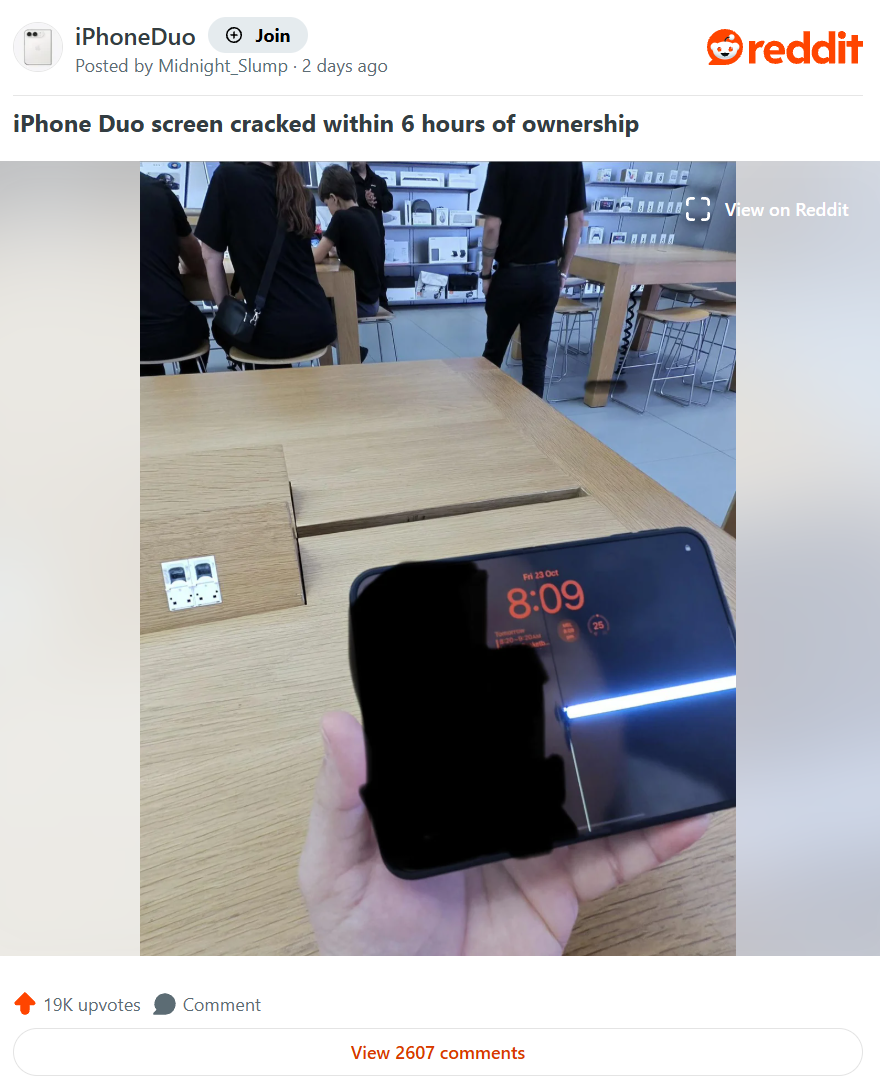
Durability is only the start. Reviewers have lined up to criticise a device that, in several key areas, delivers less than Apple’s own conventional Pro models despite costing considerably more.
Weight: At 254g, the Duo is 53g heavier than Samsung’s 201g Galaxy Z Fold 8. Put another way, Samsung’s rival is roughly 20% lighter.
No Face ID: Apple has reverted to Touch ID, which several reviewers consider a step backwards in convenience.
Camera compromises: There is no dedicated telephoto lens, a glaring omission at this price.
Screen finish: The matte nanotexture coating helps hide the crease but costs contrast, colour vibrancy and video sharpness.
Awkward controls: Top-mounted volume buttons are hard to reach during calls.
Odd proportions: The outer display feels cramped, while the unfolded screen can be unwieldy.
Software gaps: Several third-party apps show black bars, poor scaling or awkward layouts.
Heat: Reviewers report noticeable warming during photography, video calls and demanding tasks.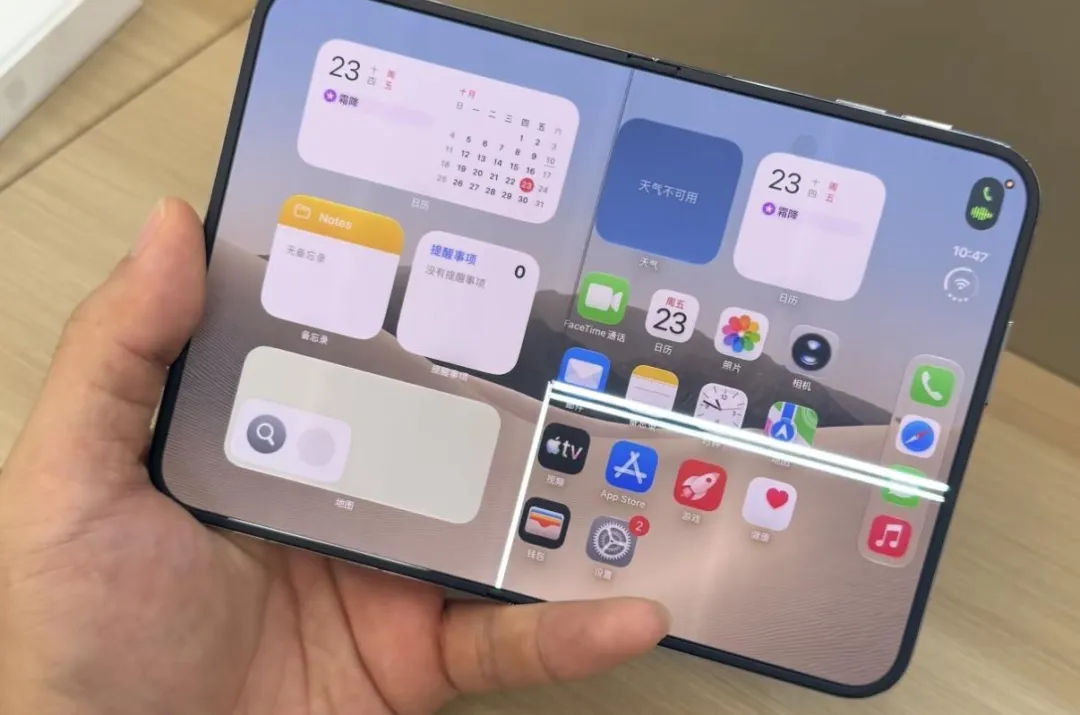
Reviewers unconvinced
WIRED’s Julian Chokkattu criticised the Duo’s heavy build, rigid multitasking features and unoptimised apps, and found its matte display less impressive for video than the conventional iPhone 18 Pro screen.
Consumer Reports questioned whether either screen suits everyday use, finding the external display too cramped for some tasks and the unfolded display unnecessarily large for others.
Form over function
The weight, the loss of Face ID, the missing telephoto camera, the awkward controls and the display trade-offs point to a device where appearance may have trumped practicality.
With Samsung’s eighth-generation Fold already on the market, the comparison on weight, cameras, screen finish, durability and Australian repair costs is not one that currently flatters Apple.