CHOICE Hands Hisense A Shonky Award, But History Suggests The Brand Will Survive
 April Ossington
05 Nov 2026
CHOICE is well known for its annual Shonky Awards and it has struck again. This time Hisense is in the spotlight, although if past recipients are anything to go by, the appliance and TV giant probably does not need to start clearing space in the corporate crisis room just yet.
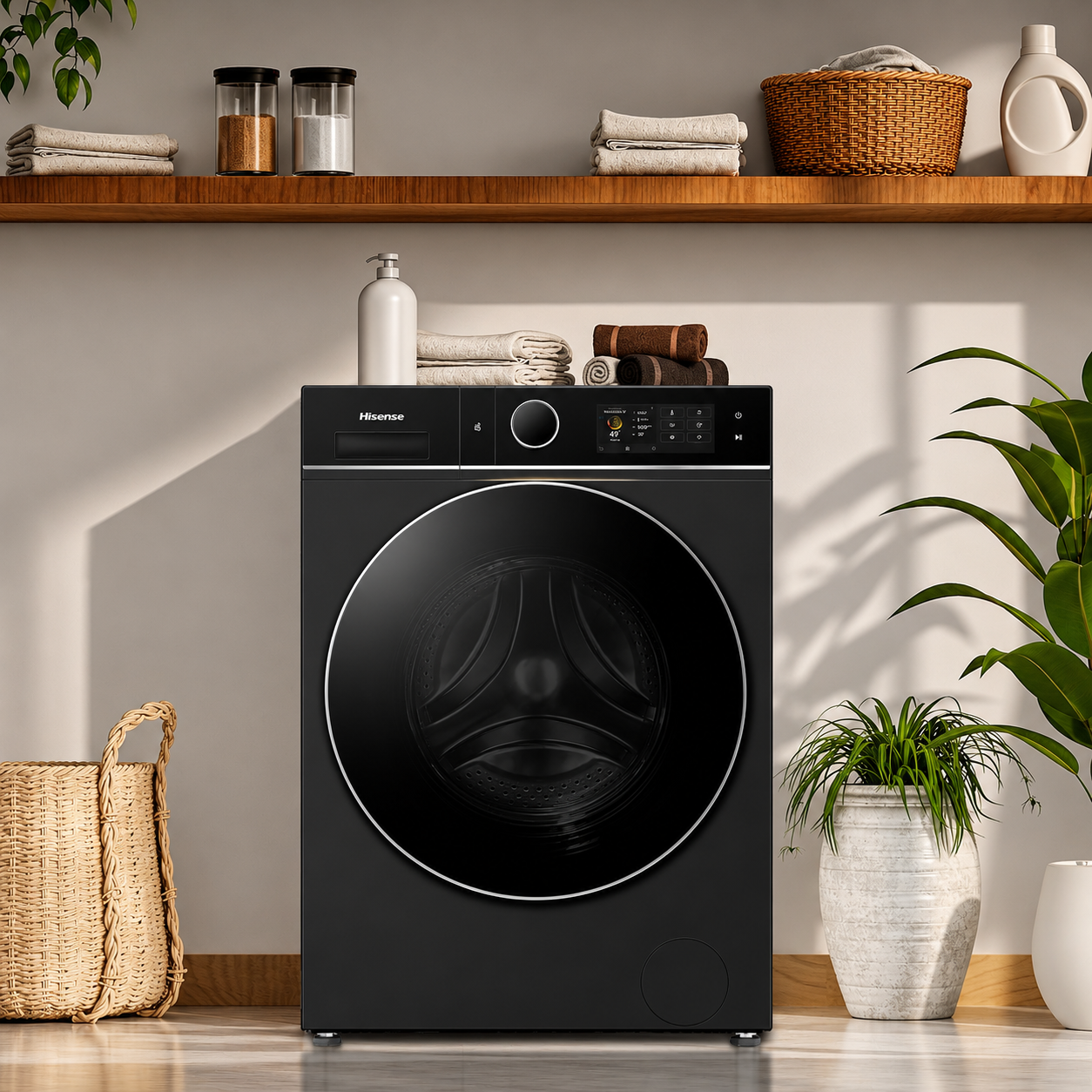
The consumer group handed Hisense one of its 2026 Shonkys over the Series 8i Heat Pump Washer Dryer Combo, criticising the extraordinary cycle times required to achieve the energy ratings shown on the machine.
CHOICE found the washer-dryer took 811 minutes, or 13.5 hours, to dry a full 8kg load using the Eco program nominated for its eight-star drying energy rating. The washing program used to achieve its five-star rating took another 728 minutes. Run the two energy-rating programs one after the other and laundry day stretches beyond 25 hours.
That is certainly enough time to wash the clothes, reconsider your life choices and possibly begin another working day.
But there is an important qualification buried beneath the lemon-shaped trophy. Hisense has not broken the rules.
CHOICE itself acknowledges that manufacturers are permitted under the current system to nominate the program used for energy testing, and even praised the engineering involved in squeezing a heat-pump dryer into a standard-sized combination appliance. Its criticism is ultimately aimed as much at the energy-rating framework as it is at Hisense, arguing that the programs used to achieve headline efficiency ratings may bear little resemblance to those consumers actually use.
Hisense is also in fairly illustrious company.
Samsung has collected Shonkys on multiple occasions. Its SW70SP washing machine received one in 2012 after CHOICE found it used 224 litres of water to wash a 3.5kg load on its auto-sensing mode. Samsung returned in 2015 over its top-loader recall, again in 2016 for the Galaxy Note7, and then in 2017 for a $2,999 washer-dryer that took more than 6.5 hours to dry a 3.5kg test load while using 149 litres of water.
Samsung remains one of the world’s largest consumer electronics and appliance companies.
LG has also been through the Shonky treatment. In 2010, CHOICE criticised its GC-L197NFS refrigerator after finding energy consumption in everyday use was higher than the figure implied by its energy label. LG later provided compensation following ACCC action.
Even Apple appears in CHOICE’s inaugural 2006 Shonky class, although it is worth correcting a commonly repeated version of that story. The award was directed at Apple’s repair and warranty service, rather than simply being an award for the iPod itself. Apple subsequently went on to become one of the world’s most valuable consumer technology brands.
In other words, a Shonky can generate headlines and embarrassment, but receiving one is hardly a guarantee that consumers will abandon a major brand.

Photo by Choice
That appears particularly relevant in Hisense’s case.
The company has been gaining ground in Australia despite operating in a relatively flat appliance and consumer electronics market. Hisense ANZ marketing chief Michelle Wee said earlier this year that the business had recorded consistent double-digit growth over the previous five to six years, with its strategy increasingly focused on taking share from established competitors. That figure is company commentary rather than independently audited market data, but it points to considerable momentum.
There is also harder evidence of that increased presence. Euromonitor’s 2025 Australian refrigeration volume figures put Hisense at 14 per cent, only one percentage point behind Fisher & Paykel and Samsung at 15 per cent and five points behind market leader Electrolux at 19 per cent.
What cannot yet be claimed is that this particular Shonky has had no effect on Hisense sales. CHOICE only announced the 2026 awards on November 4, so it is obviously far too early to measure any commercial fallout. Nor is there public evidence showing whether criticism of this particular washer-dryer has affected Hisense’s Australian laundry share.
What can be said is that Hisense’s broader growth has continued while the company has moved deeper into Australia’s appliance market, and history suggests a Shonky Award alone is unlikely to derail a large brand.
CHOICE would probably disagree with any suggestion the awards are merely theatre. The organisation points to previous Shonkys that have contributed to products being withdrawn, compensation being paid and business practices changing.
But there is undeniably a publicity element to the exercise. The name, the lemons and the deliberately colourful language are designed to attract attention to consumer issues that might otherwise struggle for headlines.
Hisense has been contacted for comment regarding the award and the concerns raised by CHOICE. A response had not been received at the time of publication.
For Hisense, the immediate sting is reputational rather than regulatory. The machine complies with the system as it currently stands, while CHOICE’s bigger argument is that the system itself needs changing.
And judging by the company Hisense now keeps in CHOICE’s Hall of Shame, receiving a Shonky might be embarrassing, but it is hardly a corporate death sentence.