Chinese Appliance Giants Turn Up The Heat On European Brands In Australia
 David Richards
27 Sep 2026
David Richards
27 Sep 2026

Australia’s appliance market is rapidly becoming a battleground for global appliance giants, with Chinese manufacturers taking share, moving upmarket and putting new pressure on European brands that have historically commanded premium prices.
Bosch, Miele, Smeg, AEG and Electrolux are increasingly being squeezed by Chinese-owned groups that are no longer content competing at the bottom end of the market.
Haier, Midea, Hisense, TCL and Changhong are investing heavily in design, technology, manufacturing and their own brands as they chase higher-margin appliance sales outside China.
The shift is particularly significant in Australia, where Chinese brands are already taking meaningful share in refrigeration, laundry and other major appliance categories.
Euromonitor’s 2025 Australian refrigeration volume data puts Electrolux at 19%, Fisher & Paykel at 15%, Samsung at 15%, Hisense at 14% and LG at 11%.
That puts Hisense just five percentage points behind market leader Electrolux, with the Chinese company preparing to show off another generation of appliances in Australia this week.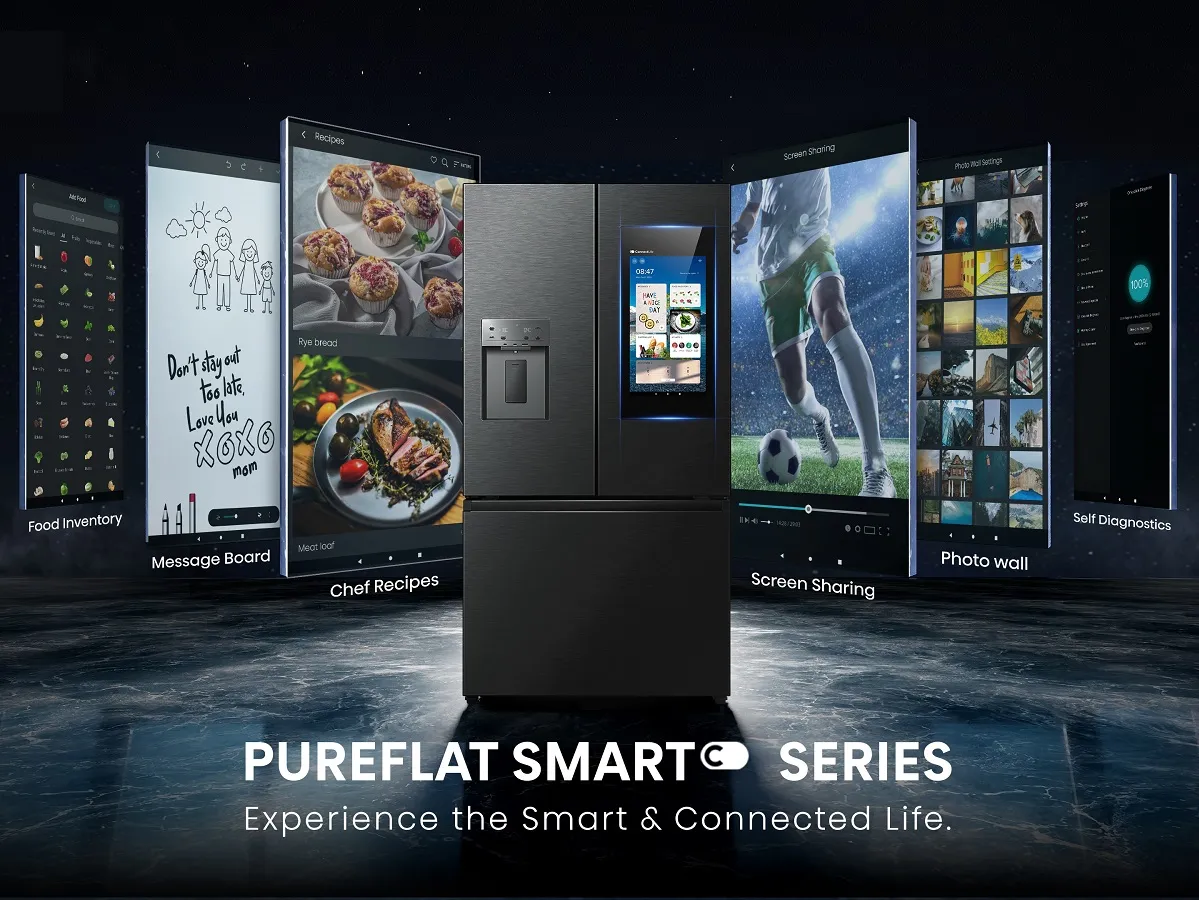
The battle is not simply China versus Europe.
China’s biggest appliance manufacturers are also fighting aggressively among themselves as a depressed domestic property market forces them to chase growth internationally.
That expansion is coming at a cost.
In the first half of 2026, four of China’s seven major appliance manufacturers reported lower profits as weak domestic demand, higher material costs, tariffs and aggressive international expansion hit earnings.
Profit at Hisense Home Appliances fell 20%, while Haier Smart Home reported a 14% decline.
Midea Group went the other way, increasing profit by 2%, while Hisense’s television subsidiary, Hisense Visual Technology, lifted profit by 13%.
Sichuan Changhong Electric the owner of the ChiQ brand and Grundig TV’s was another standout, with net profit tripling.
Changhong is the owner of the CHiQ appliance brand and also has manufacturing links with Beko, with the Chinese group manufacturing selected products for the Turkish-owned appliance business.
Midea Builds A Global Manufacturing Machine
One of the biggest threats to established appliance manufacturers is Midea.
The Chinese giant, which recently expanded its Australian position through the acquisition of Melbourne-based Residentia, generated first-half net profit of US$3.93 billion.
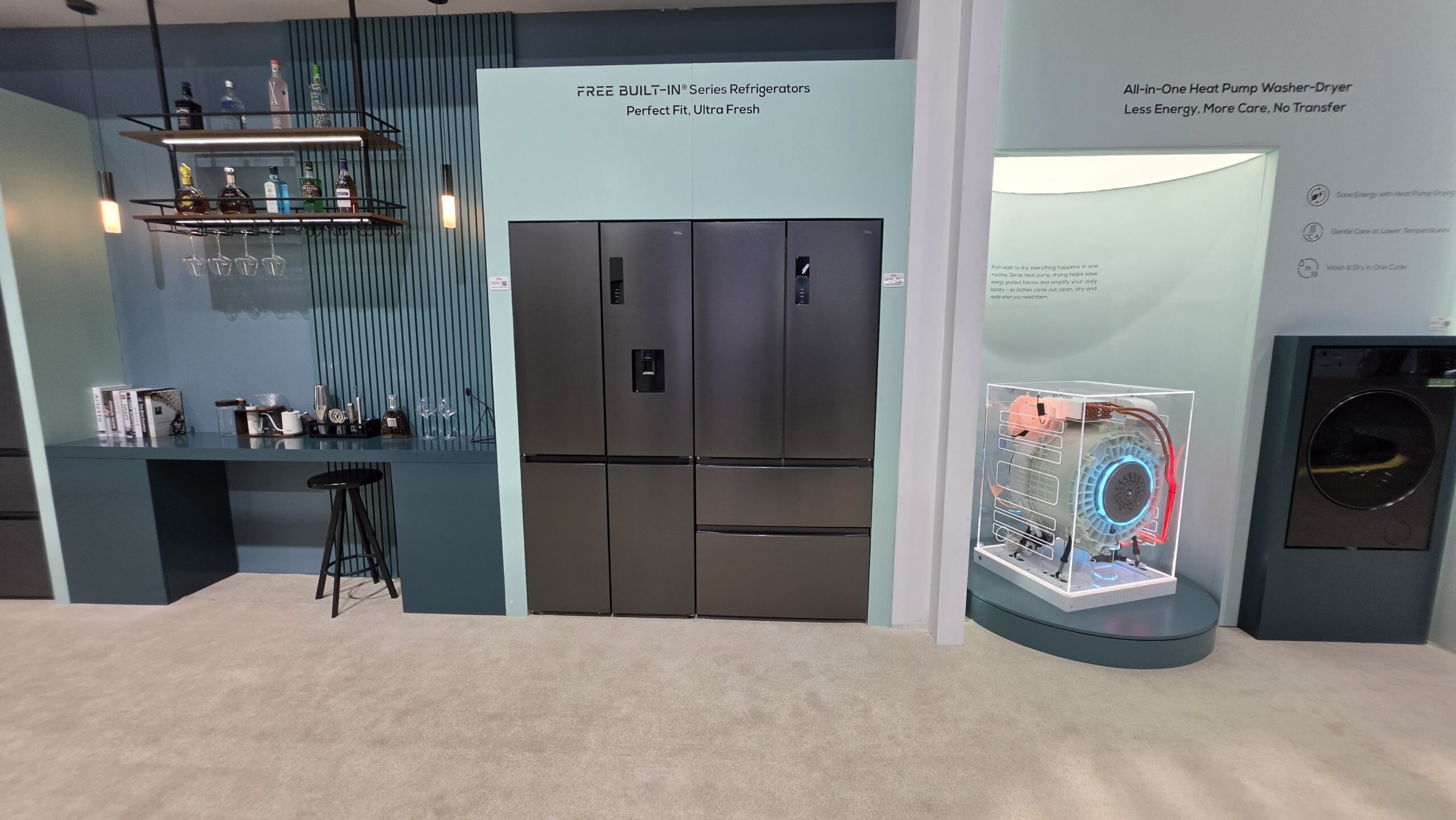
ChiQ appliances at IFA 2026
Revenue generated outside China increased 6%, while international operations accounted for 44% of total revenue.
Midea now operates 45 manufacturing plants globally, supplying international markets through a combination of exports and local manufacturing.
Critically, overseas business is becoming more profitable.
Midea generated a gross margin of around 26% from international sales compared with approximately 24% domestically.
Behind those numbers is a deliberate transformation from being predominantly an original equipment manufacturer supplying products for other brands into an original brand manufacturer selling appliances under brands it controls.
More than 50% of Midea’s overseas appliance revenue now comes from OBM operations, not OEM.
This means Midea is increasingly designing, developing, manufacturing and marketing its own products rather than simply making appliances for somebody else’s badge.
Its acquisition strategy is accelerating that transition.
Revenue from European kitchen appliance brand Teka, acquired by Midea in 2025, increased by roughly 20%, while revenue from Toshiba-branded products in Japan grew around 10% with the possibility that a Toshiba appliance brand could be launched locally in Australia.
Midea also doubled European unit sales of portable air conditioners developed for the region as extreme summer temperatures drove demand.
Hisense Chases Appliance Share
Hisense is pursuing a similar international strategy, but with considerably thinner margins.
International operations represent approximately 46% of Hisense Home Appliances sales, following acquisitions and expansion involving appliance businesses and brands in Japan, Europe and other markets.
Its overseas gross margin, however, sits at only around 11%.
Consumer electronics analyst Liang Zhenpeng argues that Hisense continues to have a significant proportion of lower-margin OEM business, while higher-value international brands still make a relatively small contribution to revenue.
That is something Hisense is clearly attempting to change.
Australia could become an important battleground.
Hisense has already demonstrated in televisions that a Chinese company can migrate from being perceived primarily as a discount brand to competing directly with Samsung, LG and Sony across mainstream and increasingly premium price points.
It is now attempting the same strategy in appliances.
Hisense sells refrigeration, laundry appliances, wine cabinets, dishwashers and air conditioners in Australia, with the company claiming distribution through more than 1,000 retail outlets including JB Hi-Fi, The Good Guys, Harvey Norman and Bing Lee.
For major retailers, Hisense represents another Chinese supplier capable of providing scale, aggressive pricing and an increasingly broad product portfolio.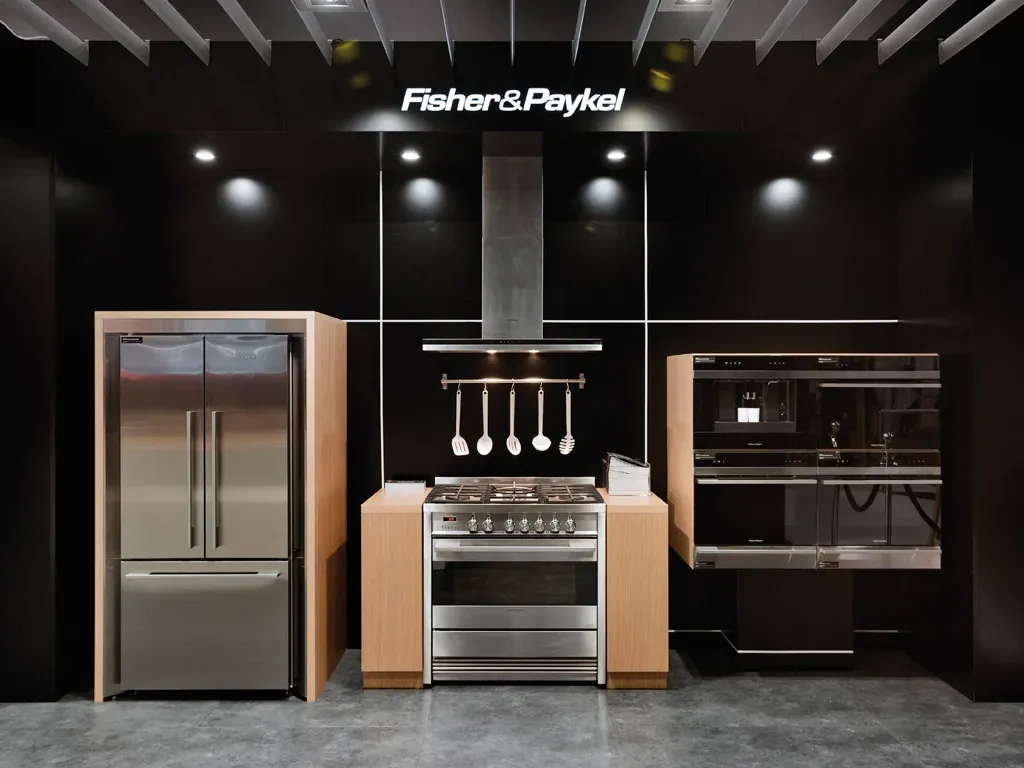
Haier Has A Different Weapon
Haier’s Australian strategy presents a different challenge for European manufacturers because it does not have to stretch one brand across every price point.
It effectively operates a two-brand strategy, using Haier across value and mainstream categories while Fisher & Paykel competes in premium, design-led appliances.
That gives the Chinese-controlled group the ability to attack different market segments without necessarily diluting its premium positioning.
The strategy is already producing results.
Euromonitor data shows Fisher & Paykel increased its Australian cooking appliance volume share to 9% in 2025, putting it level with Smeg, while Electrolux remained the category leader with 26%.
Euromonitor has attributed some of Fisher & Paykel’s gains to the resources available from parent Haier and its dual-brand strategy.
Laundry provides an even clearer picture of Haier’s strength.
The group was Australia’s largest home-laundry supplier by volume in 2025 with a 26% share, according to Euromonitor.
LG followed at 16%, Electrolux at 12%, Bosch at 7% and Miele at just 6%.
Haier also says it has been the world’s number-one major appliance brand by volume for 17 consecutive years, citing Euromonitor research.
China Goes Premium
Haier is also using its international engineering operations to attack one of the traditional strengths of European appliance manufacturers, energy efficiency and premium engineering.
Haier Smart Home chairman and CEO Li Huagang recently unveiled the company’s X Series 11 washing machine, which the company claims delivers substantially reduced energy consumption and meets demanding European efficiency requirements, partly through the use of AI.
At IFA, Haier told ChannelNews it intends to bring more energy-efficient appliances developed through its European operations into the Australian market.
Li highlighted just how international Chinese appliance development has become.
“Structural design was done in Germany, the look was designed in Italy, the manufacturing technologies come from Japan and the motor from New Zealand, while the AI algorithm was handled by our team in China,” he said.
This globalisation of Chinese appliance development is important.
Chinese manufacturers are no longer relying solely on cheap manufacturing and aggressive pricing.
They are acquiring European brands, engineering operations, intellectual property and distribution while building factories around the world.
At the same time, they are developing increasingly sophisticated products under their own brands.

(240907) — BERLIN, Sept. 7, 2024 (Xinhua) — This photo taken on Sept. 6, 2024 shows the booth of Haier at IFA Berlin 2024 in Berlin, Germany.
IFA Berlin 2024, the world’s leading trade show for consumer electronics and home appliances, kicked off Friday, bringing together over 1,800 global exhibitors, 125 keynote speakers and more than 182,000 visitors from 139 countries, according to the organizer.
This year’s event marks the 100th anniversary of IFA, with global tech giants showcasing their cutting-edge innovations like artificial intelligence, robotics, and even a flying car. (Xinhua/Du Zheyu)
European Brands Face A New Reality
The threat for European appliance manufacturers in Australia is therefore no longer simply cheaper Chinese products sitting at the bottom of a retailer’s range.
Chinese groups are moving directly into the categories where European brands historically enjoyed some of their strongest margins.
Haier has Fisher & Paykel.
Hisense who own the struggling ASKO in Australia is using the brand-building playbook that helped it take television share.
Changhong has CHiQ while also operating as a major manufacturer for other appliance businesses with the Company set to launch Grundig branded TV’s next year in Australia.
TCL is also expanding its appliance ambitions alongside its already substantial television business.
The result is a market where Chinese manufacturers increasingly possess the scale, manufacturing efficiency, technology and brand portfolios to compete from entry level through to premium.
And with China’s domestic appliance market under pressure from the country’s prolonged property downturn, these companies have an even bigger incentive to chase growth overseas.
For Bosch, Miele, Smeg, Electrolux and other established European appliance businesses, the Australian market is consequently becoming significantly more difficult.
Their new competitors are not simply cheaper.
They are getting bigger, better funded and increasingly determined to take the premium sales and margins that European appliance brands once largely had to themselves.