BREAKING NEWS:Apple Crashes After Another Botched Update Similar To Microsoft Disaster
 David Richards
18 Nov 2026
Apple’s global network went down early this morning after what the company admits was a failed internal update. iPhone and Mac users were locked out of iCloud, Apple Pay and the App Store, and Apple’s own stores and staff systems went down around the world.
The crash started at about 4.45am AEDT. It’s the second time in under a week that a mistake inside a US tech giant has knocked out services that Australian consumers, businesses and government agencies use every day. It also raises new questions about why Canberra has no fallback when Silicon Valley falls over.
Outage reports on Downdetector jumped into the tens of thousands within minutes. Apple Pay was hit first, then iCloud, Sign in with Apple, Apple Business Manager, Apple Support, the App Store and iPhone activation. Users said they’d been unexpectedly signed out of iCloud on their iPhones and Macs.
Apple’s own System Status page confirmed problems with iCloud Account and Sign In, AppleCare on device, and its business and school services.
It was worse inside Apple. Bloomberg reports that the failure took out AppleWeb, the employee portal; AppleConnect, the internal sign-in system; and VPN access for remote staff. Employees couldn’t download internal software builds, open calendars or book meeting rooms. Even the internal website Apple uses to track outages went down. Many staff couldn’t work for hours.
Apple Stores around the world were also hit. Customers couldn’t complete purchases, and repairs and service were disrupted.
“Many of our systems are back up and running after an internal update caused some outages this morning,” Apple said in a statement. “We’re working to get the remaining systems online as soon as possible.”
Apple said the outage wasn’t caused by a cyber attack.
One key, one point of failure
The incident shows how much now depends on a single Apple Account. The same login runs iCloud, Apple Pay, the App Store and even setting up a new iPhone. When it breaks, all of them break together.
Second US tech failure in a week
On Friday 13 November, Microsoft suffered one of its worst outages. Outlook, Teams, SharePoint and Copilot went down in 74 countries, and it took the company more than 12 hours to restore most services.
ASIO and the Australian Federal Police were among the organisations affected. Home Affairs Minister Tony Burke compared the incident to the 2024 CrowdStrike disaster, describing it as an update that had “gone awry”. The National Cyber Security Coordinator, Lieutenant General Michelle McGuinness, was brought in to assess the impact on Australia.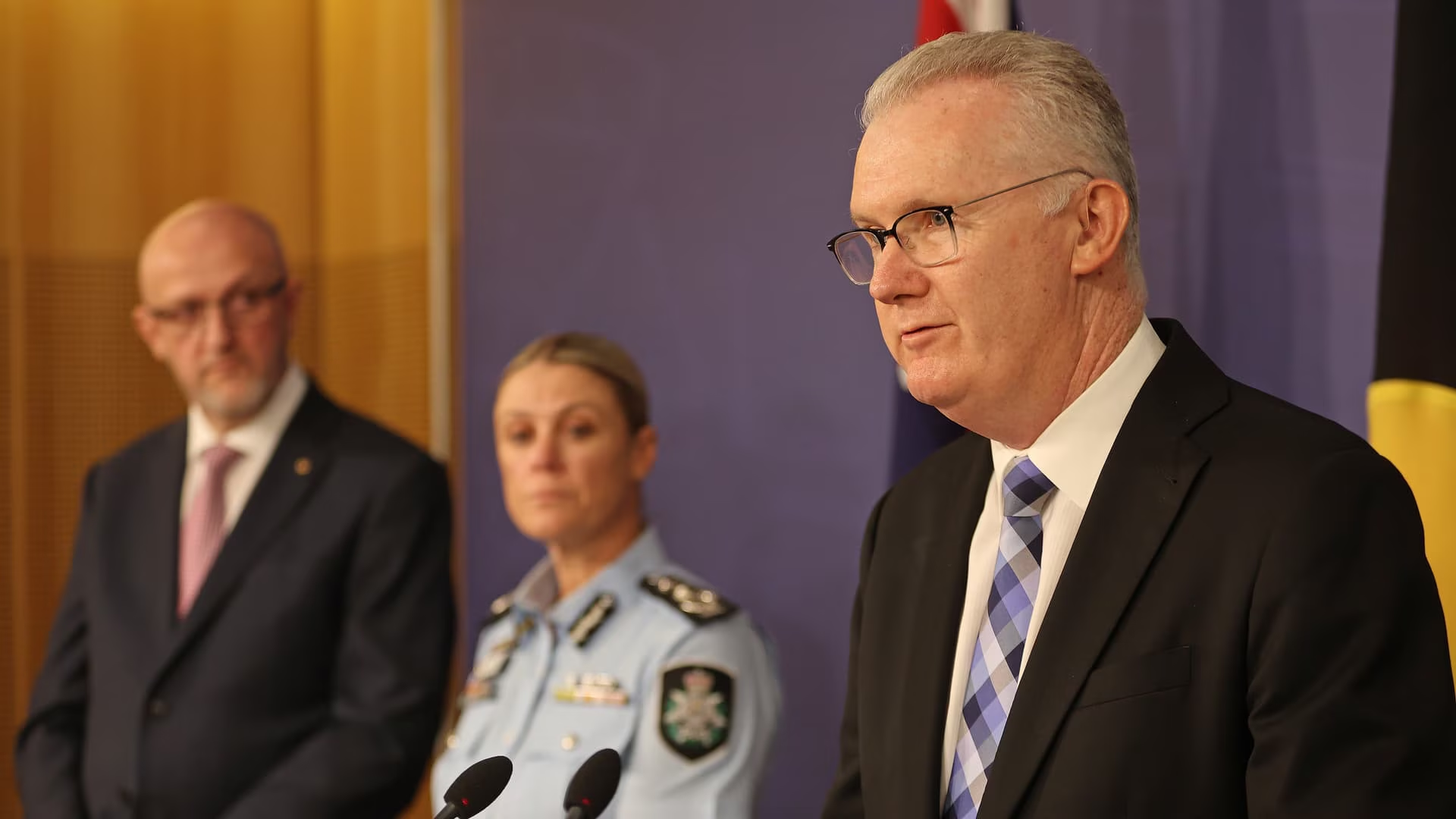
The run of US failures has also hit other critical systems:
On Friday, flights across the US were grounded for more than four hours after equipment outages at Federal Aviation Administration air traffic control facilities.
JPMorgan Chase, the largest US bank, reported a “technical issue” this week.
The US National Security Agency lost a classified network it uses for internal communications. The NSA is a Five Eyes partner of the Australian Signals Directorate.
US authorities say the incidents don’t appear to be linked. For Australia, the link is dependence.
Where is Canberra’s plan B?
Federal and state governments, ASIO, the AFP, the banks and much of corporate Australia now run on email, collaboration, cloud and payment platforms owned and run in the US. When those companies make a mistake in California or Washington state, Australian agencies go dark with no local fallback.
So far the Albanese Government has treated these as incidents to respond to, not as a sovereign-capability problem to fix.