Australian Tech and Lifestyle Publishers Brace for “Google Zero” Era As ChannelNews Grows Traffic
 David Richards
27 Aug 2025
David Richards
27 Aug 2025

Australian tech and lifestyle publishers are grappling with the growing threat of “Google Zero” and the rise of AI-generated search results, with many already seeing steep declines in web traffic because of their reliance on social media to drive traffic.
The introduction of Google’s AI Overviews is accelerating the fall in traffic to these sites, stripping away clicks that once flowed to independent tech and trade websites, this is not the case for ChannelNews or our direct traffic SmartHouse publications.
Research shows Google referrals to publishers’ websites have dropped from around 65% of traffic five years ago to closer to 30% today — and that was before the rollout of AI Overviews and AI Mode. Interviews conducted by Bloomberg with 25 publishers confirm that the shift is disrupting the long-standing exchange in which quality content was rewarded with traffic from Google Search.
“Like everyone, we have definitely felt the impact of AI Overviews,” said Sean Cornwell, CEO of UK-based Immediate Media, publisher of Radio Times and Good Food. “There is only one direction of travel. Not only are AIs getting better, but they’re getting better in an exponential fashion. Drop-offs will be stark in the next few years.”At 4Square Media we have largely avoided this trap by never relying heavily on Google or Facebook referrals as a result of the direct traffic we generate based on our editorial content focus we have been able to grow visitors directly to our web sites.
Fifteen years ago we decided not to depend on social media or search traffic. Instead, we focused on exclusive journalism and direct relationships with brands like Virgin, Qantas, JB Hi-Fi and The Good Guys who have audiences that feed of independent media information.
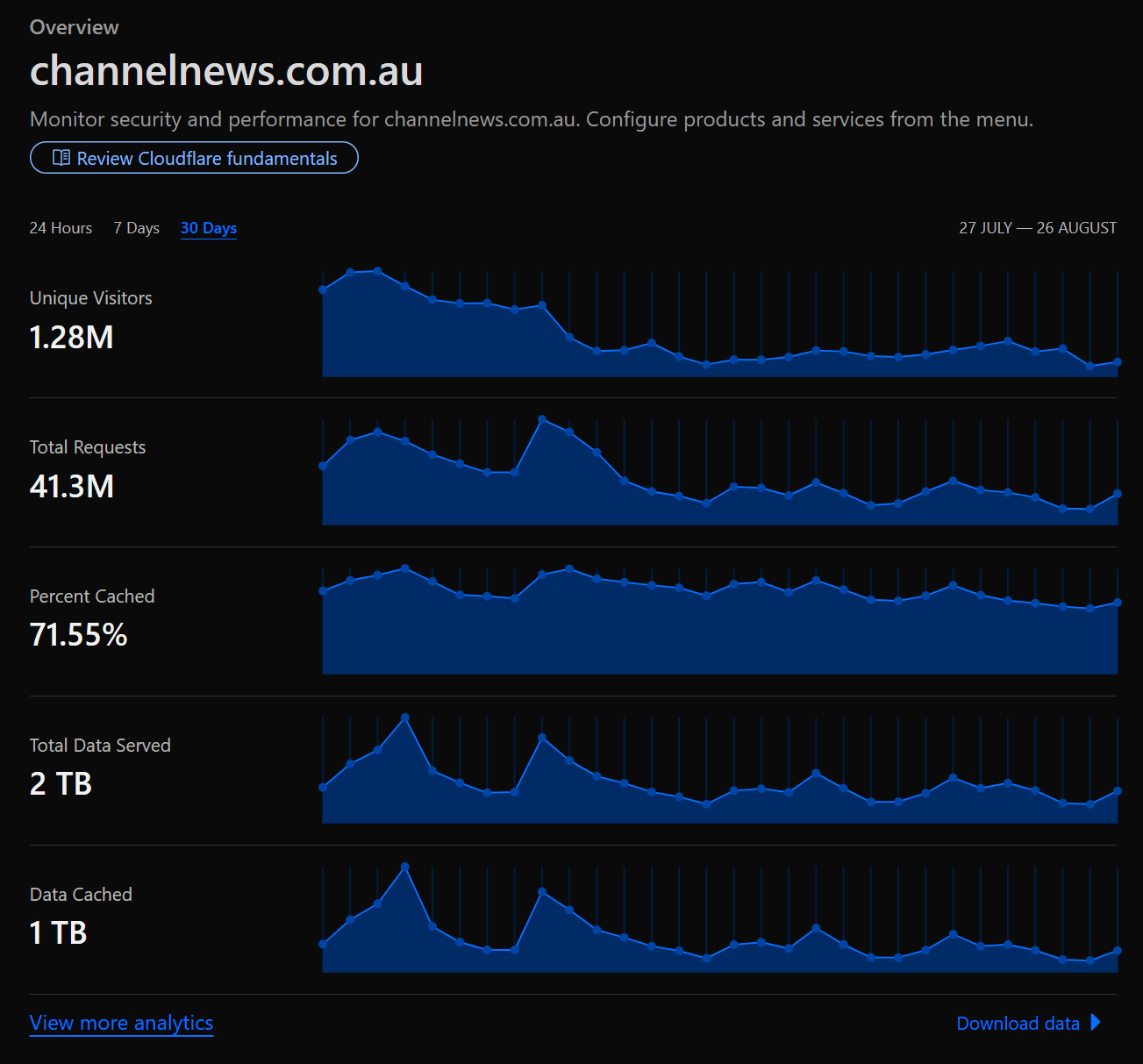
Source Cloudflair, whose code is embedded in our web site.
That approach, designed to build trust with retail partners and readers, has paid off.
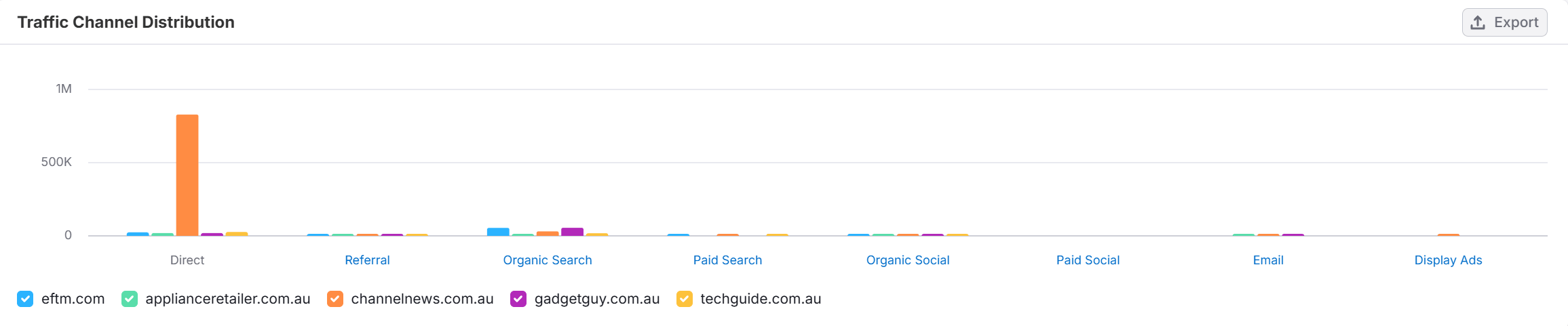
Source SemRush
Today we more than one million unique visitors a month visiting ChannelNews for the past year. Last month we had over 1.2 million Unique visitors.
Unlike some rivals, 4Square Media also reviews products from major brands such as Apple, Sony and Dyson regardless of whether there’s a commercial contract in place, arguing that independent coverage drives both trust and traffic.Not all publishers have been as resilient.
Are Media, Australia’s largest magazine group — owner of The Australian Women’s Weekly, Woman’s Day, Belle, Home Beautiful and others — is now up for sale. Its private equity owner, Mercury Capital, has engaged KPMG Corporate Finance to manage the process.

Seversal media titles are coming under pressure from declining print and changes to AI
Once dominant, Are Media was slow to embrace digital, choosing instead to double down on print. Where digital was adopted, much of its content was branded or paid-for editorial. The strategy has left the business struggling with losses as AI and Google’s evolving search models reshape consumer habits.
Globally, the story is the same. The UK’s Professional Publishers Association recently reported that media companies were “losing visibility and value as their content is used but not rewarded,” with about half of respondents suffering a decline in search traffic in the past year.
Rise of the “Zero-Click” Search
Studies from Pew Research Center and Authoritas show that Google users are less likely to click through to websites when an AI summary is displayed in search results.
Enders Analysis estimates that four in five consumers now rely on “zero-click results” for at least 40% of their queries.
Publishers argue this shift reduces incentives to invest in quality reporting, ultimately degrading the pool of information that feeds Google’s AI models. Some also warn of risks to consumers: for example, Google’s AI has already produced questionable or inaccurate product recommendations, including unsafe home-renovation advice and references to non-existent items.
Google disputes the findings, claiming the research into its AI Overviews contains “fundamental flaws.”
But the trend is clear: as AI-driven search becomes the default, many publishers face a stark choice — adapt, reinvent their distribution strategies, or risk disappearing from the digital landscape altogether.