Apple’s October Surprise Could Include M5 iPad Pro and 5 Other Products
 Isabella Alexiou
30 Sep 2025
Isabella Alexiou
30 Sep 2025

Apple could announce up to six new products before year’s end, with rumours pointing to an M5 iPad Pro, updated Apple TV 4K, new HomePod models, second-generation AirTag, and an entry-level MacBook powered by an iPhone processor.
While M5 Mac releases appear delayed until early 2026, the company may host an October or November event, or follow its previous strategy of daily website announcements for new accessories and tablets.
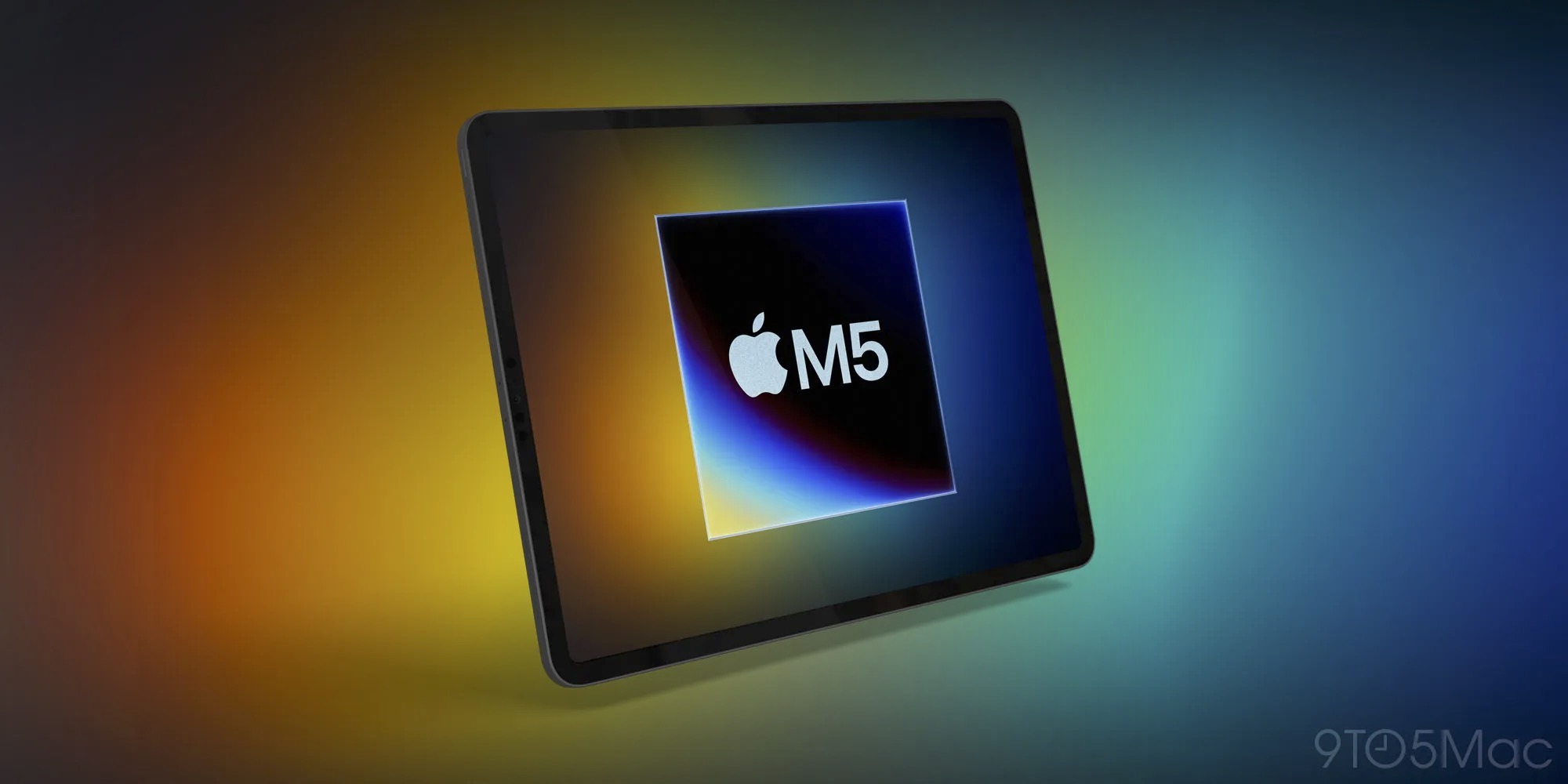
The most significant potential release is an M5-powered iPad Pro, reportedly targeting an October launch.
The upgrade would include Apple’s latest processor and a dual front-facing camera system, potentially borrowing the new Centre Stage capabilities from the iPhone 17’s selfie camera.
Current iPad Pro models with M4 chips start at $1,699 for the 11-inch and $2,199 for the 13-inch.
An M5 upgrade would likely maintain similar pricing while offering performance improvements primarily beneficial for professional workflows and AI processing.
MacRumors reports Apple is preparing a new Apple TV 4K for 2025, potentially featuring the A19 processor and increased RAM to support Apple Intelligence features.
The current Apple TV 4K retails for $219 (32GB) and $249 (64GB).
The A19 chip would represent a significant jump from the current A15 Bionic, potentially enabling more demanding gaming and AI-powered features.
However, the practical benefits for typical streaming use cases remain unclear.
Conflicting reports suggest either a HomePod 3 or HomePod mini 2 is in development.
The original HomePod was discontinued in 2021 before returning in 2023 at $479, while the HomePod mini hasn’t been updated since 2020 despite its $159 price point.
Either update would likely focus on improved audio processing and Siri capabilities, though Apple’s smart speaker market share remains minimal compared to Amazon and Google.
The AirTag 2 has been rumoured for months, with expectations it will feature Apple’s new U2 chip for improved precision tracking.
The current AirTag sells for $55 individually or $185 for a four-pack.
Originally expected at WWDC 2025, the tracker could now arrive before year’s end.
The U2 chip would enable more accurate location tracking and potentially new features for Apple’s Find My network.
Perhaps most intriguing is a rumoured entry-level MacBook using an iPhone processor rather than traditional Mac silicon.
This could position below the current MacBook Air (starting at $1,599) as a more affordable option for basic computing needs.
Such a device would likely target education markets and light users, potentially starting around $999-1,199 to compete with Chromebooks and budget Windows laptops.
Apple’s approach to these announcements remains unclear.
The company could host a traditional October event if the M5 iPad Pro represents a significant upgrade.
Alternatively, it might follow the 2020-2021 pattern of daily website updates for smaller product refreshes.
The absence of M5 Macs suggests Apple is decoupling its chip generations across product lines, potentially allowing iPad updates independent of Mac release schedules.
This flexibility could enable more frequent updates tailored to each product category’s needs.
These potential releases reflect Apple’s strategy of incremental improvements across its ecosystem rather than revolutionary changes.
The focus on processor updates, connectivity improvements, and refinements to existing products suggests a mature market where marginal gains matter more than breakthrough innovations.
For Australian consumers, the releases would arrive during the holiday shopping season, though local availability often lags US launches by weeks or months for accessories and non-flagship products.