Apple Moves To Secure Long-Term Memory Supply As AI Demand Tightens Chip Market
 April Ossington
23 Nov 2026

Apple is reportedly negotiating a long-term memory supply agreement with Samsung Electronics as growing demand for artificial intelligence infrastructure places increasing pressure on global semiconductor supplies.
The technology giant is understood to be finalising a deal that would secure DRAM memory chips from Samsung for four to five years, beginning in the first half of 2027.
The proposed arrangement would establish minimum supply commitments, although pricing would continue to reflect prevailing market conditions.
The negotiations follow reports that Apple has already reached a separate supply agreement with South Korean semiconductor manufacturer SK hynix.
The developments signal a change in Apple’s approach to purchasing components, with the company traditionally favouring shorter contracts that allow it to negotiate more competitive prices.
As one of the world’s largest smartphone manufacturers, selling more than 200 million iPhones annually, Apple has historically been able to use its substantial purchasing volumes to secure favourable terms from suppliers.
However, tightening memory availability is changing the balance of power across the semiconductor industry, with manufacturers increasingly able to negotiate longer commitments from major technology customers.
The shift is being driven largely by the rapid expansion of AI data centres, with companies including Amazon and Google investing heavily in computing infrastructure that requires substantial quantities of advanced memory.
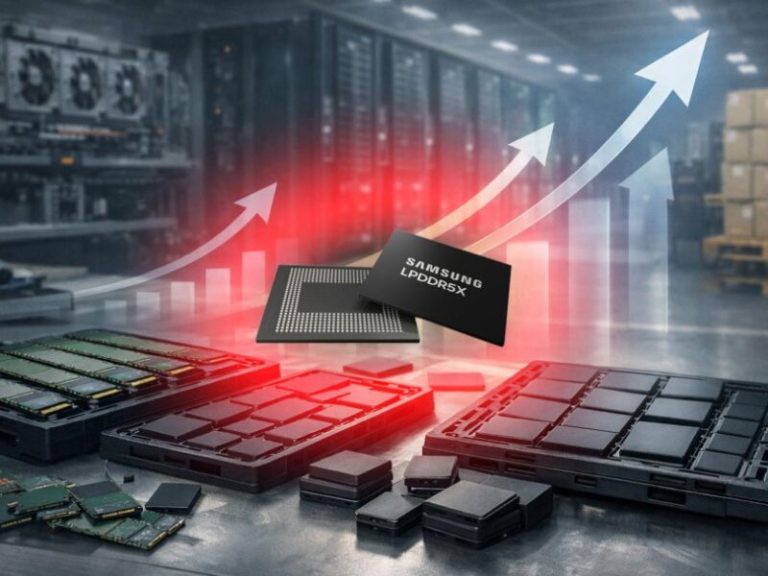
Demand for high-bandwidth memory and server DRAM has encouraged semiconductor manufacturers to prioritise these higher-margin products, reducing the production capacity available for conventional memory used in smartphones and personal computers.
Research firm TrendForce expects server DRAM to account for 43 per cent of total memory demand in 2026, compared with 38 per cent in 2025.
Over the same period, mobile DRAM’s share is forecast to decline from 36 per cent to 32 per cent, reflecting the changing priorities of the global memory market.
Memory manufacturers have already begun securing longer-term purchasing commitments from their largest customers.
SK hynix announced in October that it had established supply agreements with 14 major international customers, covering more than half of its planned production capacity for 2027 and 2028.
These arrangements generally extend for approximately five years, providing greater certainty over future demand.
Samsung has also been expanding its long-term customer agreements, confirming that it had signed contracts with 10 major customers and was negotiating similar arrangements with another 10.
For semiconductor manufacturers, these agreements offer greater financial predictability in a sector historically characterised by substantial fluctuations in memory prices and demand.
They also allow suppliers to establish firmer purchasing commitments, reducing their exposure to sudden changes in customer orders.
US semiconductor manufacturer Micron Technology has introduced more restrictive conditions in some of its five-year strategic supply agreements.
These include minimum and maximum pricing arrangements, upfront deposits and take-or-pay provisions that require customers to pay for agreed quantities even when actual purchases fall below contracted volumes.
There has been no indication that Apple’s proposed agreement with Samsung contains comparable conditions.
Nevertheless, the broader adoption of long-term contracts demonstrates how increasing demand for AI infrastructure is reshaping relationships between semiconductor manufacturers and their customers.
For Apple, securing a reliable memory supply could become increasingly important as competition for components intensifies across smartphones, computers and AI computing systems.
The company’s willingness to consider a multi-year commitment suggests that maintaining consistent access to essential components is becoming a greater priority than retaining maximum flexibility over purchasing prices.
With investment in AI infrastructure expected to remain a major influence on semiconductor demand, long-term supply agreements could become an increasingly important feature of the global memory market.