AMD Unveils New AI Servers And Robotics Chips In Multi-Trillion-Dollar Push Against Nvidia
 Joe Gallop
24 Jul 2026
Joe Gallop
24 Jul 2026
AMD has unveiled a sweeping new portfolio of AI infrastructure and robotics products as it attempts to challenge Nvidia in a computing market it expects will reach US$2 trillion by 2030.
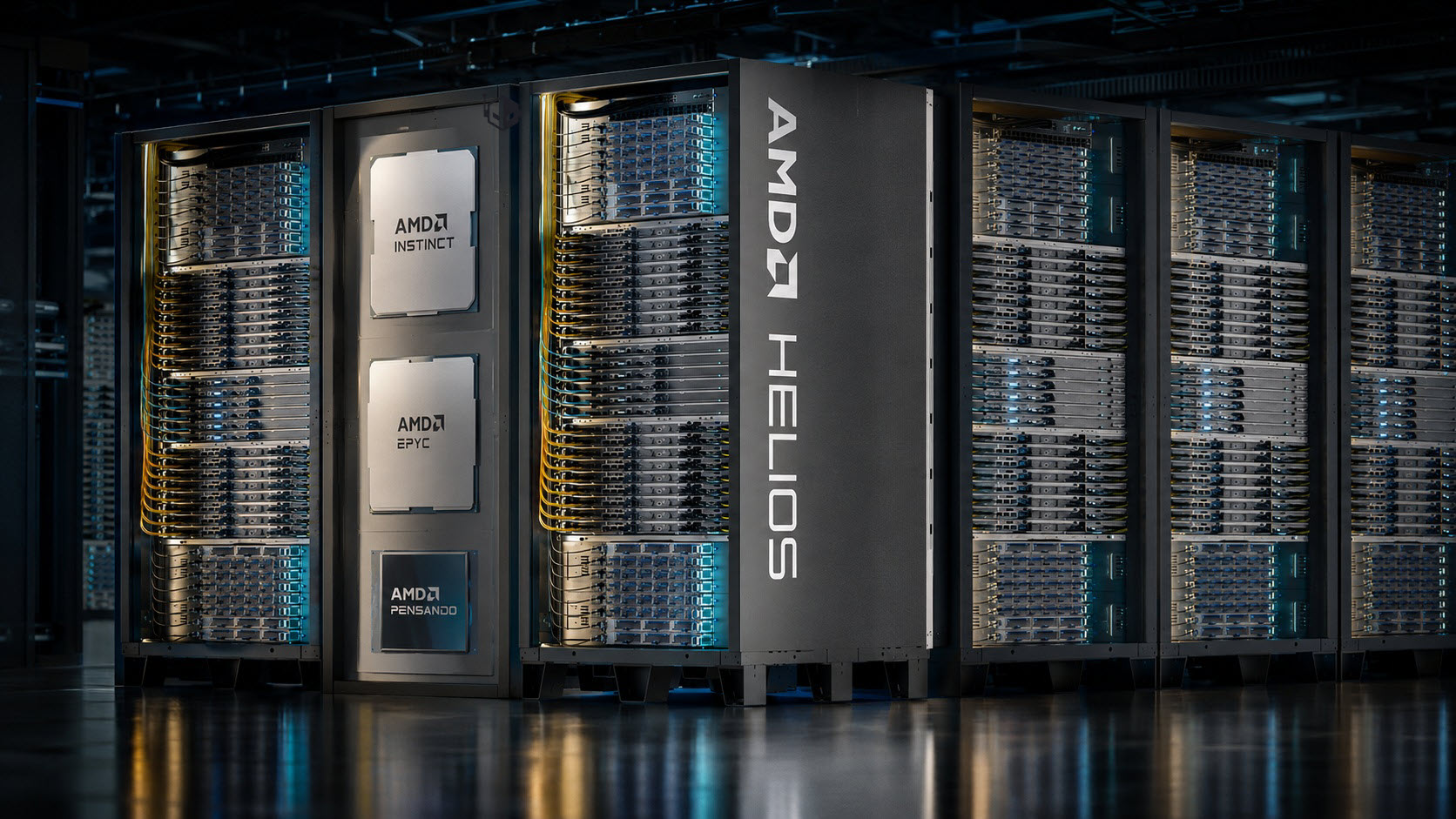
The centrepiece is Helios, a liquid-cooled rack-scale AI platform combining 72 Instinct MI455X accelerators, sixth-generation EPYC server processors, Pensando networking and AMD’s ROCm software.
AMD claims a Helios rack offers up to 2.9 exaflops of peak FP4 performance, 31TB of HBM4 memory and 1.7 petabytes per second of memory bandwidth.
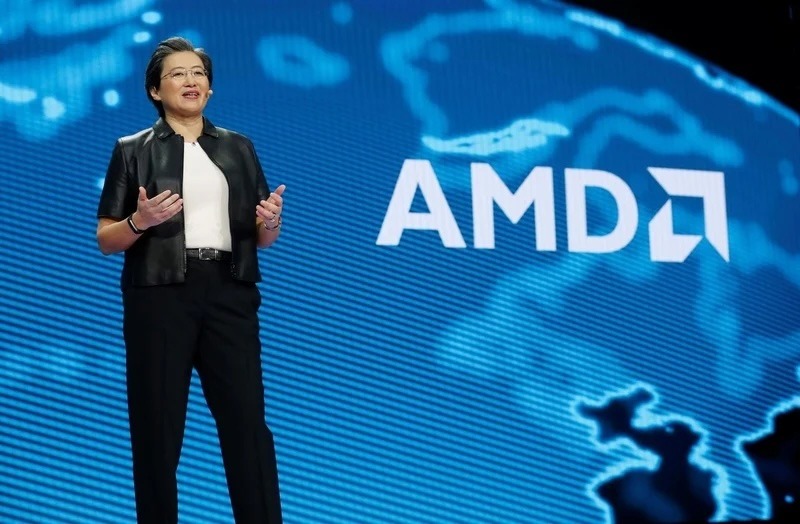
AMD Chief executive Lisa Su (pictured below) said Helios was already in full production, with shipments scheduled to begin near the end of the third quarter.
OpenAI executive Sachin Katti said the ChatGPT developer expected to deploy Helios “at massive scale” from late 2026, before accelerating installations throughout 2027.
AMD has also secured commitments from Anthropic, which plans to deploy up to two gigawatts of Instinct processors from the first half of 2027 under an agreement that includes a potential US$5 billion investment from AMD.
The chipmaker estimates the AI accelerator market alone will be worth US$1.4 trillion by 2030, while the market for data centre central processing units could reach US$220 billion.
AMD said its new EPYC 9006 processors would offer up to 256 cores and 512 threads for cloud computing, AI agents and high-performance workloads.
Its expansion extends beyond data centres. The company also launched the Ryzen AI Embedded X100 series for robotics, industrial automation, healthcare and defence applications.

The processors combine up to 16 Zen 5 CPU cores, RDNA 3.5 graphics and an XDNA 2 neural processor capable of up to 50 TOPS. They are designed for continuous operation and a product lifecycle of up to 10 years.
AMD also announced a partnership with Cerebras to combine Helios with the company’s Wafer-Scale Engine in a disaggregated AI inference system.
AMD says the setup could deliver up to five times more tokens per second per watt, with availability initially planned through Cerebras Cloud in the second half of 2026.
AMD also introduced Kria development systems and a robotics partner network intended to offer an open alternative to Nvidia’s CUDA and Jetson platforms.
Despite the announcements, AMD shares fell during the presentation as investors questioned how quickly the company could narrow Nvidia’s commanding lead in AI infrastructure.