Logitech Unveils Largest Enterprise Product Launch In Company History
 Dominic Bayley
14 Oct 2026
Dominic Bayley
14 Oct 2026
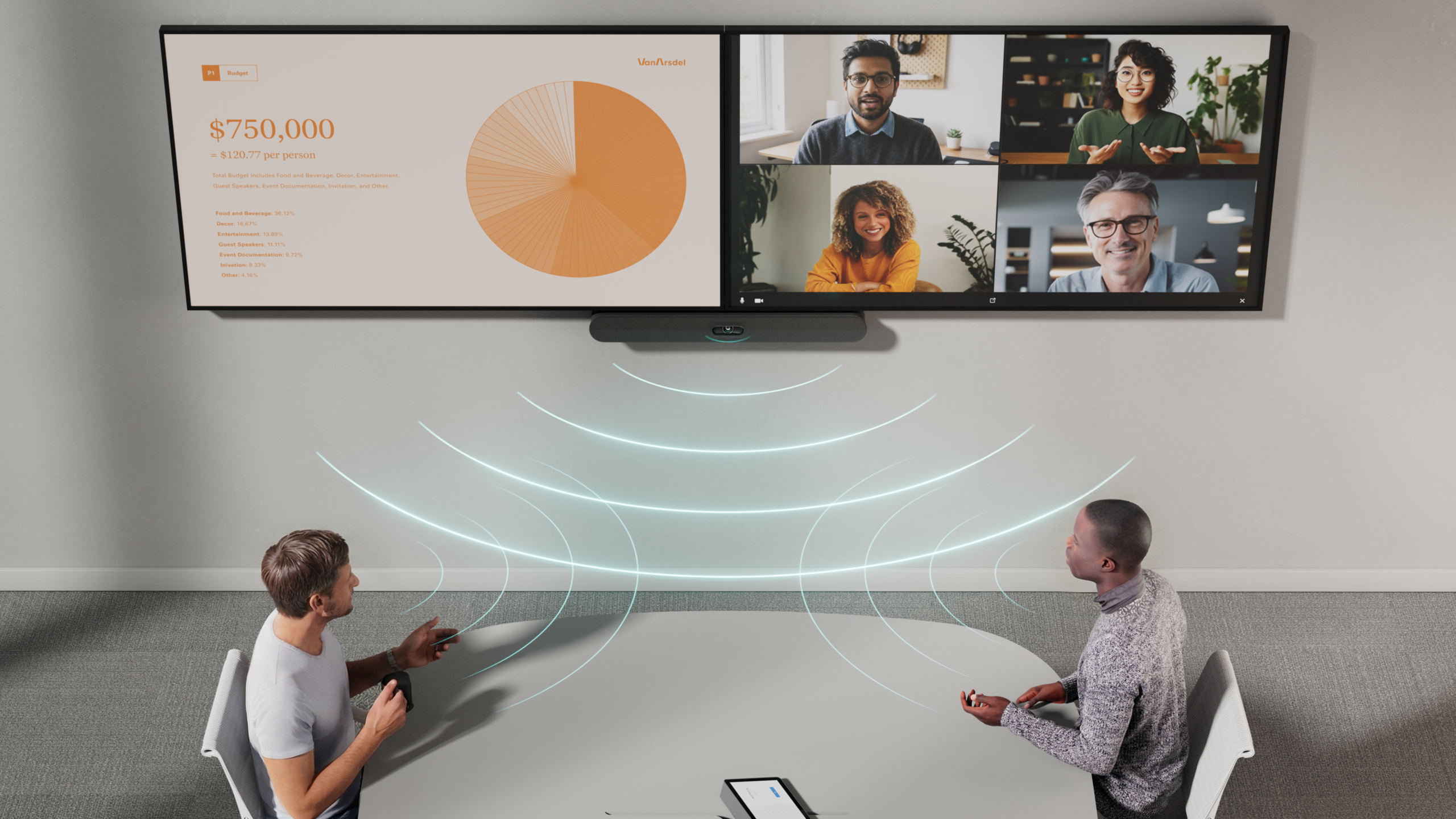
Logitech unveiled what is says is its largest enterprise product launch in company history with a new range of workplace video collaboration products for its business customers.
The new line-up includes the Rally Bar 2 video bar, the Rally System 2 Pro modular video conferencing system and Sound Shape audio technology. The products are designed for meeting rooms and conferencing facilities of different sizes.
Rally Bar 2 is the successor to the Rally Bar video bar. It has multiple upgrades in the form of a Qualcomm processor, a redesigned lens, a 1-inch sensor and AI-powered Right Sound 3 audio system that brings studio-quality audio to meeting rooms. The device also includes embedded sensors.
Logitech says those sensors are used to automate booking meetings when people walk in and to provide occupancy data to help users make informed decisions about real estate. Rally Bar 2 sports a sleek aluminium unibody. It’s certified for Microsoft Teams, Zoom Rooms, and Google Meet and is built on Microsoft Device Ecosystem Platform.
Rally System 2 Pro on the other hand is a solution for AI-driven meeting experiences in large, multi-purpose spaces. It simplifies multi-vendor setups in complex and divisible rooms.
It includes RoomMate 2 Pro, a Qualcomm-powered compute box running up to three 4K displays, multiple cameras, speakers and mic pods across Android, PC or BYOD setups, and Rally AI Camera Pro, a dual-camera device combining a wide-angle 1-inch sensor with Logitech’s optical PTZ camera design.
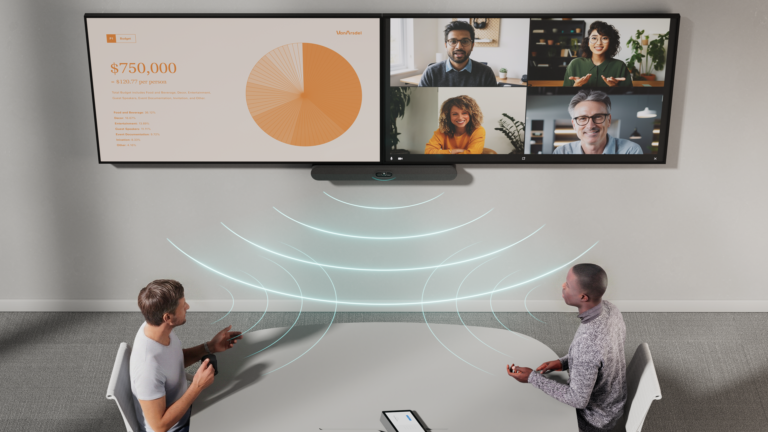
On the audio front Logitech launched Sound Shape, a new audio technology that directs sound towards listeners through focused acoustic beams. The technology is used with Rally Speaker 2 Pro and Rally Speaker 2 Max.
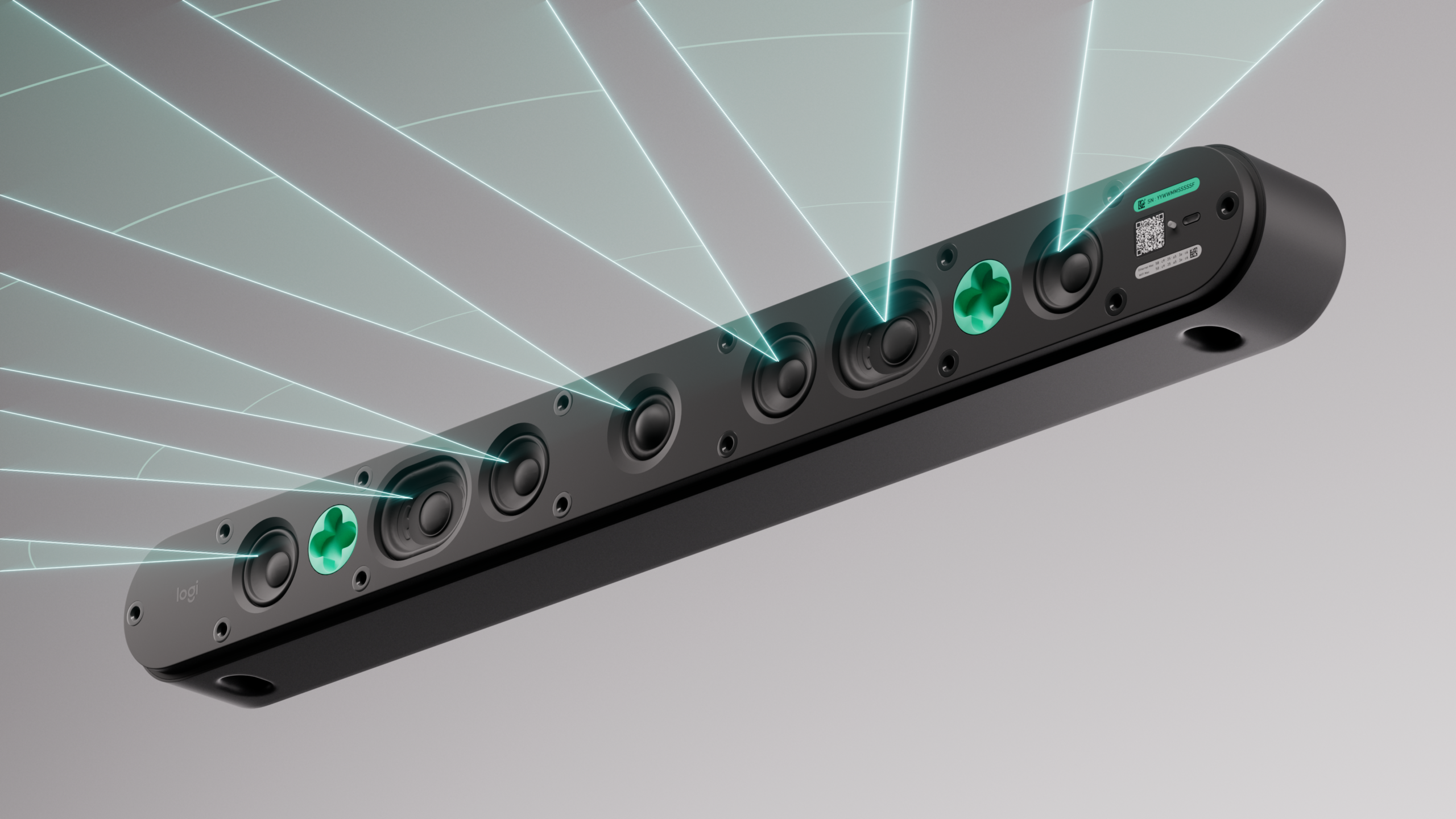
According to Logitech the technology uses focused acoustic beams to precisely direct sound toward listeners throughout a room. The result is evenly distributed sound across a 20-metre space, a feat only partially achieved previously by costly and complex ceiling speaker array installations.
Logitech has also released updated room controls. Among the new additions are the Tap IP 2 and Tap Scheduler 2, which introduce improvements aimed at simplifying meeting room management and enhancing the user experience.
The Tap IP 2 is a network-connected touch controller featuring a brighter display, while the Tap Scheduler 2 is designed to streamline room bookings with upgraded processing hardware and an integrated motion sensor.
The new devices form part of Logitech’s broader strategy to bring video conferencing, audio, room controls and occupancy management together into a more integrated workplace system.
As businesses continue to adapt their offices for hybrid working, demand has grown for conferencing equipment that can support remote collaboration while also providing greater visibility into how meeting spaces are being used.
The Rally Bar 2 is priced at A$7,399.95, alongside the Tap IP 2 at A$2,249 and Tap Scheduler 2 at A$2,299.
All three products are beginning their global rollout.
Rally System 2 Pro, RoomMate 2 Pro and Rally Speaker 2 are scheduled to arrive at a later date.
Logitech is also preparing a software update that will introduce Right Sight 3, a new multi-camera switching feature designed to improve how meeting participants are framed during video calls.
The technology will use multiple cameras positioned around a meeting room, including wall-mounted and table-based units, to automatically select the most suitable view.
Right Sight 3 will be delivered as a free update through Logitech’s CollabOS platform, although the company has not confirmed a specific release date.