VOXX Revenues Plunge 43% as Gentex Merger Fails to Halt Global Slide Klipsch, Integra and Onkyo Still Key
 David Richards
18 Feb 2026
David Richards
18 Feb 2026

The Premium Audio Company is effectively dead in Australia, with distributor Westan now driving VOX product sales locally. But while the branding may have shifted, the financial pain remains — and a close examination of the latest numbers suggests the crisis is far from over.
Two years after Gentex absorbed VOXX International in a rescue-style merger, the once-prominent audio group is still struggling to find its footing in an increasingly cutthroat global market.
Back in 2024, Gentex and VOXX International entered into a definitive merger agreement that saw VOXX folded into the larger automotive and electronics group. The move followed years of poor management decisions, sliding revenues and mounting debt that left VOXX exposed and vulnerable.
At first glance, Gentex appears healthy. The company reported calendar 2025 sales of US$2.53 billion — up $220 million, or 10% from $2.31 billion in 2024. But dig deeper and the weak link is clear.
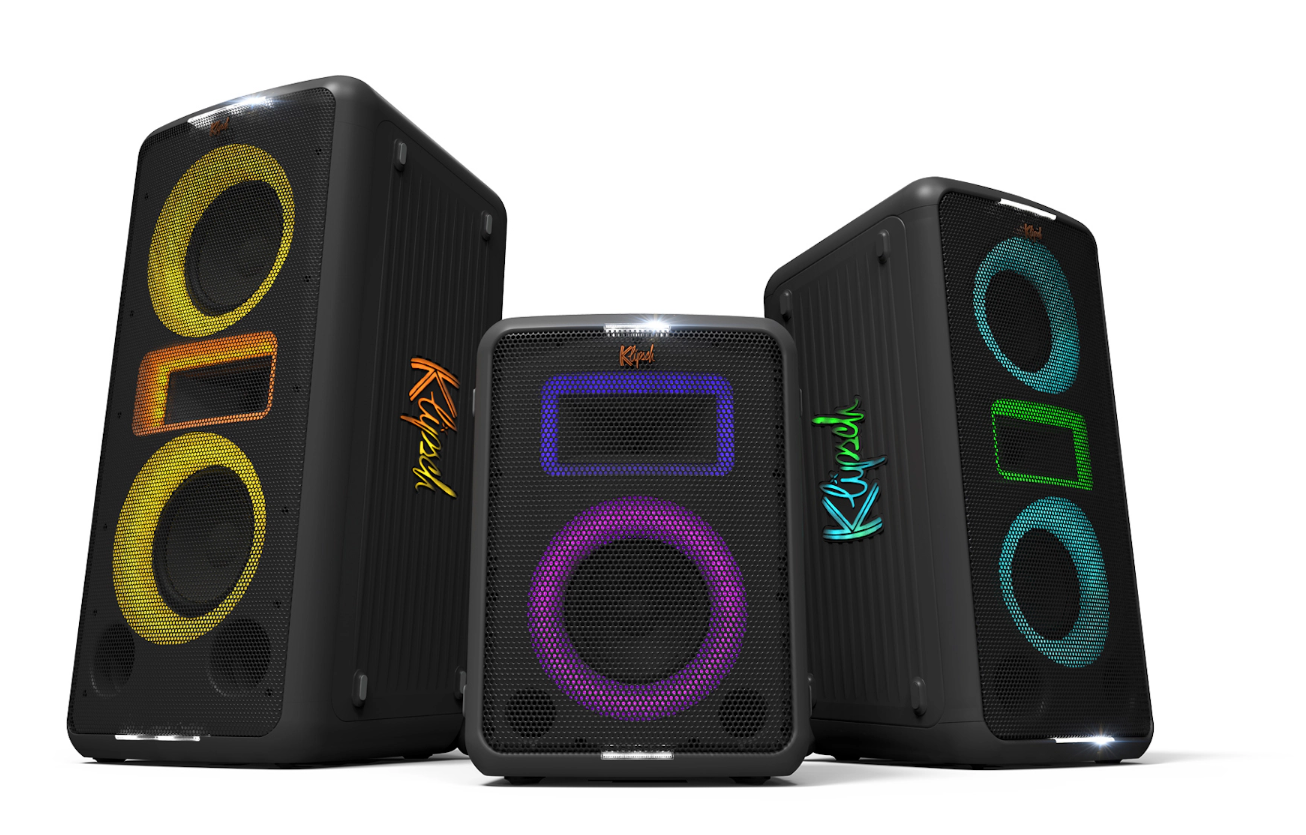
Klipsch Music City party speakers.
VOXX, now operating under Gentex’s umbrella, posted net sales of just $267.2 million across Q2 to Q4 of 2025. While the company has eliminated direct year-on-year comparison data from its latest disclosure — a move critics say obscures the scale of decline — historical filings tell a stark story.
Before the Gentex acquisition, VOXX recorded $468.9 million in revenue for 2024. On current numbers, that represents a 43% year-on-year collapse.
Even when adjusting for Q1 2025 — estimated at $117.2 million — full-year pro forma revenue would land around $384.4 million, still reflecting a double-digit contraction.
Management has blamed external forces, citing President Trump’s tariffs and retaliatory counter-tariffs, along with reduced demand for exports into China.
But analysts argue the explanation only partly accounts for the decline, noting that competitors facing the same geopolitical headwinds have fared far better.
The competitive landscape has shifted dramatically. VOXX now finds itself battling Samsung-owned Sound United and Harman — two giants with deep pockets, vertically integrated supply chains and aggressive R&D pipelines.
In contrast, VOXX’s reduced scale leaves little margin for error.
Today, the company is concentrating on a narrower portfolio of “core” premium brands. Klipsch remains the flagship, positioned as a heritage premium audio name. Onkyo and Integra AV receivers continue to be manufactured, with Onkyo’s home entertainment division operating under the Premium Audio Company joint venture (VOXX 75 per cent / Sharp 25 per cent).
But the days of a sprawling multi-brand empire are over.
Previously, VOXX’s Premium Audio Company encompassed an extensive stable of brands including Magnat, Mac Audio, Heco, Jamo, Mirage and ProMedia. Over time, several high-profile names — including Pioneer, Jamo and Energy — have been divested, reassigned or shifted under new distribution arrangements as corporate strategy evolved and financial pressures mounted.
Industry analysts warn that without a substantial injection of capital into research and development, VOXX risks falling further behind in a market increasingly dominated by technology-driven ecosystems.
With Samsung’s acquisition of Sound United now complete and Harman firmly entrenched, the competitive vice is tightening.
For Gentex, VOXX was meant to be a strategic expansion into premium consumer audio. Instead, it may be shaping up as a costly turnaround project — one that is far from guaranteed to succeed.