The CD Is Back: Record Growth Down Under As Young Buyers Snap Up Discs They Can’t Even Play
 David Richards
22 Jul 2026
David Richards
22 Jul 2026

The compact disc, a format written off a decade ago, is suddenly the fastest growing category in the Australian music market, and JB Hi-Fi, the retailer that started out selling music and hi-fi in 1974, is set to be the biggest winner.
New figures from the Australian Recording Industry Association (ARIA) show CD revenue surged 29.6% to $21 million in the latest reporting period, with unit sales climbing past 1.5 million discs. Physical music overall jumped 11.0% to $67.9 million.In the US the story is the same. Luminate’s biannual report shows CDs sold 16.3 million units between January and the end of June 2026, up 16%, outpacing vinyl, which grew just 2.4% over the same period.
The twist: roughly half of the Gen Z and Millennial buyers driving the boom don’t even own a CD player.
JB Hi-Fi The Last Chain Standing
Once a big revenue generator alongside disc games, CDs faded as streaming took hold, and with Sony now killing off disc games the shiny five-inch disc is staging an unlikely comeback.
JB is now effectively the last major bricks-and-mortar CD chain in Australia, still running a full CD range in store and online, including deluxe packs, exclusives and pre-orders. Every dedicated music chain that once competed with JB is gone.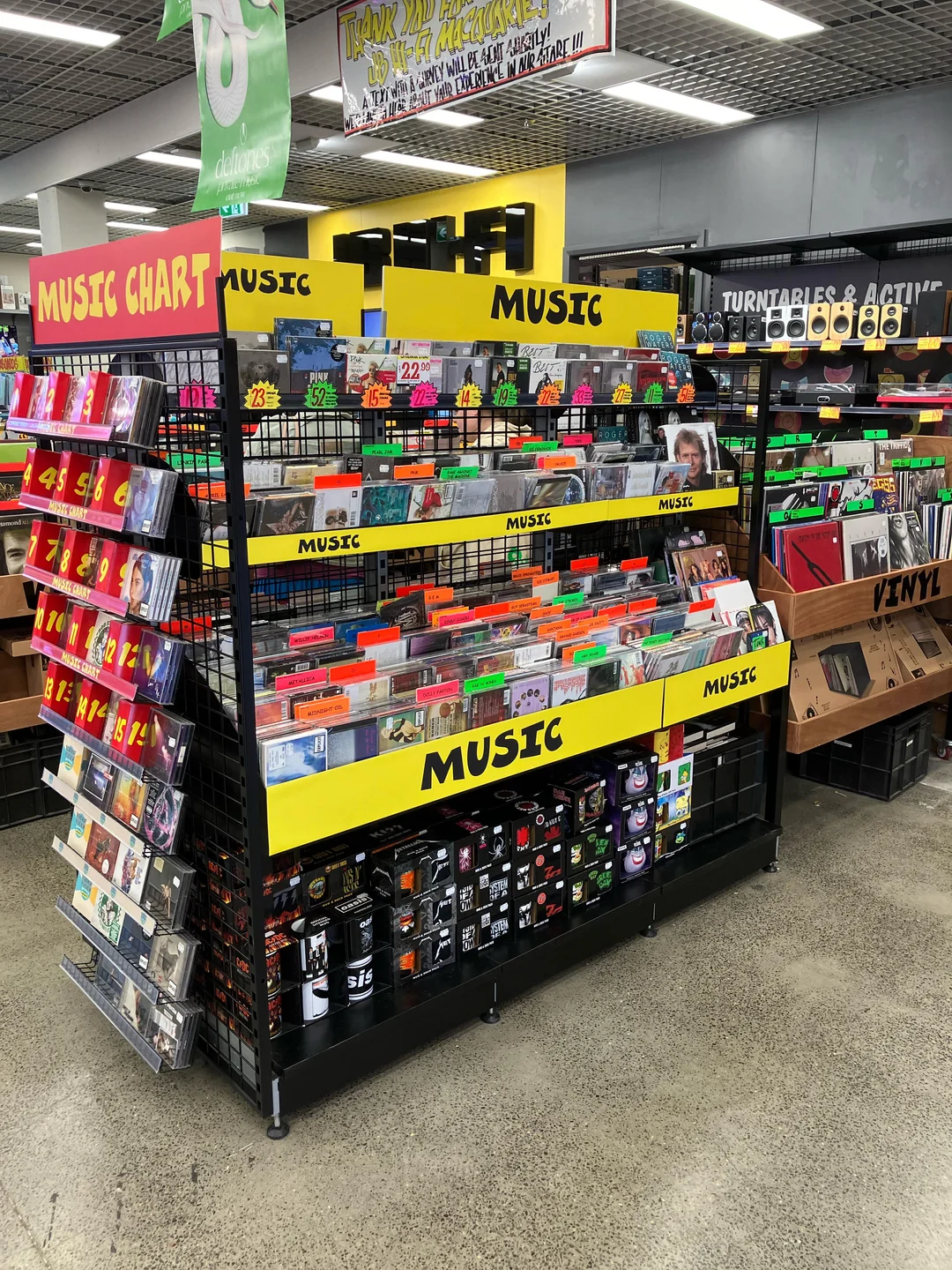
Sanity, which once ran more than 150 stores nationally, has been online-only since March 2023, still trading CDs, vinyl and box sets under Ray Itaoui’s ownership. Beyond that, the market is made up of independent record stores such as Red Eye, Utopia and Rocksteady, Amazon Australia, artist direct-to-consumer stores, and discounters like Big W carrying a thin chart range.
Big W, once a major seller of CDs and disc games, is now understood to be taking another look at the category on the back of the surge in demand.
In the US, mass retail is already moving. Target and Walmart captured nearly 30% of CD sales, while e-commerce share slipped from 27.4% to 26.1% as buyers head back in store to hunt for discs.
Who Is Buying, And Why
The buyers are not who the industry expected. Purchases are driven by aesthetic ownership and direct artist support as much as listening, with younger fans treating discs as collectibles.
“The act of buying physical music is as much about aesthetic ownership and direct financial support for the artist as it is listening to the music on the product itself,” Luminate noted.
The nostalgia factor is real. 60% of Gen Z listeners now say they mostly listen to music from the 1990s or earlier, up from 18% in 2021.
In Australia the roughly $5 million in added CD value over the year is small in dollar terms, but superfans, K-pop box sets and deluxe editions have made it the fastest growing category in the local market.
The K-Pop Effect
Strip K-pop out of Luminate’s midyear figures and US CD growth drops from 16% to 6.7%, still nearly three times faster than vinyl, but it is K-pop that turned a steady recovery into a headline surge.
BTS’s Arirang sold 567,000 CDs in the US through week 26, around 3.5% of every CD sold in the first half of 2026. The album’s No. 1 Billboard 200 debut delivered 641,000 equivalent album units, including 532,000 pure album sales, 208,000 of them on vinyl.
BTS was not carrying the market alone. ENHYPEN’s The Sin: Vanish sold 286,400 CDs and ATEEZ’s Golden Hour Part 4 added 263,000. Those three albums accounted for roughly 6.9% of all US CD sales in the period, and the same momentum pushed global K-pop album sales to a record 49.5 million copies in the first half of 2026.
Hardware Demand Surges
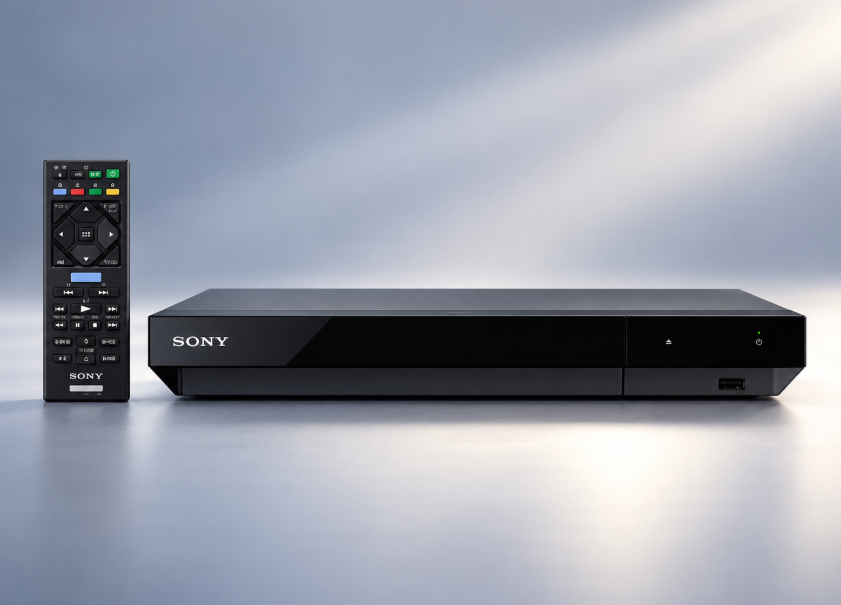
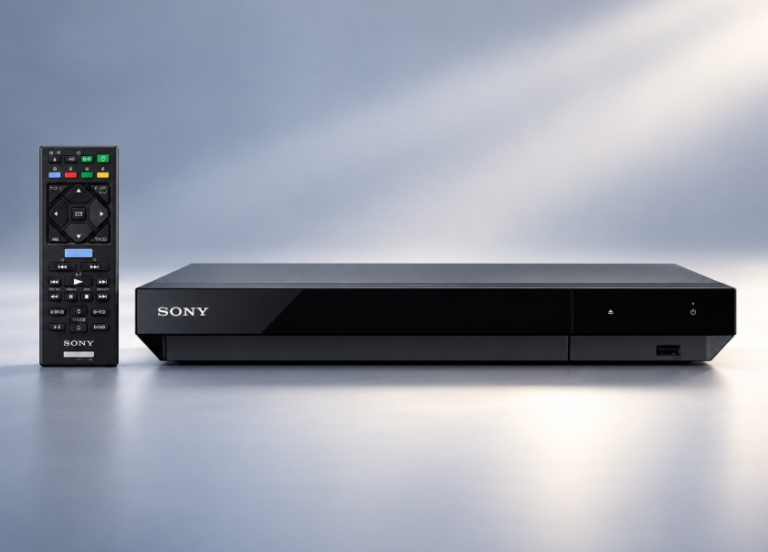
The disc boom is dragging hardware with it with audio companies struggling to keep up with demand for CD players.
Adobe Analytics tracked a 94% spike in online searches for “CD player” and “portable CD player” during the last Black Friday sales window versus the January to October 2025 average.
Demand for players has surged on the back of CD releases from artists including Taylor Swift and Pink Floyd, spanning portable and retro-styled units, and the automotive industry reports growing US demand for CD players in cars.
Can Anyone Actually Press Them?
The bigger question is whether the industry can keep up. The US had 40 CD replication facilities in 2000. Today there are three, leaving little spare capacity and raising the prospect of lead-time blowouts if the revival accelerates.
Sony DADC in Austria remains the biggest name, running 75 injection moulding machines producing up to 1.8 million discs daily across CD, SACD, DVD and Blu-ray. Global manufacturing is now concentrated in Asia, particularly China’s Guangdong province around Guangzhou and Shenzhen, with secondary hubs in Xiamen and Qingdao.
Taiwan holds a niche in premium and low-volume runs, with CMC Magnetics and Ritek making most of the world’s blank and recordable media. Many familiar brands, including Maxell and Verbatim, are actually pressed by them. In the US, independents like Disc Makers are still pressing CDs and vinyl entirely in local plants, with 100-unit minimums aimed at independent artists.
ARIA Pushes For Royalty Reform
Off the back of the results, ARIA CEO Annabelle Herd is pushing for the removal of the 1% statutory cap on radio recording royalties, arguing the format’s revival strengthens the case for artists and labels to be paid more when their recordings are played on air.
—