TCL Unveils ‘Super Pixel’ Display Tech
 Joe Gallop
27 Feb 2026
Joe Gallop
27 Feb 2026
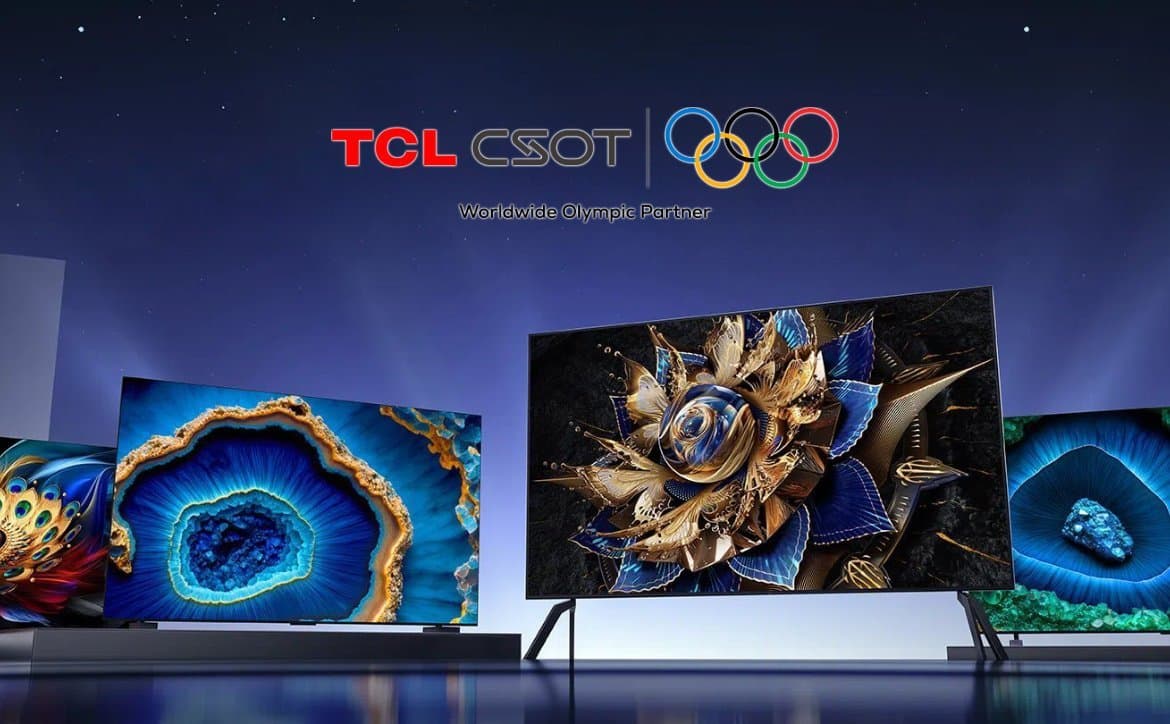
TCL CSOT has launched a new display architecture dubbed ‘Super Pixel’, promising sharper image quality and up to 25% lower power consumption compared with conventional OLED panels.
Announced ahead of Mobile World Congress (MWC) 2026 in Barcelona, the technology rethinks how sub-pixels are arranged and driven inside an OLED display
The company says the move can deliver clearer visuals and higher refresh rates without increasing panel complexity.
Most OLED displays today rely on sub-pixel rendering (SPR), where individual pixels do not always contain full red, green and blue (RGB) elements in a standard layout.
To reproduce accurate colour, display controllers often borrow sub-pixels from neighbouring pixels, increasing processing demands and power consumption.

TCL CSOT claims its Super Pixel design adds just 1.8% more sub-pixels than a typical SPR panel, yet achieves sharpness comparable to WQHD displays.
Because the layout uses a real RGB pixel arrangement, it reduces the processing load on the display driver, cutting power usage by up to 25%.
The streamlined structure also requires less bandwidth, enabling refresh rates up to 40% higher than comparable conventional panels – a potential win for gaming smartphones, tablets and high-performance laptops.
Alongside Super Pixel, TCL CSOT highlighted progress in inkjet-printed OLED (IJP OLED) manufacturing. The company has begun construction of what it says will be the world’s first 8.6-generation IJP OLED production line.

Unlike traditional OLED production, which relies heavily on complex vacuum deposition processes, inkjet printing uses scalable printheads to deposit organic materials.
TCL says this approach simplifies manufacturing, adapts more easily to different panel sizes and enables emission areas 50–60% larger, improving luminous efficiency and further reducing power consumption.
For Australian consumers, the real impact will depend on adoption by major device makers.
If the technology delivers on its claims, it could translate into smartphones with longer battery life, brighter TVs with lower energy use, and more efficient displays in everything from notebooks to electric vehicles.