Samsung Leads Global Smartphone Market as APAC Drives Growth
 David Richards
21 Oct 2025
David Richards
21 Oct 2025

The global smartphone market has recorded year-on-year growth in Q3 2025, according to new data from Omdia, with Samsung retaining the top spot for the third consecutive quarter, capturing a 19% market share.
The Asia-Pacific (APAC) region remains the key growth engine for the industry, with sales continuing to rise thanks to an expanding middle class, widespread 5G rollout, and strong demand for premium and AI-powered smartphones claim analysts.
Omdia said the rebound in global sales was also supported by major product launches, robust device replacement cycles, and vendors increasing inventories ahead of the key Q4 shopping season.
Samsung’s market leadership was bolstered by sustained demand for its Galaxy A series and the success of its 7th-generation foldable devices.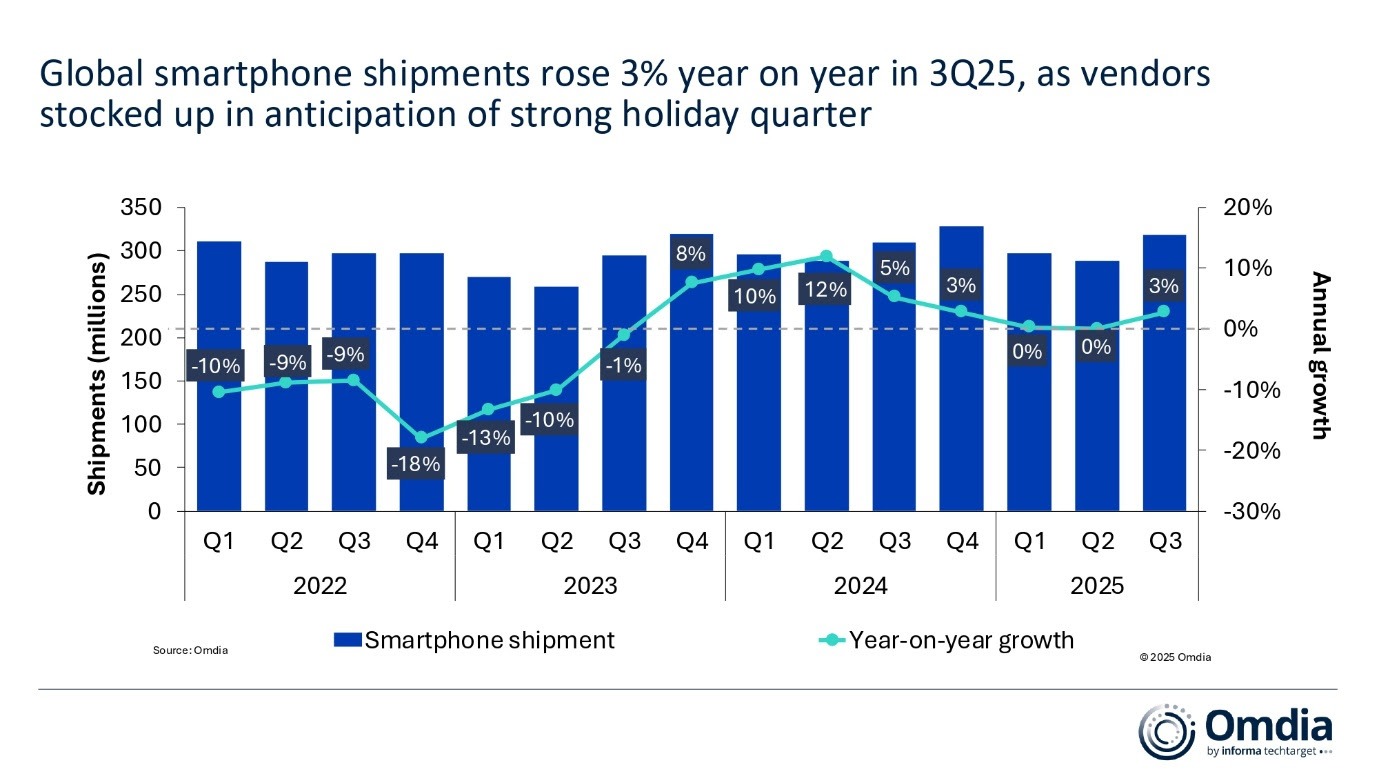
Apple followed closely with an 18% share, achieving its strongest-ever Q3 performance after a 4% lift in iPhone shipments. Early demand for the iPhone 17 series helped drive those gains.
Oppo continued to post steady results, while Xiaomi—a new entrant to the Australian market—secured a 14% global share and is positioning itself to challenge Oppo and Motorola locally.
The growing popularity of emerging form factors, particularly foldable designs, contributed to broad-based sales increases across all major smartphone vendors compared to the same quarter last year.
“Recovering consumer demand for upgrades and replacements is boosting the market following a disruptive start to the year,” said Le Xuan Chiew, Research Manager at Omdia. “The reception to the industry’s biggest launch events has been positive, with vendors striking a balance between hardware and software innovation. This season’s hardware standouts—foldables, ultra-slim phones, bold colours, and back-cover displays—have captured consumers’ attention.”
Chiew added that several manufacturers had raised production targets as early demand outperformed expectations.
“Returning demand also highlights the importance of effective product segmentation,” Chiew said. “The iPhone 17 series has clearly stood out, particularly the base model, which exceeded expectations by offering upgraded storage at the same price. Meanwhile, the redesigned Pro and Pro Max models continue to attract consumers globally. Although iPhone Air shipments remain modest, its marketing effectiveness has been strong, serving as a technical testbed for Apple’s future innovations.”
Vendors who used the muted first half of 2025 to streamline operations and optimise product launch cycles are now benefitting from improved consumer sentiment.
“Economic uncertainty continues to influence vendors’ strategic planning,” Chiew cautioned. “Balancing volume, profitability, and revenue targets remains crucial. While challenges persist, near-term success will hinge on identifying the right opportunities supported by sharp marketing and go-to-market strategies.”