QD-OLED Monitor Market Share Surges
 Chris Griffith
02 May 2025
Chris Griffith
02 May 2025
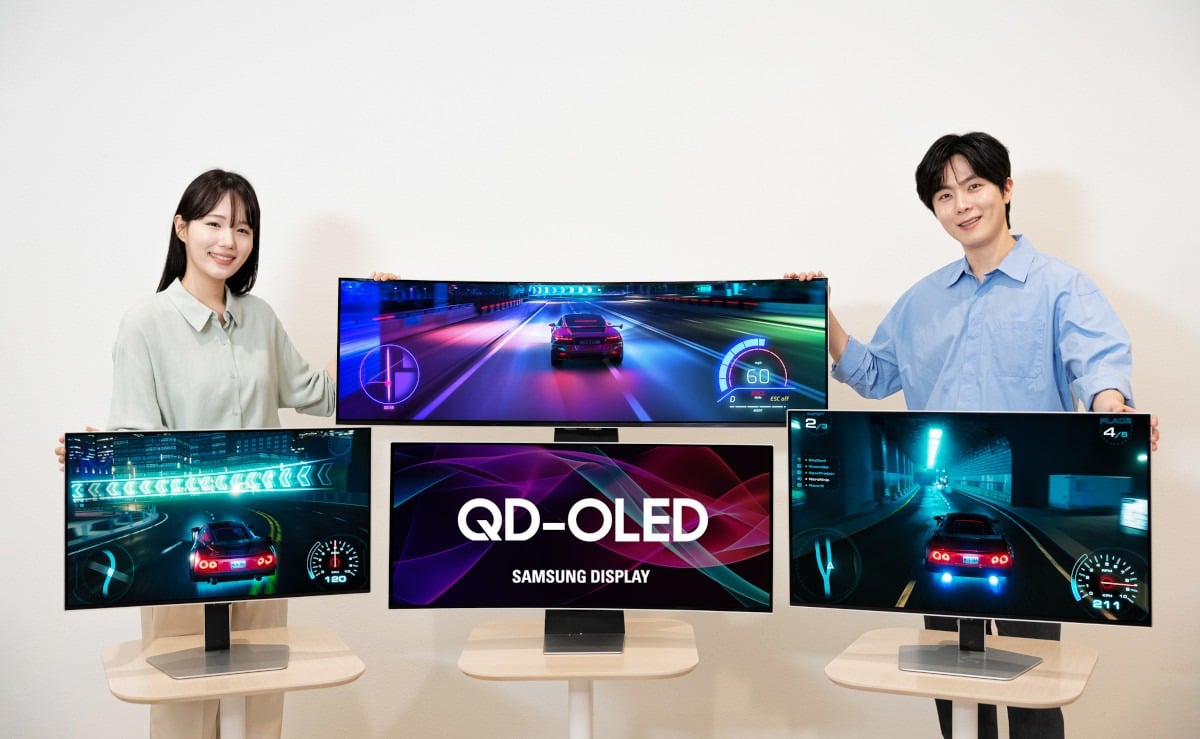
QD-OLED accounts for 73% of OLED shipments this year, an increase driven by advancing technology and new products.
Market intelligence firm TrendForce says QD-OLED’s share had increased from 68% in 2024, a 5% hike that highlights its strong competitiveness in the high-end monitor market.
“The introduction of new 27-inch UHD products and high-refresh-rate QHD 500 Hz monitors is drawing attention”, TrendForce says in a statement.
“These models offer strong appeal for gaming and professional use, becoming key drivers of QD-OLED monitor adoption.”
TrendForce says the penetration rate of QD-OLED in 27-inch models is projected to grow from 32% in 2024 to 47% this year, driven by an expanding product lineup and ongoing technical improvements.
It says the main advantage of QD-OLED lies in its use of blue OLED light to excite quantum dots, which then emit pure red and green light.
“This design boosts brightness, color saturation, and gamut coverage, resulting in brighter, more vibrant, and finely detailed visuals.
“However, QD-OLED’s reliance on blue light can impact panel longevity, and residual ambient light in dark scenes may still trigger unwanted quantum dot emissions in dark scenes, potentially compromising visual clarity.
“Recent developments include the addition of a green emission layer, boosting luminous efficiency by 30% to improve both energy consumption and image quality.”
TrendForce says Pico inkjets used in manufacturing allow for more precise layering of quantum dot ink, achieving pixel densities of 140 PPI and enabling 4K resolution on 32-inch panels.
This further improved QD-OLED’s competitiveness in the premium monitor space.
Its latest report on “OLED Panel Costs” says emissive materials and QD film account for the largest share of QD-OLED production costs. However, the inkjet process results in 20% ink waste per nozzle.
“Newly developed recycling techniques can recover up to 80% of residual ink, helping reduce costs and improve material efficiency.”
TrendForce says the TV market for OLED is being constrained by the growing popularity of ultra-large LCDs and the cost competitiveness of Mini LED backlighting.
“However, OLED adoption in the IT sector remains in its early stages, with strong customer interest.”