New TV Technology Turns Screens Into Speakers With Sound That Follows The Action
 Dominic Bayley
20 Oct 2026
Researchers in South Korea have developed a new display technology that could transform how we experience sound from TVs, allowing audio to come directly from the objects and people appearing on screen rather than from separate speakers.
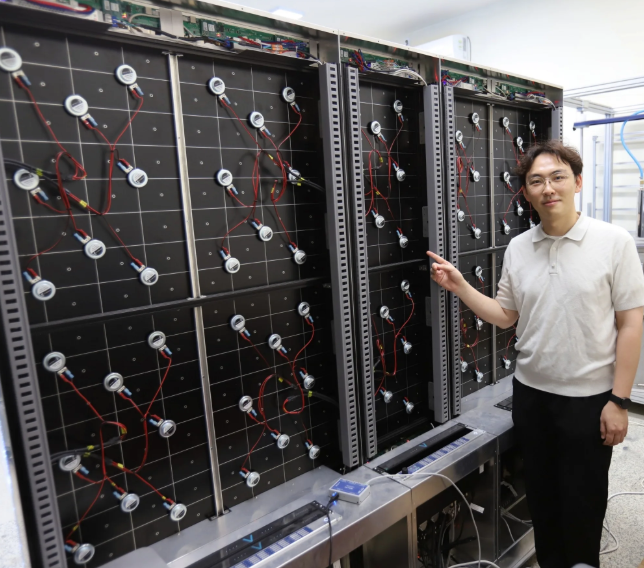
The technology, developed by the Korea Institute of Machinery and Materials (KIMM), uses tiny vibration motors mounted behind a display to generate sound at precise locations. This means a character speaking on one side of the screen could have their voice reproduced from that exact position, while the sound of a moving vehicle could follow its movement across the display.
According to Newswise, the researchers installed 80 miniature vibration motors behind the screen. Instead of vibrating the entire display, the system carefully controls the power delivered to individual motors, allowing specific sections of the screen to produce sound independently.
Testing demonstrated a positioning accuracy of 99.9%, with active areas producing vibrations up to 35 decibels stronger than surrounding inactive sections. This helps prevent sound from spreading across the display and improves the precision of audio reproduction.
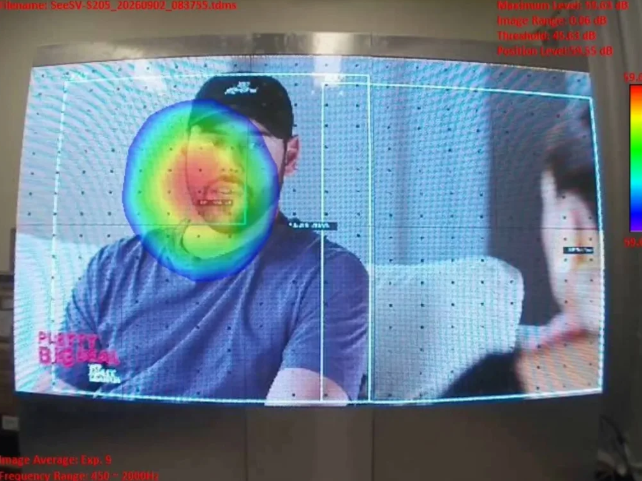
Artificial intelligence also plays an important role in the technology. The system can identify the location of sound-producing objects in video footage, separate individual audio sources and automatically direct each sound to the corresponding position on the screen.
The researchers demonstrated the technology using a prototype display measuring approximately 100 inches. An acoustic camera confirmed that sound could move across the display in sync with objects appearing in the video.
While the technology remains in the research stage, the team has secured a Korean patent and published its findings.
One of its biggest advantages is its modular design, which allows multiple display panels to be connected or separated depending on the required screen size. This could make the technology suitable for everything from conventional televisions and automotive displays to exhibition installations and large commercial LED screens.
The researchers also discovered that combining multiple modules could generate powerful low-frequency sound, potentially allowing displays to reproduce bass similar to that produced by conventional woofers.
Dr Dongjoon Kim, who led the research, said the team plans to focus on integrating the technology into modular LED tile displays as the next stage of development.
Although commercial availability remains uncertain, the breakthrough could eventually reduce the need for conventional external speakers while delivering a more immersive viewing experience, with sound appearing to originate directly from the action on screen.