Monopoly Microsoft Screwed Australia Today & All The Albanese Government Did Was Shrug It Off
 David Richards
13 Nov 2026

Australia’s governments have handed Microsoft the keys to the nation’s digital infrastructure, and when the lights went out today, the response from Canberra was a shrug.
As businesses, schools, police, spy agencies and state governments sat paralysed by a global Microsoft 365 meltdown, Home Affairs Minister Tony Burke rushed to defend the US giant, saying the government had an “important relationship” with the $US3.88 trillion company.
Not a word about an inquiry. Not a word about penalties. Not a word about why a nation that has poured billions into a single foreign supplier has no fallback when that supplier falls over.
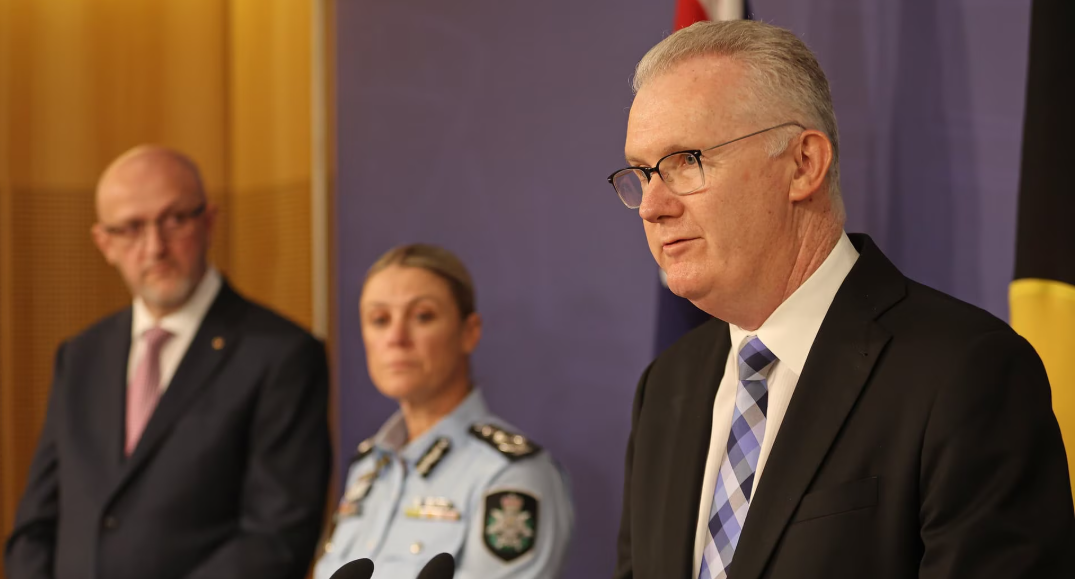
ASIO Director-General Mike Burgess and AFP Commissioner Krissy Barrett and Home Affairs Minister Tony Burke say Microsoft’s outage has hit government agencies, including intelligence services.
It is time for a Senate Inquiry. And given how deeply Canberra is now tied to Microsoft and its federal reseller Data#3, there is a strong case that the scrutiny should come from outside government altogether.
Who Was Hit
Outage reports peaked at about 4:20am AEST, with millions affected worldwide. By 2:30pm the crisis was still not over, and Microsoft had given no estimated time for full restoration.
The casualty list reads like a directory of the nation’s critical services:
- Service NSW, with transactions unavailable at service centres and call centres
- NSW Parliament
- The ACT, NT, Tasmanian and WA governments
- Queensland Health
- Local councils
- ASIO and the AFP, with Director-General Mike Burgess and Commissioner Krissy Barrett both confirming their organisations were caught in the meltdown
ChannelNews has been without Outlook, Exchange Online, Teams, OneDrive, Copilot, SharePoint Online and multiple Microsoft 365 apps for more than eight hours.
Microsoft’s Excuse
Microsoft blamed “a large number of servers being unexpectedly unavailable, which is shifting load onto the remaining infrastructure”, and said it was reverting a recent network change linked to the start of the failure.
It brought some servers back online in the morning, then warned they could become unresponsive again under traffic. In other words, the company that runs the Australian government could not say when it would be running again. 
A Nation Locked In
Microsoft is now the default operating layer of Australian government. Almost every federal department is effectively locked in, and the states run their schools on Microsoft software.
The money tells the story:
- $1.2 billion+: The Digital Transformation Agency’s five-year whole-of-government deal, signed in February and in force from 1 July 2026, covering Copilot, Microsoft 365, Azure and Dynamics 365. The previous arrangement cost taxpayers $96 million, a near 13-fold increase.
- $3 billion: Technology contracts the Federal Government has signed with Data#3, the government’s Microsoft licensing partner, since the start of the 2026-27 financial year.
- 36%: The share of Data#3’s federal contract value, more than $1.06 billion, accounted for by the VSA6 Microsoft agreement alone, now taken up by 38 Commonwealth agencies and departments.
- $495 million: Defence’s new five-year Azure commitment from 1 September, Microsoft’s largest ever deal with Defence, underpinning its SAP-based ERP platform and its expanding M365 environment, Vera.
- $230 million+: Seven contracts signed by Services Australia between July and September.
- $100 million+: Multi-year agreements with the ATO and the Australian Digital Health Agency running to 2031.
- 29,000: Paid Copilot licences across 67 federal entities, with DFAT and Health the heaviest users. Copilot was down today too.
Meanwhile Microsoft Pty Ltd booked total revenue of $9.23 billion in FY25 with 2,584 staff, up from about $5 billion in FY21.
Where Is The Backup?
Billions flow out of Australian taxpayers’ pockets to Microsoft, yet there appears to be no requirement for locally mirrored, independently resilient services that keep government, schools and business running when Microsoft’s global network stumbles.
Australia is a nation of fewer than 30 million people. Mandating local redundancy for the services our governments now cannot function without is hardly an unreasonable ask of a supplier collecting this kind of money.
So why hasn’t the Federal Government demanded it?
One Rule For Telcos But Not Microsoft
When Optus and Telstra networks failed, the consequences were swift: investigations, regulator action and penalties. Telcos are held to account because their networks are deemed critical infrastructure.
Today’s outage proves Microsoft’s platform is every bit as critical. Yet ministers and security chiefs have played down concerns about Australia’s dependence on a single provider, and Burke’s first instinct was to protect the relationship rather than the businesses left stranded.
Those are the same small and large businesses the Albanese Government is squeezing with new taxes while it struggles to manage its own budget. Today they lost a day’s work, and Canberra offered them nothing.
The questions are simple. Why has the Federal Government committed billions to one supplier without demanding local backup? What oversight exists over how Microsoft manages Australian data? And why is there no penalty regime for a cloud failure that takes down police, spy agencies and state governments in a single morning?
A Senate Inquiry should be asking them. Now.