LG Move To Sell Direct, Expanding Confidential Web OS Data Sales To 3rd Parties
 David Richards
10 Jan 2025
David Richards
10 Jan 2025

At a CES 2025 press conference that was only open to South Korean journalists, LG Electronics CEO William Cho who at one stage ran the Companies Australian operation, has openly spruiked their questionable capture of confidential data, via the WebOS software built into their TV and appliance products, he also admitted that the Company is expanding their sell direct business in 2025 via what they describe as the LG ‘online brand shop’.
The admissions came after LG announced that they expect that their operating profits in the fourth quarter to fall by a massive 53.3% year-on-year to $156.47 million AUD.
Last year overall profits at LG fell 6.1% from 2023.
KB Securities analyst Jeff Kim claims in a note to clients that LG Electronics will most likely continue to face challenges from sluggish demand and higher logistics costs this year.
He claims that the Company is expected to keep wrestling with rising television-panel prices and slowing business growth.
As a result he has cut his 2025 operating-profit forecast for the company by 7%.
This is below LG’s consensus based on their 4Q preliminary results, he is also downbeat on their 2025 earnings outlook which has prompt KB to cut its target price for the stock by 8.3%.
In what appears to be a total change in direction for the struggling business, LG it appears is more interested in data capture and the sale of the data to third parties coupled with a new direct sell model than having to give away margin to retailers.
LG describes the newly adopted business model for the Company, as the future for the business describing the capture of data, often unbeknown to the user of an LG product, as an “Innovative business model” that evolve around new subscription service business and webOS-based advertising and content.
During the recent Black Friday sales period in Australia, LG Electronics invested in extensive marketing in an effort drive sales away from retailers to their own ‘Brand Shop’ with heavy discounts offered to consumers.
This is the margin they would normally give to a retail partner with LG management admitting that their direct sell model growing at a rapid pace, with sales surging over 80 percent YoY during last November’s Black Friday period.
The other money spinner is the questionable capture of confidential dat.
How this works is that an LG OLED TV uses the WebOS operating system along with a multitude of other TV brands who LG has given the software to for free to capture data on consumers private lives.
For consumers to get access to the Smart TV features on their TV owners of a WebOS powered TV have to accept the WebOS terms and conditions, and in doing so consumers often don’t realise that they are handing LG access to a vast amount of confidential data, including how consumers could vote in the future.
LG is then selling this data to third parties for hundreds of millions of dollars a year.
Management admit that they are now able to strip content from over 200 million TVs and millions of LG appliances worldwide including in Australia.
Last year, the LG webOS-based data capture business exceeded its revenue target $1.105 billion Australian Dollars (AUD)
Starting this year, webOS is being expanded so that LG can capture more confidential data on Australians lives than ever before.
Cho claims that the Company is currently expanding their existing device-centric business into mobility and commercial spaces.
The move away from consumer products the Company claims is due to rapidly changing global market environments.
“Amidst unprecedented market uncertainties and a shifting competitive landscape, we require a fundamentally different level of strategies and precise execution,” Cho stress.
In both Australia and globally LG is struggling to compete up against Chinese Companies such as LG and Samsung with the likes of Hisense and TCL, already stripping TV share away from the South Korean Company, they are also cutting into LGs appliance business.
In 2024, LG’s revenue from subscription services rose more than 75 percent year-over-year (YoY), surpassing the company’s original targets.
The Company claims that they plan to triple this figure by 2030, by establishing its subscription services as a key driver of growth.
The company’s data-driven online brand shop is also growing at a rapid pace, with sales surging over 80 percent YoY during last November’s Black Friday period.
The Company is using data captured using software such as WebOS built into their TV’s to offer consumer products directly via the LG online shop which is being widely marketed in Australia.
LG executives admit that their WebOS platform-based service business, which is contributing to the transformation of the company’s business structure into a high-profit model, aims to increase its revenue by more than five times by 2030 – ultimately accounting for 20 percent of LG’s total operating profit.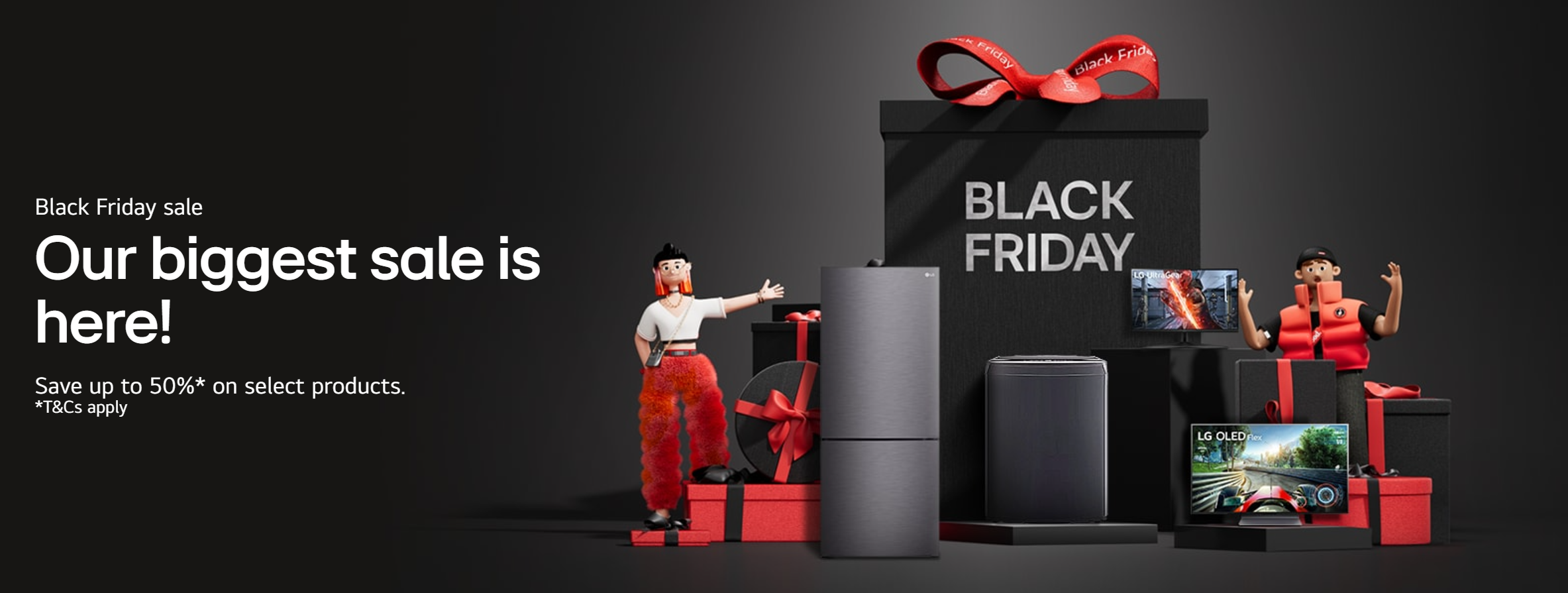
This business model leverages hundreds of millions of LG products sold worldwide as a platform to generate revenue by providing customers with content, tailored advertising and services directly as opposed to selling via a retailer.
Executives at CES said that they are upgrading the software to become a comprehensive content platform for various devices and solutions, including IT products.
To accelerate growth in the B2B sector, the company is focusing on its heating, ventilation, and air conditioning (HVAC) business, which is projected to expand rapidly in the AI era.
By 2030, LG expects its B2B business to account for around 45 percent of all revenue generated by the company. B2B revenue made up approximately 27 percent of total revenue in 2021 – a figure that rose to 35 percent by the end of last year.