Last Month It Was Masimo Now Another Health Company Is Taking Apple To Court Claiming Patent Stealing
 David Richards
24 May 2023
David Richards
24 May 2023

Last month it was Masimo’s Blood Oxygen measurement technology, that Apple was accused of stealing in their desperation to build health technology into their Apple Watch, now another medical Company is fighting it out with Apple in a US Court.
The man who is taking Apple on this time is billionaire Vinod Khosla who Bloomberg describes as being “No lightweight”.
He’s in fact one of Silicon Valley’s most celebrated venture capitalists, and he’s used to playing long odds on the startups he backs.
Bloomberg claims that Khosla Ventures put itself on a collision course with Apple when it moved into the personal health and fitness space a decade ago and invested in AliveCor, a maker of cardiac monitoring devices and software.
What might have been a big partnership opportunity for AliveCor in the years following the release of the Apple Watch in 2015, has now turned into a messy court fight.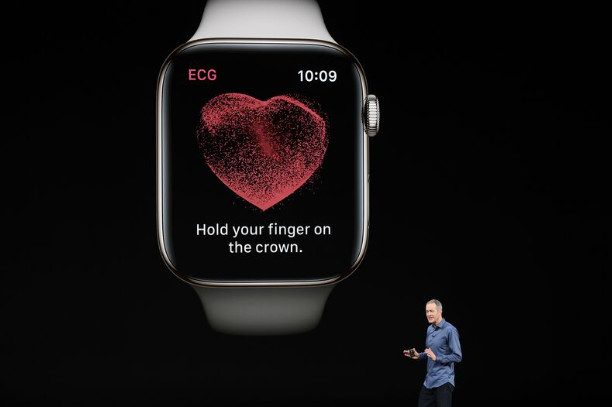
Instead of riding Apple’s coattails as a prominent player in the wearable medical device market, forecast to grow to $132.5 billion by 2031, AliveCor’s Food and Drug Administration-approved technology is inaccessible to the tens of millions of people who buy Apple Watches every year.
Similar to what Masimo is claiming the startup is in its third year of trying to prove that Apple brazenly copied its heart-monitoring technology and sabotaged AliveCor’s ability to offer its own product on the Apple Watch.
And of course, Apple has as we have heard in several patent stealing cases that Apple has lost, they claim that its smaller rival’s patent-infringement and antitrust claims are meritless.
“We made it a battle because we can,” Khosla told Bloomberg News.
“I think it’s really important that they not bully people and so we decided to make it a public battle.”
AliveCor, recently prevailed over Apple at the White House when President Joe Biden declined to veto a ruling by a trade court in Washington that could theoretically bar imports of the Apple Watch.
But that ban won’t take effect unless AliveCor wins long-shot appeals on some contested patents.
AliveCor traces the dispute back to 2015, when it says its co-founder, David Albert, was invited by Apple executives to show off its heart-monitoring device, dubbed the KardiaBand, and was told the iPhone maker intended to collaborate.
Apple says the meeting was like hundreds of others it has hosted with developers over the years, with no pretence of a partnership.
This is remarkably similar to what happened to Masimo.
After 18 months of discussions, and in “a clear attempt to steal AliveCor’s thunder,” Apple announced its own heart health initiative for the Apple Watch a few hours after AliveCor informed the technology company of the official launch date of its band, AliveCor later claimed in a lawsuit.
Over the next few years, as Apple updated the Watch operating system, no other service was allowed to offer heart-rate monitoring on the device because of the company’s “concentrated campaign to corner the market,” AliveCor said in its antitrust complaint filed two years ago in federal court in Oakland, California. Apple denied that allegation and said it has allowed third-party apps to use its heart rate sensor technology since 2015.
Apple said any claims by AliveCor that it was cut off from accessing user data are a result of the startup’s decision not to tweak its technology to fit more precise heart health reporting on the Apple Watch. A ruling on Apple’s request for dismissal of the antitrust claims is expected soon. If Apple doesn’t prevail at this stage, a trial is set for 2024.