Digidirect Pushes Into Media Business Despite Shocking Trustpilot Claims
 David Richards
30 Sep 2025
David Richards
30 Sep 2025

Digidirect, which recently snapped up technology retailer Mwave just hours after it entered administration, is moving aggressively to expand its revenue streams. The retailer has launched a new in-house media network aimed at extracting more marketing dollars from suppliers while competing directly with traditional media companies, this is despite a poor ranking on Trustpilot.
The strategy comes as suppliers voice growing frustration. Several told ChannelNews they are “fed up” with mounting demands from retailers for extra marketing spend on top of existing margins and promotional contributions.
Under the plan, Digidirect will offer brands access to advertising opportunities including in-package inserts, point-of-sale placements, and digital display ads across its portfolio of websites — Digidirect, Mwave, Booktopia, and book distributor James Bennett. The approach is expected to divert budgets away from established technology and camera media outlets.
Speaking at Mumbrella’s Remade conference, Adam Freedman defended the move, saying retailers must balance supplier needs with customer relevance.
“Whether it’s endemic or non-endemic, you have to think about the impact to the customer,” he said. “It’s almost like taking an editorial approach to retail media — delivering things that are actually beneficial to the customer.”
However, Digidirect coiuld face an uphill battle convincing brands to buy in.
On Trustpilot, the retailer holds just a two-star rating out of five, with widespread complaints about order fulfillment errors, poor customer support, delivery delays, refund disputes, and even defective or misleading products.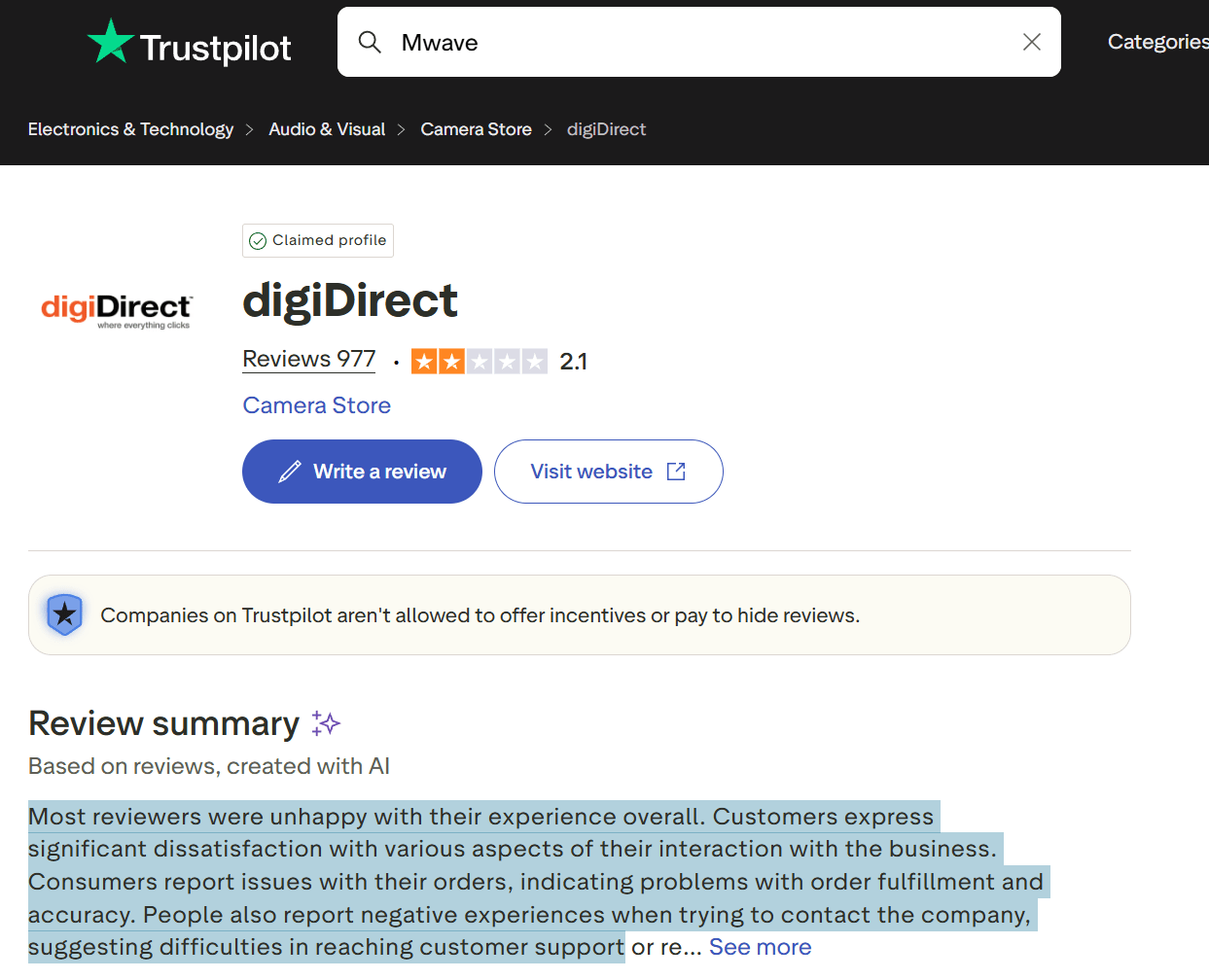
Trustpilot reviewers describe “significant dissatisfaction” across multiple touchpoints, suggesting systemic service issues that may undermine confidence in the retailer’s new advertising pitch.
Freedman has yet to explain how Digidirect will reconcile these consumer complaints with its ambition to attract supplier ad spend — or whether participation in the media network could eventually become a condition of ranging, as seen with retail giants Coles and Woolworths.
Nonetheless, he insists the initiative leverages scale.
“We’re shipping thousands of packages every week — that’s a vehicle for advertisers,” Freedman said. “Post-purchase is a powerful moment. Customers have just bought something, and they’re already thinking about what comes next. That’s when we can meet them with relevant opportunities.”
Founded in 2006 by Shant Kradjian as an online camera retailer, Digidirect is now positioning itself as both a retailer and a media business — a move that could reshape supplier relationships while putting further pressure on traditional tech media publishers.