CES 2023: Is An 8K Apocalypse Happening, Similar To 3D?
 David Richards
09 Jan 2023
David Richards
09 Jan 2023
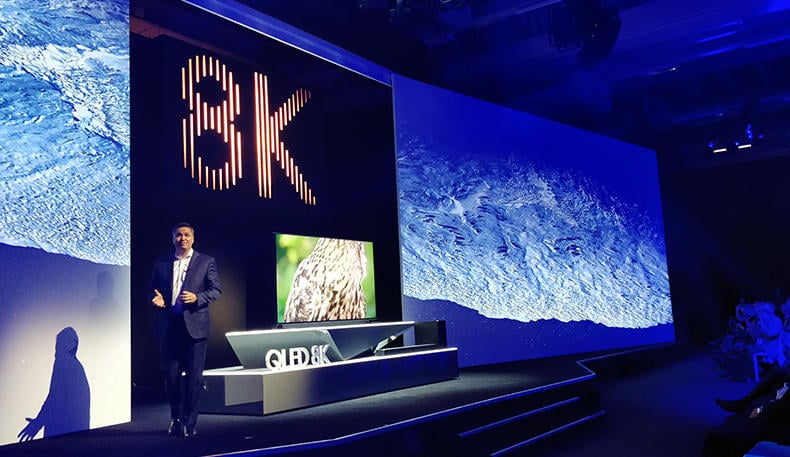
A big no-show at CES 2023 this year was 8K TVs, which appear to be heading to the same graveyard as 3D TVs did six years ago. The only exception was Samsung.
The simple reason is, like 3D, consumers are not loading up their trolleys with 8K TVs and sales are, at best, dismal according to analysts.
After spruiking 8K last year, several brands, including LG, are now downplaying 8K, while TCL and Hisense had absolutely no 8K TVs or projectors in their 2023 range.
CES, which is well known for being the birth place and the graveyard, for technology, appears to have highlighted an end-game for 8K TVs, with movie studios, including CBS Studios and Paramount, telling ChannelNews they have no plans to shoot content in 8K because of the cost.
Samsung, LG and Sony, as well as TCL, made a lot of noise about the future for 8K TVs when they first introduced them at CES, now it’s all about the display technology, with LG’s OLED offering coming under pressure from the likes of Samsung who are now spruiking their own version of OLED.
It was only 16 months ago that Hisense debuted its first 8K TV, the U800GR. But this year the company seemed far more interested in levelling up its 4K performance, announcing a dazzlingly bright new model, the 2500-nit 85-inch UX claims The Verge.
Samsung, LG and Sony have in the past made big bets on 8K. We attempted to talk to LG executives about the lack of 8K across their premium TV range but we got no clear answers.
Its 8K Z Series OLED merited only a footnote in the company’s press releases, which simply advised that the new Z3 would benefit from LG’s OLED evo panel technology in 2023 for the first time.
Sony made no TV announcements, while Samsung was still spruiking 8K at CES 2023, with the Company even moving to identify 8K content available via YouTube.

According to Samsung sources, the Company is staying with 8K because they see it as a key technology for gamers.
Sales of 8K TVs, according to Omdia Research, paints a bleak picture for 8K shipments, with the top-end tech only accounting for 0.15% of all TV shipments in 2021 and falling further in 2022.
“Consumers are happy with 4K,” claim analysts at CES. “They see little value in spending additional money when the image difference in their eye is negligible,” an IDC analyst claimed at CES.
8K TVs typically sell at a premium when compared to similarly sized and spec’d 4K models, with a gap of anywhere between $1000 and $2500, depending on the model.
According to one TV executive, recent rulings by the EU have also contributed to concerns, with 8K TVs seen as being power hungry.
The EU ruling regarding power consumption could see 8K TVs effectively banned in Europe this year.
Many observers claim 8K TVs have simply failed to pan out because of a nearly total lack of native 8K content.
In Australia, no TV network or streaming Company offers 8K programming or access to content.
Marvel’s Guardians of the Galaxy Vol 2 was the first feature-length movie shot in 8K — and it was made in 2016. There have been almost no movies shot in 8K, including the top-viewed Top Gun: Maverick with Tom Cruise.