Bleeding Losses LGs OLED TV Display Business Is In Trouble, Samsung Tipped As Potential Buyer
 David Richards
09 Jul 2025
David Richards
09 Jul 2025

LG Electronics and the OLED Display Company are facing a questionable future, as competitors who are able to operate more effectively strip OLED share, there is also rumours that Samsung could take over the LG Display business.
After another year of financial losses—the fourth in a row—and the outlook for LG OLED operations look bleak, despite their arch rival Samsung propping up their revenues by buying LG OLED panels and then using these panels to strip market share away from the struggling LG Group who this week tipped a 47% slump in profits.
Researchers claim that despite a massive investment LG’s 90K Gen 8.5 OLED fab operation, was only operating at 50% utilization.
The problem was that TV sales fell flat, while TCL and Hisense, leveraging their MiniLED, TV technology quickly moved to dominate in the over 65″ market.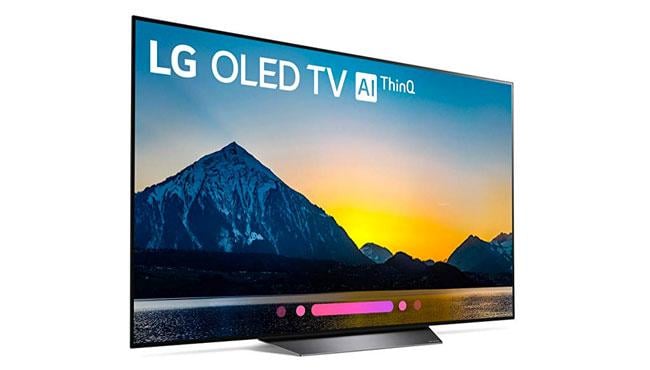
Now the business that is moving to sell direct while growing their commercial air conditioning business over TV sales is facing a new problem.
Chinese giant TCL is reportedly preparing to build a massive new 8.6-generation OLED production line in China, according to market intelligence firm UBI Research.
TCL CSOT has long touted inkjet-printed RGB OLED as a potentially superior and more cost-effective alternative to WOLED and QD-OLED with the Company set have their first models by year end.
There is also the possibility that Samsung and other OEM TV Companies that are buying LG’s premium priced panels could move to using TCL’s new display technology, simply because it is cheaper.
In October 2024, the company claimed a breakthrough before beginning small-scale production of printed OLED monitor panels later that year.
In May 2025, it showcased a full line-up of printed OLEDs ranging from 6.5 to 65 inches.
Now the Company is planning bigger models, but this is not without potential problems.
To compete with LG Display and Samsung Display in OLED panel production, TCL CSOT needs to significantly scale up its manufacturing capabilities.
According to UBI Research, it has finalized an investment plan to do exactly that, with plans to install production equipment by the end of 2026.
– “According to UBI Research’s China Market Trend Report, Chinese display company TCL CSOT (China Star Optoelectronics Technology) is planning to construct a new 8.6-generation (2290x2620mm) OLED line at the T8 site near its existing T9 OLED line in Guangzhou.
This investment will be based on inkjet printing technology, with a total investment scale of approximately A$2.1 billion” said UBI Research.
For LG, the problem is that they are facing new competition, and they have limited capital to compete in the emerging IT OLED market, which was already crowded by $4–5 billion in investments from Samsung Display, BOE, and Visionox.
BOE had made inroads as a third competitor for Apple’s iPhone business and was awarded the primary shipments for the new low-end iPhone 17, the business was previously given to LG.
Meanwhile, SDC rapidly gained a 2:1 lead in the fast-growing OLED gaming monitor market which is expected to reach 3.5 million units by 2025.
Despite its roughly $10 billion in negative assets, OLED Info, the Israeli publisher, continued to promote the idea of Samsung acquiring LGD, as if SDC needed more OLED TV capacity.
Back in Q2 2024 LG Display who were desperate for cash and an injection of capital onto their books closed a $1.2 billion deal with TCL for the sale of its under-utilized Gen 8.5 LCD fab in Guangzhou.
Another problem for LG Display is that Apple has begun to slow its conversion of iPads and MacBooks to OLED—a consequence of having overestimated the iPad Pro OLED market size by a factor of two claims Display Daily.