Australian Retailers Slash Free Returns as Costs Force Policy Rethink
 Isabella Alexiou
08 Jul 2025
Isabella Alexiou
08 Jul 2025

Australian retailers are increasingly abandoning free returns policies as rising operational costs force a fundamental reassessment of customer service strategies that became unsustainable after the COVID-19 pandemic.
New data from transport company Shippit reveals that only 14 percent of approximately 1,617 Australian and 266 New Zealand retailers now offer free returns, representing a dramatic decline from 49 percent in 2018.
The shift reflects what industry experts describe as a “reckoning” for businesses that expanded generous return policies during the pandemic to compete for customers in an online-dominated market.
With physical stores closed, retailers encouraged customers to buy multiple sizes or variations of items and return anything unsuitable, but this strategy proved financially unsustainable as costs escalated across the economy.
“The cost of everything went up as everybody started to pass on the inflated cost of labour, petrol, rent … and then we saw a bit of a reckoning where you saw businesses start to collapse,” said Rob Hango-Zada, chief executive of Shippit.
The wake-up call came in 2023 when businesses realised that absorbing return costs was no longer viable amid broader economic pressures.
Australia Post’s eCommerce report for 2025 shows the financial impact on retailers, with businesses charging 30 percent more for return shipping than the previous year.
The postal service estimates that 30 percent of businesses now offer paid returns, 15 percent provide no return options, and 34 percent maintain free returns, indicating a significant market shift away from absorbing these costs.
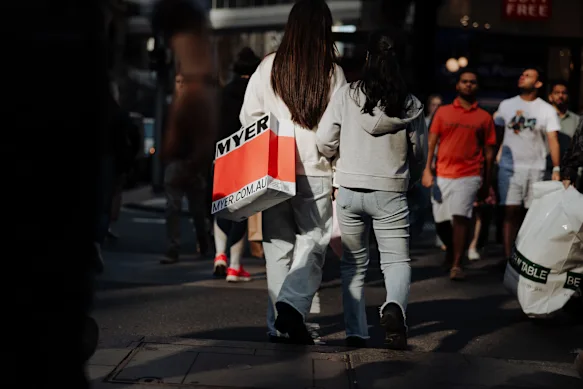
The policy changes extend beyond smaller retailers to major brands, with high-profile online fashion retailer ASOS ending its years-long free returns policy in Australia in June 2023.
In the UK, ASOS has gone further by banning customers who repeatedly return large portions of their orders, demonstrating the global nature of the returns cost crisis.
However, competition from major Australian retailers, including The Iconic, David Jones, and Myer, which continue offering free returns on all purchases, creates significant pressure on smaller retailers who must balance cost management with customer expectations.
Australia Post data indicates that 65 percent of shoppers value “friction-free” returns, with this figure rising to 72 percent among Generation Z and Millennial customers.
Some retailers are developing creative solutions to manage return costs while maintaining customer satisfaction.
Byron Bay-based sustainable clothing store Afends provides free returns when customers choose store credit instead of refunds, while others offer free returns for online purchases when goods are returned to physical stores, reducing shipping expenses.
The environmental implications of return policies add another dimension to the issue, with a report from charity Good360 finding that 30 percent of clothing bought online and returned in 2024 was sent to landfills instead of being resold.
Some companies find it cheaper to dispose of returned items rather than process them for resale, highlighting the broader sustainability challenges associated with liberal return policies.
Ben Wapling, head of marketing for sporting goods retailer Intersport, explained the complex calculations retailers face, noting that return costs range between $7 and $11 per order.
“You’ve got to weigh that up, but you also weigh up the potential of the customer saying ‘oh look, it’s all a bit too hard, I’m not going to make a purchase’,” he said.
The trend reflects broader changes in retail economics as businesses reassess customer service policies implemented during emergency pandemic conditions and adapt to more sustainable long-term operating models in an environment of persistent cost pressures and changing consumer behaviour patterns.