Apple Prepares Major 2027 Product Launches As OLED iMac Faces Uncertain Future
 April Ossington
23 Nov 2026

Apple is reportedly preparing another extensive product launch schedule for 2027, with new iPhones, iPads, MacBooks and wearable devices expected throughout the year, although plans for an OLED iMac could be delayed or abandoned due to rising production costs.
Following a busy final quarter of 2026, which included the introduction of its first foldable smartphone, a touchscreen Mac and new smart home products, Apple is expected to maintain its accelerated release schedule into next year.
According to Bloomberg, the company is preparing several more affordable devices for the first quarter of 2027, including a new entry-level iPad, the iPhone 18e and a second-generation MacBook Neo.
These products could arrive around February or March, coinciding with the anticipated release of iOS 27.4.
Apple is also reportedly considering launching the standard iPhone 18 and an updated MacBook Air during the same period, potentially making the opening months of 2027 particularly significant for its mainstream product range.
Additional releases are expected during the first half of the year, including a refreshed iPad Pro and an iPad Air featuring an OLED display.
The introduction of OLED technology to the iPad Air would represent an important upgrade for Apple’s mid-range tablet, bringing display technology previously reserved for more expensive models to a broader audience.
The second-generation iPhone Air is also expected to arrive during this period, with reports suggesting a significant camera upgrade.
Unlike its predecessor, which features a single rear camera, the new model could incorporate a dual-camera system combining a primary sensor with an ultra-wide lens.
Rather than announcing all these devices simultaneously, Apple is expected to distribute launches across several events and release windows.
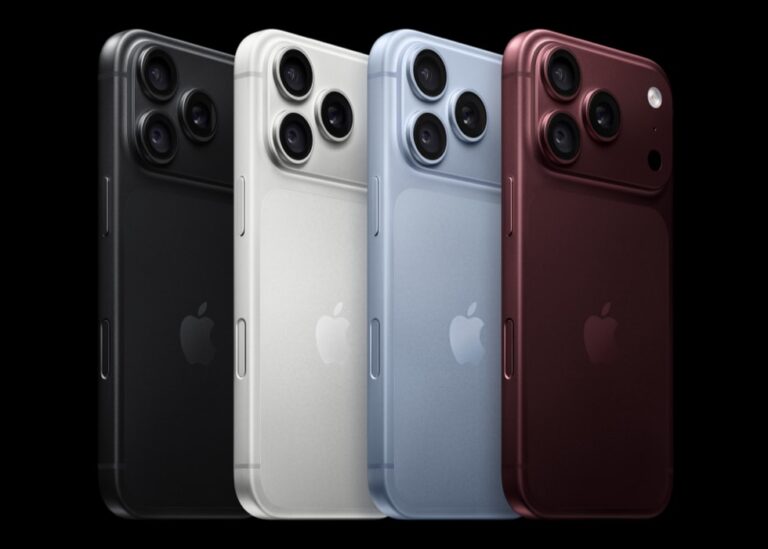
The approach would follow its late-2026 strategy, which separated major announcements covering smartphones, computers and smart home technology.
The second half of 2027 could bring further developments, with reports pointing to new Apple Watch models, smart glasses and AirPods incorporating cameras.
Apple is also expected to introduce the iPhone 20, a special anniversary model reportedly featuring a substantially redesigned appearance.
Early rumours suggest the device could adopt a quad-curved glass design, potentially marking one of the most significant visual changes to the iPhone in recent years.
However, while Apple appears to be expanding its product portfolio, the company is reportedly reassessing plans to introduce OLED technology to its iMac desktop computer.
According to South Korean publication The Elec, Apple has been discussing possible changes to the OLED iMac development schedule with Samsung Display.
The project could be postponed, with cancellation also reportedly under consideration.
Previous industry reports suggested an OLED-equipped iMac could arrive around 2029 or 2030, although the latest developments have raised questions about whether that timeframe remains achievable.
Apple has reportedly approached LCD manufacturers, including BOE, about developing displays for another iMac expected around 2029, suggesting the company may continue using conventional LCD technology for several more years.
The decision appears to be influenced primarily by manufacturing costs rather than technical limitations.
OLED displays offer several advantages over traditional LCD panels, including improved contrast, deeper black levels and individual pixel illumination.
However, producing large OLED panels suitable for desktop computers remains comparatively expensive, particularly when manufacturers must also meet Apple’s brightness, resolution and durability requirements.
The iMac also sells in considerably smaller volumes than products such as the iPhone, making it more difficult to offset higher display development and production costs.
Rising memory prices are reportedly adding further pressure to Apple’s component expenditure, potentially making a premium display upgrade less commercially attractive.
The company had previously approached suppliers about developing a 24-inch OLED panel offering 600 nits of brightness and a pixel density of 218 pixels per inch.
Samsung Display was reportedly developing a five-layer light-emitting structure designed to improve brightness and panel longevity.
LG Display had also been working on a competing solution before reportedly discontinuing its development efforts.
Another consideration may be the commercial performance of Apple’s OLED iPad Pro range.
Although the company introduced tandem OLED displays to its premium tablets in 2024, subsequent demand has reportedly been weaker than initially anticipated.
Combined OLED panel shipments from Samsung Display and LG Display for the iPad Pro are forecast to reach approximately 4.9 million units in 2026, compared with six million in 2025.
The decline could reinforce concerns about whether customers are prepared to pay substantially more for OLED technology across other Apple product categories.
Despite the uncertainty, Apple has not necessarily abandoned the idea of an OLED iMac.
Bloomberg reported in October that the company was testing OLED technology for both the iMac and MacBook Air, although neither product had an officially confirmed release date.
The contrasting developments highlight Apple’s approach to future product development, with the company reportedly preparing an ambitious range of new devices while remaining cautious about introducing expensive technologies into lower-volume products.
For consumers, 2027 could deliver significant upgrades across Apple’s smartphones, tablets, laptops and wearable devices, while those waiting for an OLED iMac may face a considerably longer wait.
Apple has not officially confirmed the reported launch schedules or the future of its OLED iMac project.