Amazon Unveils Its Fastest Satellite Antenna as Starlink Rivalry Heats Up
 Joe Gallop
25 Nov 2025
Joe Gallop
25 Nov 2025
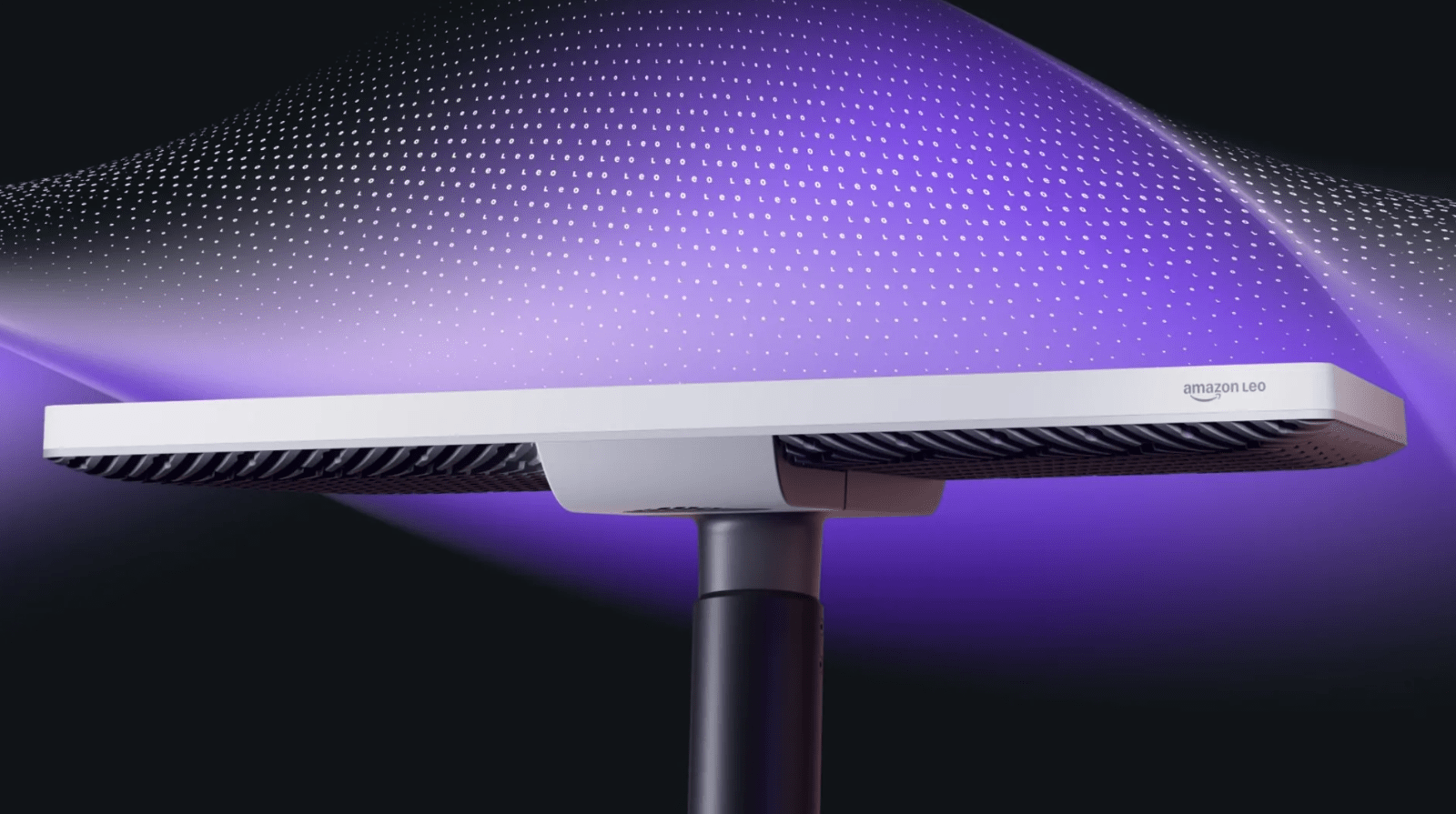
Amazon has unveiled Leo Ultra, a business-grade satellite antenna it claims is the fastest commercial phased-array terminal in production, promising speeds of up to 1Gbps down and 400Mbps up.
The hardware debuts as part of an enterprise preview for the company’s newly rebranded satellite service, Amazon Leo, previously known as Project Kuiper.
The preview covers select partners across aviation, energy, logistics and government sectors, with early units already heading to companies including JetBlue and Hunt Energy Network. A broader commercial launch is slated for next year.
Early international interest includes Australia, where Leo will replace the NBN’s Sky Muster service, bringing high-speed broadband to more than 300,000 regional, rural and remote customers.

At 20 by 30 inches, Leo Ultra is the largest of Amazon’s three-antenna lineup and is targeted at organisations operating in remote or high-demand environments.
The antenna uses custom Amazon-designed silicon and proprietary RF processing to minimise latency for cloud workloads and real-time applications. It also supports simultaneous full-duplex operation and has no moving parts, improving reliability in harsh weather.
The company is also preparing two smaller terminals: the Leo Pro, capable of up to 400Mbps downloads, and the compact Leo Nano, rated for 100Mbps.
The launch comes as SpaceX’s Starlink dominates the LEO broadband market with nearly 9,000 satellites in orbit.
Amazon has deployed just over 150, though it plans a constellation of 3,236. Starlink’s current business-grade Performance Kit tops out at around 400Mbps, though SpaceX says gigabit speeds are coming with its V3 satellites next year.
Beyond raw speed, Amazon is leaning heavily on enterprise-grade networking features. Amazon Leo customers can connect directly to AWS or other cloud and on-premises systems without touching the public internet. Options like Direct to AWS and Private Network Interconnect promise rapid provisioning and simpler cloud routing.
Amazon is also highlighting end-to-end encryption amid renewed attention on vulnerabilities in legacy GEO satellite systems, which researchers recently found were carrying sensitive data unencrypted.
Amazon hasn’t confirmed plans or pricing for residential users, though a commercial rollout is expected in 2026.
With Starlink expanding aggressively, including budget plans in some regions, Amazon Leo will need aggressive pricing and rapid satellite deployment to seriously challenge its rival.