AI Memory Boom To Hit Smartphone, Tablet and PC Display Shipments
 Emma Wheaton
26 Aug 2026
Emma Wheaton
26 Aug 2026

The global flat panel display market is expected to contract in 2026 as soaring memory prices continue to push up the cost of smartphones, PCs and other consumer electronics.
According to Counterpoint Research’s Flat Panel Display Tracker and Forecast, global Flat Panel Display (FPD) shipments are forecast to fall 4.7% year-on-year in 2026. The impact of the memory shortage is particularly evident across smartphones and tablets.
Memory chip prices are rising due to the supply pressures from booming AI infrastructure, creating issues for other areas of the tech industry. The higher component costs are also increasingly being passed on to consumers via price hikes on devices and products.
“High prices for memory chips are leading to price increases across a range of electronics products, leading to reduced demand,” said Bob O’Brien, Research Director at Counterpoint Research.
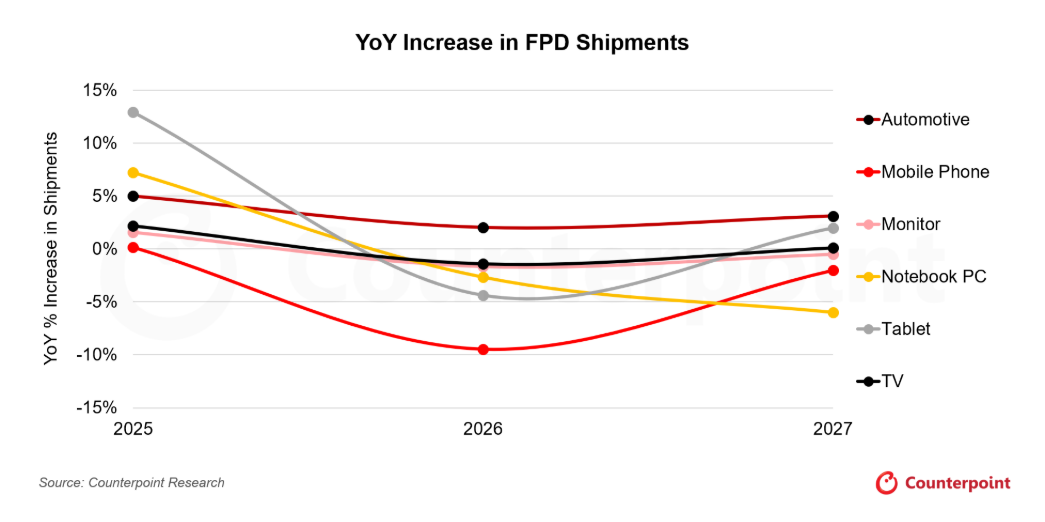
According to the research, the impact is expected to be particularly strong for the low and mid-range smartphone and PC markets as this is where manufacturers have less room to absorb higher component costs.
Counterpoint says mobile phone FPD shipments look set to fall 9.5% in 2026 with consumers delaying device upgrades, looking for cheaper alternatives or turning to the second-hand market.
While the PC market is also under pressure, the outlook for 2026 has improved following stronger-than-expected shipments in the first half of 2026.
Monitor panel shipments are now forecast to decline 1.7%, up from Counterpoint’s previous estimate of a 3% decline.
Notebook panel shipments are expected to fall 2.7%, which is an improvement on the previous forecast of an 8.8% decline.
The Counterpoint research points to the downturn in the IT display market extending into 2027. Higher finished-product prices could potentially lead manufacturers to adjust panel procurement and consumers to hold back on making purchases.
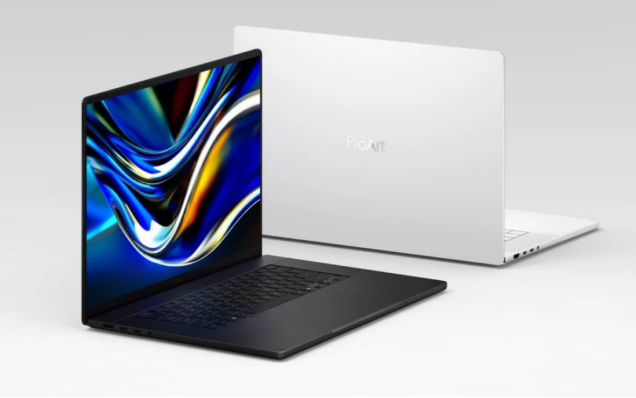
The premium segment, however, looks set for positive news, with manufacturers increasingly turning to OLED displays in a bid to differentiate products and protect margins. OLED monitor panel shipments are forecast to increase 60% in 2026, while OLED notebook panel shipments are expected to rise 50%.
With TVs being less dependent on memory chips, the television market is proving more resilient. Mini LED display shipments are forecast to grow by more than 10% in 2026 and 2027.
The automotive sector is also emerging as a bright spot for display manufacturers. Automotive displays are expected to be the only major FPD application to record year-on-year shipment growth in 2026, with further growth also forecast for 2027.
The demand is supported by the trend of vehicles featuring more screens, along with the larger average display sizes aiding in the revenue growth.
While demand for AI is creating opportunities for semiconductor manufacturers, the competition for memory it is causing is filtering down, affecting mainstream consumer electronics as this new research shows.